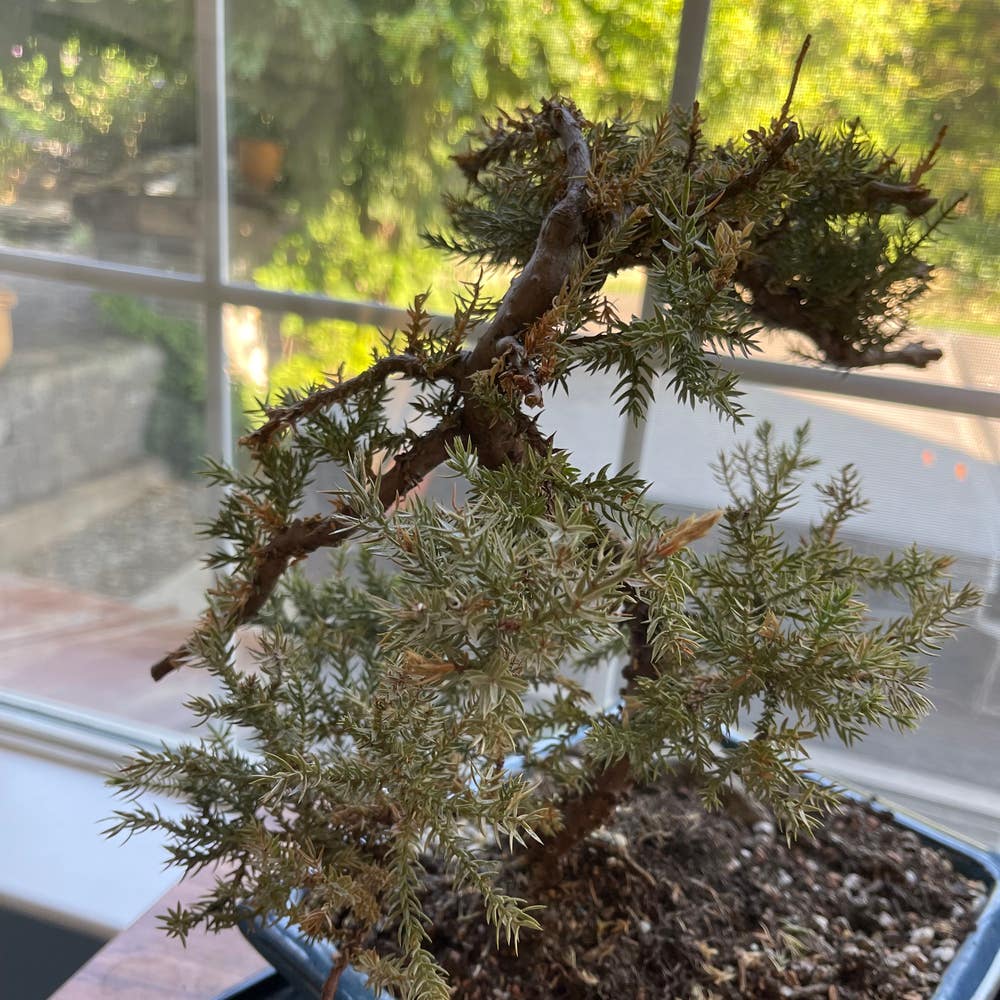
Dealing with Droopy Leaves on Your Green Mound Juniper 😢
Juniperus procumbens
By the Greg Editorial Team
Oct 17, 2024•5 min read
This article was created with the help of AI so we can cover more plants for you. May contain errors. See one? Report it here.
Ensure your Green Mound Juniper thrives 🌱 by mastering essential care tips and diagnosing issues before they escalate!
- 💧 Identify watering issues: Overwatering causes yellow leaves; underwatering leads to brown tips.
- 🐛 Inspect for pests regularly: Catch infestations early by checking for webs and droppings.
- 🌱 Ensure proper soil conditions: Use well-draining soil with a pH of 6.0 to 7.0.
Diagnosing the Problem
🚰 Signs of Overwatering vs. Underwatering
Identifying whether your Green Mound Juniper is overwatered or underwatered is crucial for its health. Overwatering often shows up as yellowing leaves and mushy roots, indicating that the plant is drowning. In contrast, underwatering manifests as brown tips and crispy leaves, signaling that your juniper is thirsty.
🐛 Identifying Pest Infestations
Pests can wreak havoc on your juniper if not caught early. Start with a visual inspection; look for webs, droppings, or any visible pests clinging to the foliage. Next, assess the damage: discolored or deformed leaves can be a telltale sign of an infestation.
🦠 Recognizing Symptoms of Root Rot
Root rot is a serious issue that can lead to the demise of your plant. Symptoms include wilting even when you’ve watered adequately and a foul smell emanating from the soil. To diagnose this, carefully remove the plant from the soil and check the roots for health.
🌱 Assessing Soil Conditions
The right soil conditions are vital for your Green Mound Juniper's success. Ensure your soil has a well-draining texture; this prevents water from pooling around the roots. Additionally, maintain a pH level between 6.0 and 7.0 for optimal health, as this range supports nutrient uptake.
Understanding these diagnostic signs will help you address issues before they escalate. Next, we’ll explore effective treatment and solutions to revive your juniper.
Treatment and Solutions
Adjusting Watering Practices 🌊
Establishing a consistent watering schedule is crucial for your Green Mound Juniper. Adjust the frequency based on seasonal changes and weather conditions to ensure your plant thrives.
To check moisture levels, use the finger test or a moisture meter. This helps you avoid the pitfalls of overwatering or underwatering.
Signs of proper watering include healthy foliage and robust growth. If your juniper is thriving, you’re likely on the right track!
Improving Soil Drainage 🕳️
Soil amendments can significantly enhance drainage. Incorporate materials like sand or perlite to improve aeration and prevent waterlogging.
For container plants, ensure that pots have adequate drainage holes. This simple step can make a world of difference in maintaining healthy roots.
Pest Control Methods 🐞
When it comes to pest control, consider organic options first. Neem oil and insecticidal soap are effective and environmentally friendly choices.
If the infestation persists, it may be time to consider stronger chemical treatments. Always follow the manufacturer's instructions for safe application.
Treating Fungal Infections 🍄
Identifying the type of fungus affecting your juniper is essential. Look for visual symptoms and consider lab testing if necessary.
Treatment options include fungicides and cultural practices to reduce moisture. Implementing these strategies can help restore your plant's health and vigor.
By addressing these treatment solutions, you can ensure your Green Mound Juniper stays vibrant and healthy. Next, let’s explore preventative measures to keep your plant thriving year-round.
Preventative Measures
Best Practices for Watering Green Mound Juniper 🌊
Watering frequency is crucial for the health of your Green Mound Juniper. Adjust your schedule based on seasonal changes; during hot months, more frequent watering may be necessary.
Deep watering is an effective technique to encourage robust root growth. Aim to saturate the soil thoroughly, allowing roots to reach deeper for moisture.
Soil Amendments for Better Drainage 🧱
To improve drainage, consider incorporating materials like sand, gravel, and organic matter into your soil. These amendments enhance aeration and prevent waterlogging.
Mixing ratios are essential for creating the ideal soil blend. A good starting point is one part sand, one part gravel, and two parts organic matter for optimal drainage.
Regular Inspection for Pests and Diseases 🔍
Conduct monthly inspections during the growing season to catch any potential issues early. Look for changes in leaf color, texture, and overall health as indicators of pests or diseases.
Being proactive can save you from larger problems down the line. Regular checks help ensure your juniper remains vibrant and healthy.
Seasonal Care Tips to Maintain Health 🍂
In spring, focus on fertilization and pruning to promote new growth. This is the perfect time to give your juniper a little extra care.
As fall approaches, mulching and winter protection strategies become vital. Proper preparation helps your plant withstand colder temperatures and thrive year-round.
By implementing these preventative measures, you can maintain the health and beauty of your Green Mound Juniper. Next, let’s explore how to monitor and maintain your plant for long-term success.
Monitoring and Maintenance
Signs to Watch for After Treatment 🌱
After addressing droopy leaves, look for signs of recovery. New growth and improved leaf texture indicate that your Green Mound Juniper is bouncing back.
Keep an eye on moisture levels and pests. Regular checks will help you catch any recurring issues before they escalate.
Long-Term Care Strategies for Healthy Growth 🌿
Establish a fertilization schedule tailored for junipers. Opt for slow-release fertilizers that provide essential nutrients over time.
Pruning is also crucial for maintaining health. Trim back any dead or overgrown branches in early spring to encourage robust growth.
When to Seek Professional Help 🆘
If drooping persists despite your best efforts, it may be time to consult a professional. Indicators of severe issues include wilting leaves and stunted growth.
Finding a local expert can make all the difference. Look for resources in your community that specialize in plant care to get tailored advice.
With these monitoring and maintenance strategies, your Green Mound Juniper can thrive, ensuring it remains a vibrant part of your landscape.
⚠️ Safety First
This content is for general information and may contain errors, omissions, or outdated details. It is not medical, veterinary advice, or an endorsement of therapeutic claims.
Always consult a qualified healthcare professional before using any plant as food, medicine, or supplement.
Never eat any plant (or feed one to pets) without confirming its identity with at least two trusted sources.
If you suspect poisoning, call Poison Control (800) 222-1222, the Pet Poison Helpline (800) 213-6680, or your local emergency service immediately.
Spotted an error? Please report it here.
Keep your Green Mound Juniper thriving 🌿 by using Greg's personalized care reminders to tackle watering issues and pests, ensuring your plant stays vibrant and healthy!