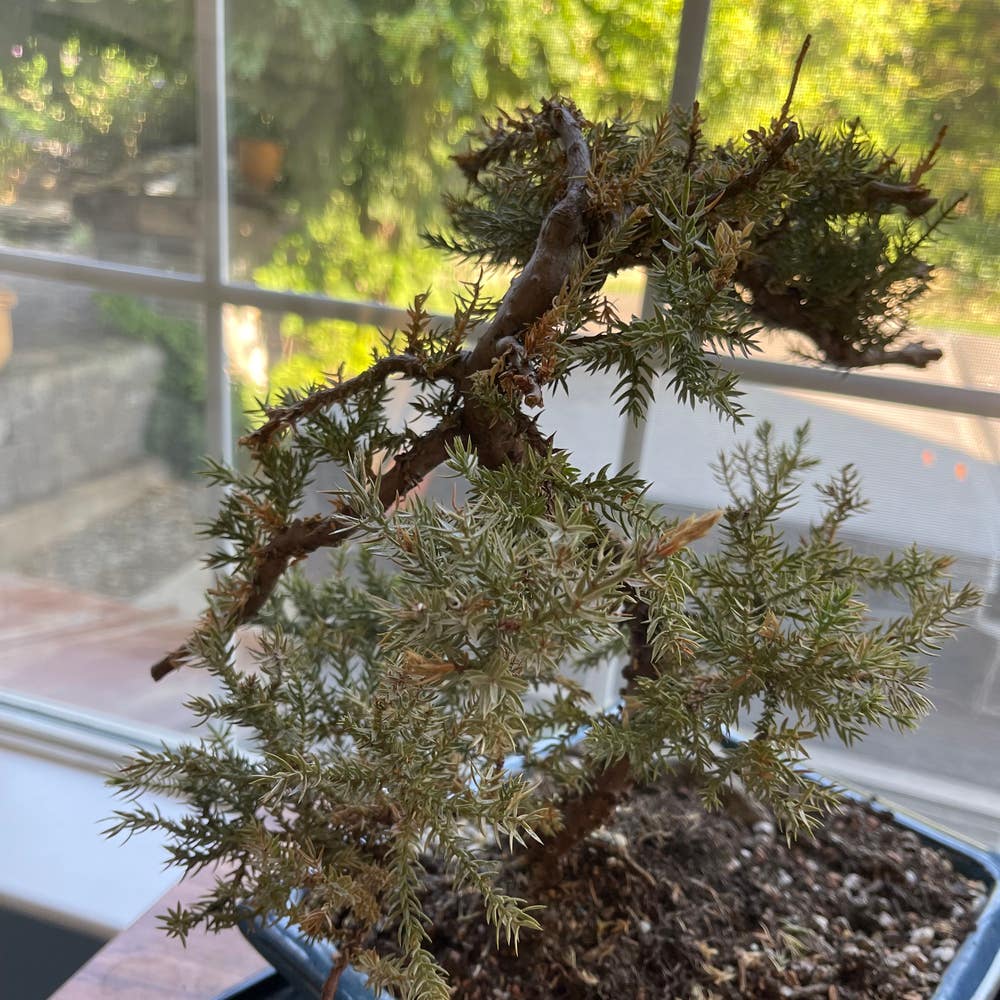
What To Do About Green Mound Juniper Dying 🌼
Juniperus procumbens
By the Greg Editorial Team
Oct 17, 2024•3 min read
This article was created with the help of AI so we can cover more plants for you. May contain errors. See one? Report it here.
Revive your Green Mound Juniper 🌱 with essential care tips to tackle common problems and ensure vibrant growth!
- 💧 Balance watering to prevent harm; both overwatering and underwatering are detrimental.
- 🌞 Ensure adequate light to avoid leggy growth and scorched leaves on your juniper.
- 🐛 Regularly inspect for pests and diseases to catch issues early and protect your plant.
Common Problems Specific to Green Mound Juniper
💧 Incorrect Watering
Identifying Overwatering and Underwatering
Overwatering your Green Mound Juniper can lead to yellowing leaves, wilting, and squishy roots. Conversely, underwatering results in dry, crispy leaves and stunted growth.
Causes and Effects
Poor drainage and compacted soil are common culprits of overwatering. On the other hand, infrequent watering and drought conditions contribute to underwatering.
Steps to Resolve Watering Issues
- Check Soil Moisture: Use a moisture meter or your finger to assess moisture levels.
- Adjust Watering Schedule: Water deeply but infrequently to encourage healthy root growth.
- Improve Drainage: Amend the soil with sand or perlite if drainage is an issue.
☀️ Incorrect Light Conditions
Symptoms of Inadequate or Excessive Light
If your juniper is getting inadequate light, you may notice leggy growth and sparse foliage. Excessive light can cause scorched leaves and browning tips.
Causes and Effects
Inadequate light often occurs when the plant is placed in shaded areas. Excessive light usually results from direct afternoon sun exposure.
Solutions for Light-Related Problems
- Relocate the Plant: Move it to a more suitable light condition.
- Use Shade Cloth: Consider using shade cloth during peak sun hours to protect the plant.
🐛 Pests
Common Pests Affecting Green Mound Juniper
Spider mites and scale insects are two common pests that can wreak havoc on your juniper. Look for tiny webs and stippled leaves from spider mites, or sticky residue and yellowing leaves from scale insects.
Identification and Symptoms
Inspect the stems and undersides of leaves for visible pests. Signs of damage include yellowing, wilting, or leaf drop.
Treatment Options
- Insecticidal Soap or Neem Oil: Use these for effective pest control.
- Regular Inspections: Regularly check your plants and remove any affected areas promptly.
🦠 Diseases
Common Diseases
Green Mound Junipers can fall victim to several diseases, including powdery mildew, rust, and black rot. Powdery mildew appears as white, powdery spots, while rust shows orange or yellow spots on foliage.
Symptoms and Identification
Keep an eye out for discoloration, wilting, or unusual growth patterns. Early detection is key to managing these issues.
Treatment and Prevention Strategies
- Fungicide Application: Use fungicides for severe cases to protect your plant.
- Improve Air Circulation: Ensure good airflow and avoid overhead watering to prevent disease spread.
🛡️ Preventive Measures
Best Practices for Care to Avoid Common Issues
Regularly check soil moisture and drainage to keep your juniper healthy. Monitor light conditions and adjust as necessary, and maintain healthy soil with organic amendments.
Importance of Regular Monitoring and Maintenance
Early detection of problems can save your plant from serious issues. Establishing regular care routines can prevent many common problems from arising in the first place.
With these insights, you can better care for your Green Mound Juniper and ensure it thrives in your garden. Next, let’s explore how to enhance its overall health through preventive measures.
⚠️ Safety First
This content is for general information and may contain errors, omissions, or outdated details. It is not medical, veterinary advice, or an endorsement of therapeutic claims.
Always consult a qualified healthcare professional before using any plant as food, medicine, or supplement.
Never eat any plant (or feed one to pets) without confirming its identity with at least two trusted sources.
If you suspect poisoning, call Poison Control (800) 222-1222, the Pet Poison Helpline (800) 213-6680, or your local emergency service immediately.
Spotted an error? Please report it here.
Keep your Green Mound Juniper thriving 🌿 by using Greg's tailored watering reminders and moisture checks to catch issues early and promote healthy growth!