🌳 Why Are My Japanese Garden Juniper Leaves Dropping?
Juniperus procumbens
By the Greg Editorial Team
Jun 18, 2024•4 min read
This article was created with the help of AI so we can cover more plants for you. May contain errors. See one? Report it here.
Solve the mystery of your juniper's leaf drop 🍂 and restore its vibrant green glory!
- 🍂 Unexpected leaf drop is a red flag - indicates environmental or health issues.
- Inspect and adjust care for pests, diseases, and watering when leaves fall.
- Seasonal care and well-draining soil are key to preventing future leaf drop.
Spotting the Signs: What Leaf Drop Looks Like
🍂 Visual Symptoms
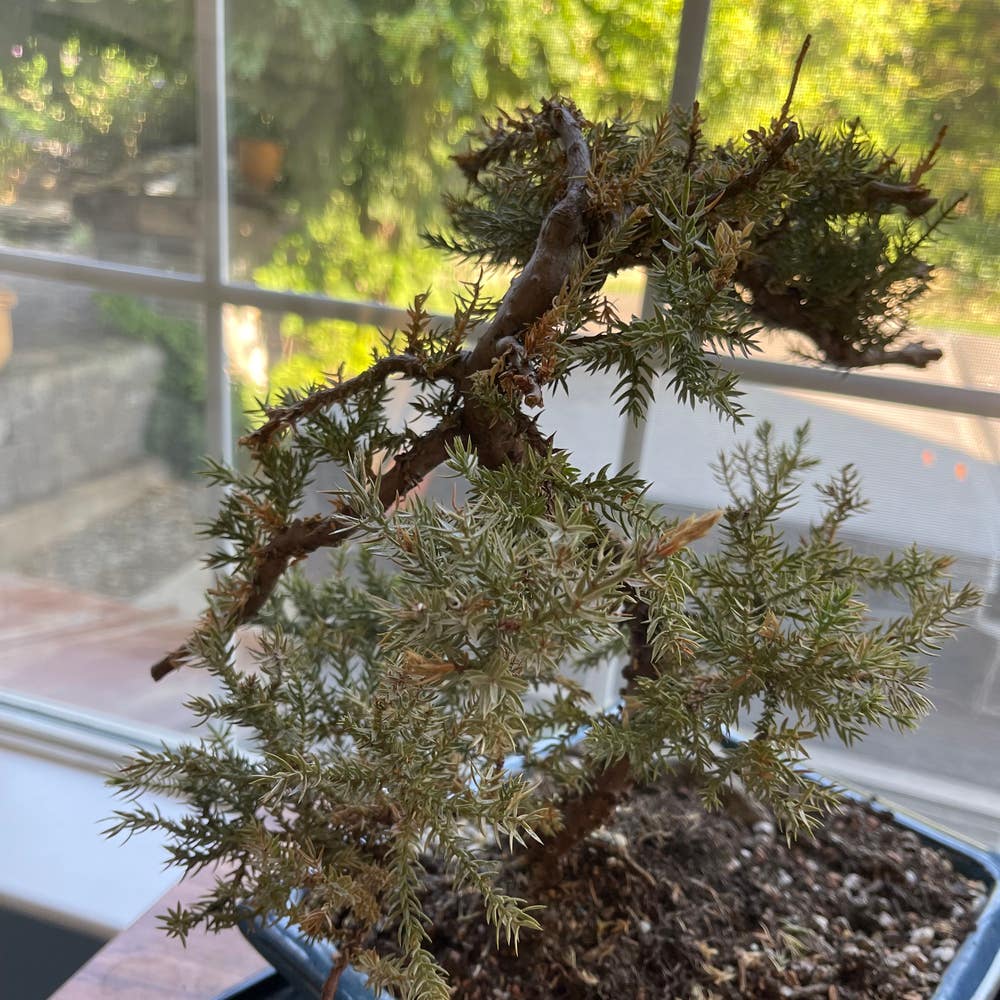
Japanese Garden Juniper leaf drop can be startling. Needles may turn brown and fall, leaving bare patches. Scale-like adult foliage might thin out, betraying the plant's stress. If your juniper's lush greenery is giving way to a sparse and sullen appearance, it's time to take note.
🚩 When to Worry
It's natural for plants to shed a bit in spring or fall, but if your juniper is dropping leaves outside these seasons, it's a red flag. Pay attention to leaves falling from the top or tips of branches, as this is atypical. A juniper that's more naked than clothed, regardless of the season, is crying out for help.

Rooting Out the Causes
🌦️ Environmental Stressors
Weather extremes and improper watering can wreak havoc on Japanese Garden Junipers, leading to leaf drop. Intense heat or cold, along with watering missteps, stress the plants, causing them to shed leaves as a cry for help.
🐜 The Usual Suspects: Pests and Diseases
Pests like spider mites or diseases such as root rot can turn your juniper's leaves into a dropping frenzy. Regular inspections for pests and disease signs are crucial for early intervention.
🌱 Soil and Roots Under Scrutiny
The health of your juniper's roots is directly tied to soil conditions. Compacted soil or poor drainage can suffocate roots, leading to leaf loss. Conversely, excessively sandy soil can dry out roots, also causing leaves to drop.

First Aid for Falling Leaves
🚑 Immediate Actions
When your Japanese Garden Juniper starts shedding leaves like a dog in summer, act swiftly. First, inspect the leaves for pests or disease—these are often the culprits behind a leafy downfall. If you spot tiny critters or funky spots, it's time for some plant triage.
- Isolate the affected plant to prevent any potential spread to your plant posse.
- Prune damaged foliage to stop the problem in its tracks and encourage new growth. Think of it as a haircut after a bad dye job.
- Check the soil moisture; if it's wetter than a rainforest floor, ease up on the watering. Conversely, if it's drier than a stand-up comedian, it's time to hydrate.
- Adjust lighting if your plant's been sunbathing too much or lurking in the shadows.
🌱 Long-Term Plant Care Adjustments
After you've played plant paramedic, it's time to think about the long haul. Consistent care is the secret sauce to a thriving Juniper.
- Reevaluate your watering schedule; your plant's thirst isn't static and changes with the seasons.
- Consider the potting mix; it should be as well-draining as a colander.
- Monitor your plant like it owes you money, ready to tweak your care routine at the first sign of distress.
- Fertilize judiciously; it's a nutrient boost, not an all-you-can-eat buffet.
By keeping these tips in your back pocket, you'll be well on your way to stopping leaf drop and keeping your Juniper joyously green.

Keeping Your Juniper Jubilant
💧 Watering Wisdom
Consistency is your juniper's best friend. Water when the top inch of soil feels dry, but don't drown the poor thing. Overwatering is like giving your plant an unwanted bath—it won't thank you for it. In summer, your juniper's thirst may spike, but resist the urge to overcompensate. Winter? Ease off. Your juniper isn't trying to win a swimming medal.
🌱 Soil and Fertilization Fundamentals
Your juniper's roots crave a well-draining home. Mix in some organic matter, like compost, to keep it happy. Fertilization isn't a frequent flyer on the juniper care itinerary, but if you're dealing with sandy soil or a potted friend, a slow-release, low-phosphorus, high-magnesium fertilizer is your go-to. Remember, less is more.
🍂 Seasonal Considerations
As the seasons turn, so should your attention to your juniper's needs. Monitor the soil like it's the latest binge-worthy show. When the heat cranks up, your watering can gets more screen time. As autumn leaves fall, dial it back. Your juniper's not looking to reenact a scene from "Frozen." Keep an eye on the forecast—your juniper's well-being might just depend on it.
⚠️ Safety First
This content is for general information and may contain errors, omissions, or outdated details. It is not medical, veterinary advice, or an endorsement of therapeutic claims.
Always consult a qualified healthcare professional before using any plant as food, medicine, or supplement.
Never eat any plant (or feed one to pets) without confirming its identity with at least two trusted sources.
If you suspect poisoning, call Poison Control (800) 222-1222, the Pet Poison Helpline (800) 213-6680, or your local emergency service immediately.
Spotted an error? Please report it here.
Combat your juniper's leaf drop by tackling environmental stress and pests, with Greg's 🌿 custom watering reminders ensuring your plant's health and happiness.