💧 How Do I Know When My Japanese Garden Juniper Needs Water?
Juniperus procumbens
By the Greg Editorial Team
Jun 18, 2024•3 min read
This article was created with the help of AI so we can cover more plants for you. May contain errors. See one? Report it here.
Master the art of quenching your Juniper's thirst 🌿—no more guesswork on watering schedules!
- Wilting and browning tips signal your juniper needs water.
- Yellow leaves and musty smell mean you're overwatering.
- Adjust watering with seasons; more in summer, less in winter.
Spotting Thirsty Junipers: Recognizing When to Water
🥤 Wilting and Dryness: The Telltale Signs
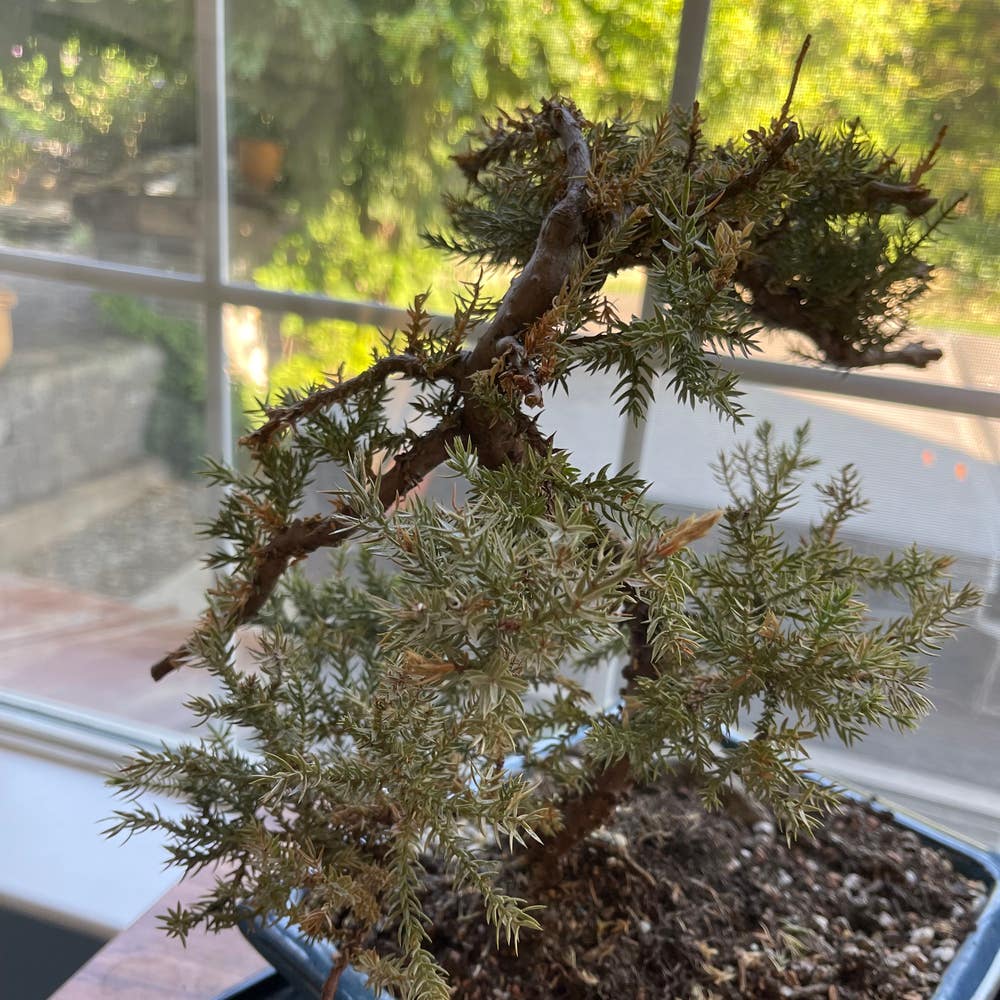
Wilting leaves are the juniper's SOS. If the foliage looks more like a crumpled paper bag than lush greenery, it's time to reach for the watering can. Browning tips? They're not just a fashion statement; they signal serious thirst.
💦 Too Much of a Good Thing: Overwatering Symptoms
Yellow leaves are the plant's way of waving a yellow flag. It's a sign you might be loving your juniper to death with water. And that musty smell? It's not the scent of success but a red flag for root rot.

The Art of Watering: Techniques and Tips
💧 Deep Watering for Deep Roots
Deep watering isn't just a suggestion, it's a necessity for your Japanese Garden Juniper. It's like giving your plant a long, refreshing drink that reaches all the way to the roots, encouraging them to grow strong and deep. For young plants, this might mean a weekly session with the hose, while mature junipers can go longer between drinks.
💦 How Often to Water
The age and size of your plant dictate the watering frequency. Young, thirsty junipers need a deep soak once or twice a week, especially during their growth spurts. Older, more established plants are like seasoned marathon runners—they've learned to conserve and use water efficiently, requiring less frequent watering.
🌦 Seasonal Sensibility: Adjusting for Weather and Seasons
When summer turns up the heat, your juniper's thirst will spike. Increase watering to combat the relentless sun. Conversely, winter is the plant's time to binge-watch its favorite shows and chill, so dial back on the watering. Let the soil dry out a bit more, just enough to prevent a case of the dreaded root rot.

Checking the Pulse: Soil Moisture Testing
🖐️ Getting Hands-On: The Finger Test
To check soil moisture with the finger test, insert your finger about an inch deep. If the soil feels dry, it's time to water. If it's damp, give it a day or two before rechecking.
🛠️ Tools of the Trade: Using Moisture Meters
Moisture meters take the guesswork out of watering. Probe stability is crucial for accurate readings. Remember, high sodium levels can skew results, so pair meter readings with the finger test for best results. Use a moisture meter with a probe length suitable for your garden's needs, whether indoor or outdoor. Opt for simplicity: a reliable, easy-to-read meter that doesn't break the bank. No batteries required, just insert and read.

⚠️ Safety First
This content is for general information and may contain errors, omissions, or outdated details. It is not medical, veterinary advice, or an endorsement of therapeutic claims.
Always consult a qualified healthcare professional before using any plant as food, medicine, or supplement.
Never eat any plant (or feed one to pets) without confirming its identity with at least two trusted sources.
If you suspect poisoning, call Poison Control (800) 222-1222, the Pet Poison Helpline (800) 213-6680, or your local emergency service immediately.
Spotted an error? Please report it here.
Keep your Japanese Garden Juniper thriving 🌱 with Greg's custom watering plan that takes the guesswork out of when to water, no matter the season or weather.