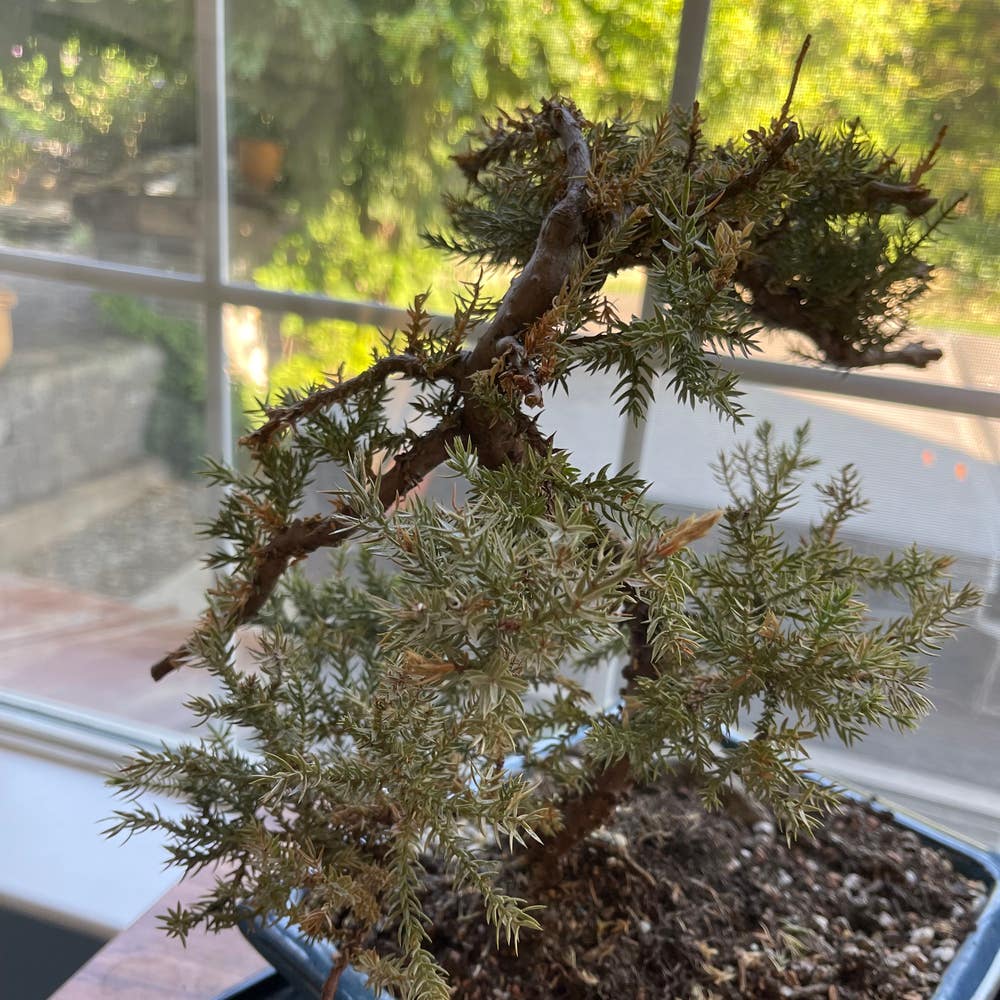
Japanese Garden Juniper Root Rot Solutions
Juniperus procumbens
By the Greg Editorial Team
Jun 18, 2024•3 min read
This article was created with the help of AI so we can cover more plants for you. May contain errors. See one? Report it here.
Rescue your juniper from root rot's grip 🌿 and ensure its lush future with these expert solutions and tips.
- Spot root rot early with yellow/brown foliage and mushy roots.
- Treat with root pruning and sterilized tools, then dry soil before watering.
- Prevent relapse with well-draining soil, moisture meters, and proper containers.
Spotting the Red Flags: Identifying Root Rot
🕵️♀️ Visual Symptoms
Root rot in Japanese Garden Juniper is not subtle once you know what to look for. Discoloration of foliage from vibrant green to yellow or brown is like a silent scream from your plant. If the roots have turned from cream or light brown to a dark, mushy mess, it's a clear distress signal.
Beyond the Surface
To properly inspect the root system, you'll need to get your hands dirty. Gently unearth the juniper and examine the roots. Healthy roots should be firm and white, not soft or discolored. If your juniper rocks in the soil, it's a sign of weak anchorage due to root rot. It's crucial to differentiate this from other ailments; root rot will have a distinct foul odor and a telltale mushiness that other issues won't present.

Emergency Response: Treating Root Rot
🌿 Cutting to the Chase: Root Pruning
When your Japanese Garden Juniper screams "Help!" with root rot, grab your shears. It's triage time. First, yank the plant out and give those roots a shower to wash off the dirt. Now, get forensic—look for the roots that have turned to mush. They're the traitors. Snip them off, but don't stop there. Sterilize your tools with alcohol or bleach before and after, because cleanliness is next to godliness in plant surgery.
💧 Drying Out: Soil and Water Management
Post-op, your juniper's roots need a dry spell. Overwatering is the root rot enabler, so let the soil dry out before you even think about watering again. This isn't a desert mirage; it's about balancing moisture like a tightrope walker. If you're unsure, use a moisture meter as your safety net. Remember, your watering can is not a fire hose—ease up on the H2O to give your juniper a fighting chance at recovery.

Rebuilding the Foundation: Soil and Plant Reestablishment
🌱 Fresh Start: Soil Replacement
After root rot, your juniper needs a fresh start. Well-draining soil is non-negotiable. Look for a mix rich in perlite or pumice, ensuring swift water exit. When replanting, be gentle. Disturb the roots minimally to avoid additional stress.
🏥 Post-Op Care: Ensuring Recovery
Post-treatment, your juniper is like a convalescent—handle with care. Monitor for new growth as a sign of recovery. Ease back into regular watering and feeding schedules, avoiding the temptation to coddle with excessive care. Remember, junipers are the strong, silent type; they thrive with less.

Fortifying Defenses: Preventing Root Rot Relapse
💧 Water Wisdom: Irrigation Do's and Don'ts
Crafting a watering schedule for your Japanese Garden Juniper is like setting up a diet plan—it's all about balance. Let the soil dry between waterings to avoid drenching the roots. It's a simple yet effective mantra: moist, not soggy.
- Use moisture meters to take the guesswork out of watering. These handy tools help ensure you're not overdoing it or leaving your juniper parched.
🌱 Soil and Drainage Mastery
Well-draining soil is the unsung hero in the fight against root rot. Mix in organic matter like coco coir or peat moss to keep the soil structure airy and roots breathing easy.
- Choose containers wisely—those with adequate drainage holes are non-negotiable. They're like lifeboats for your juniper's roots, keeping them from drowning in excess water.
⚠️ Safety First
This content is for general information and may contain errors, omissions, or outdated details. It is not medical, veterinary advice, or an endorsement of therapeutic claims.
Always consult a qualified healthcare professional before using any plant as food, medicine, or supplement.
Never eat any plant (or feed one to pets) without confirming its identity with at least two trusted sources.
If you suspect poisoning, call Poison Control (800) 222-1222, the Pet Poison Helpline (800) 213-6680, or your local emergency service immediately.
Spotted an error? Please report it here.
Revive your Japanese Garden Juniper from root rot and prevent future issues 🛡️ with Greg's tailored watering plan and health tracking features.