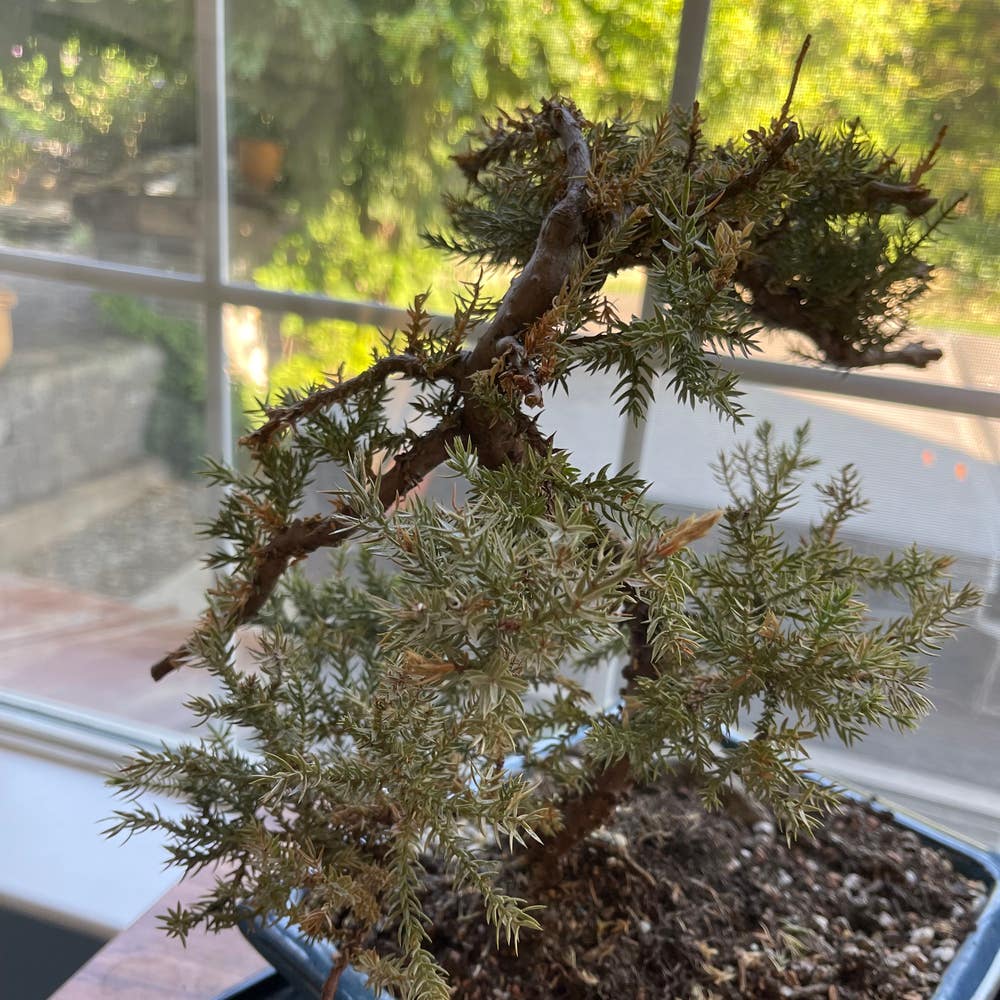
Why Are There Brown Spots on My Japanese Garden Juniper?
Juniperus procumbens
By the Greg Editorial Team
Jun 18, 2024•4 min read
This article was created with the help of AI so we can cover more plants for you. May contain errors. See one? Report it here.
Banish brown spots 🍂 from your Japanese Garden Juniper and restore its lush beauty with expert tips!
- Fungal infections and pests often cause brown spots on junipers.
- Copper fungicides and neem oil treat infections and control pests.
- Prune and adjust care to prevent future brown spot issues.
Spotting the Trouble: Identifying Brown Spots
🕵️♂️ Visual Symptoms
Brown spots on your Japanese Garden Juniper are like unwanted graffiti on a masterpiece. Rusty patches or circular lesions—these are the telltale signs that something's amiss. Unlike the benign yellowing of old age, these spots are your juniper's SOS signal.
🦠 Common Culprits
The usual suspects behind these arboreal blemishes range from fungal diseases to pesky insects, with environmental stress as their occasional accomplice. It's a botanical whodunit, and you're the detective.

Fungal Foes: Tackling Infections
🍄 Spotting Fungal Infections
Fungal infections are the sneaky saboteurs of the plant world, often leaving brown spots as their calling card. Look for spots that may be small initially but expand over time, sometimes surrounded by a red or yellow halo. These can grow into holes if left unchecked. Botryosphaeria canker and Seiridium canker are common culprits, with the former causing cankers and dieback and the latter spreading via contaminated tools or nursery stock.
🌿 Fungicide Fix
When it comes to fungicides, it's not a one-size-fits-all situation. Copper-based fungicides are popular, but always check compatibility with your plant to avoid a botanical blunder. For a greener approach, consider neem oil, but don't expect miracles. Read labels like your plant's life depends on it, because it does. Application is a meticulous affair; cover every leaf, front and back, and adhere to a strict schedule—usually every 7 to 10 days. If you're more of an organic warrior, a baking soda and soap mixture can help prevent the spread without going nuclear. Remember, persistence is key in this battle against the fungal invasion.

Environmental Stress: When Nature Strikes
🌞 Sunscald and Scorch
Sunscald isn't just a winter woe; it can strike your Japanese Garden Juniper on freezing sunny days. The sun's warmth thaws water in the soil, which refreezes and wreaks cellular havoc. In summer, scorch is the culprit, with dry conditions and relentless sun burning the foliage.
💧 Water Woes
Overwatering is the silent killer, leading to root rot and a host of other issues. Strike a balance—water enough to quench your juniper's thirst but let the soil dry out between waterings. Think of it as the Goldilocks zone for moisture: not too wet, not too dry, but just right.

Pests: The Tiny Terrors
🕵️ Identifying Pest-Related Spots
Brown spots on your Japanese Garden Juniper are like red flags waving in your garden—pests may be throwing a party. Aphids, thrips, and spider mites are the usual suspects. They're tiny but their impact is huge, leaving behind brown spots as evidence of their feast on your plant's leaves.
Look for webbing that points to spider mites or sticky honeydew that suggests aphids are nearby. Waxy bumps? You might be dealing with scale insects. Don't overlook the undersides of leaves; pests love to hide there.
🐜 Pest Control Protocols
Once you've spotted these tiny terrors, it's time for action. Neem oil and insecticidal soaps are your eco-friendly bouncers, showing pests the door without harming your juniper. For a heavy infestation, you might need to escalate to horticultural oils or chemical insecticides. Always read the label and follow instructions to avoid collateral damage.
Regular monitoring is your best defense. Catching pests early means less damage and easier control. If you're dealing with a severe case, consider pruning the affected areas with sterilized tools to stop the spread. Remember, when it comes to pests, an ounce of prevention is worth a pound of cure. Keep an eye out, and don't let those tiny terrors settle in.
Prevention: The Best Medicine
🌱 Cultural Practices
Adjusting care routines is crucial to prevent brown spots on your Japanese Garden Juniper. Consistent monitoring of the plant's environment can thwart the onset of diseases. Ensure your juniper is not overwatered; this can be a slippery slope to root rot. Instead, water judiciously, allowing the soil to dry between watering sessions.
Select disease-resistant varieties if possible, and consider the strategic placement of plants. Avoid planting junipers near red cedar or other susceptible species to reduce the risk of spreading rust.
✂️ Proactive Pruning
Pruning is not just a cosmetic fix; it's a vital health practice for your juniper. Strategic snipping improves air circulation, which is essential in keeping fungal diseases at bay. Always prune when the plant is dry to prevent the spread of spores.
Sterilize your tools before and after use to avoid introducing new pathogens. Remove any affected foliage with precision and dispose of it properly to prevent reinfection.
Remember, prevention is about creating an environment where diseases just can't take root. It's the difference between a thriving juniper and one that's just surviving.
⚠️ Safety First
This content is for general information and may contain errors, omissions, or outdated details. It is not medical, veterinary advice, or an endorsement of therapeutic claims.
Always consult a qualified healthcare professional before using any plant as food, medicine, or supplement.
Never eat any plant (or feed one to pets) without confirming its identity with at least two trusted sources.
If you suspect poisoning, call Poison Control (800) 222-1222, the Pet Poison Helpline (800) 213-6680, or your local emergency service immediately.
Spotted an error? Please report it here.
Keep your Japanese Garden Juniper spot-free 🌿 with Greg's tailored care reminders that nip brown spots in the bud by adjusting watering and pest control alerts.