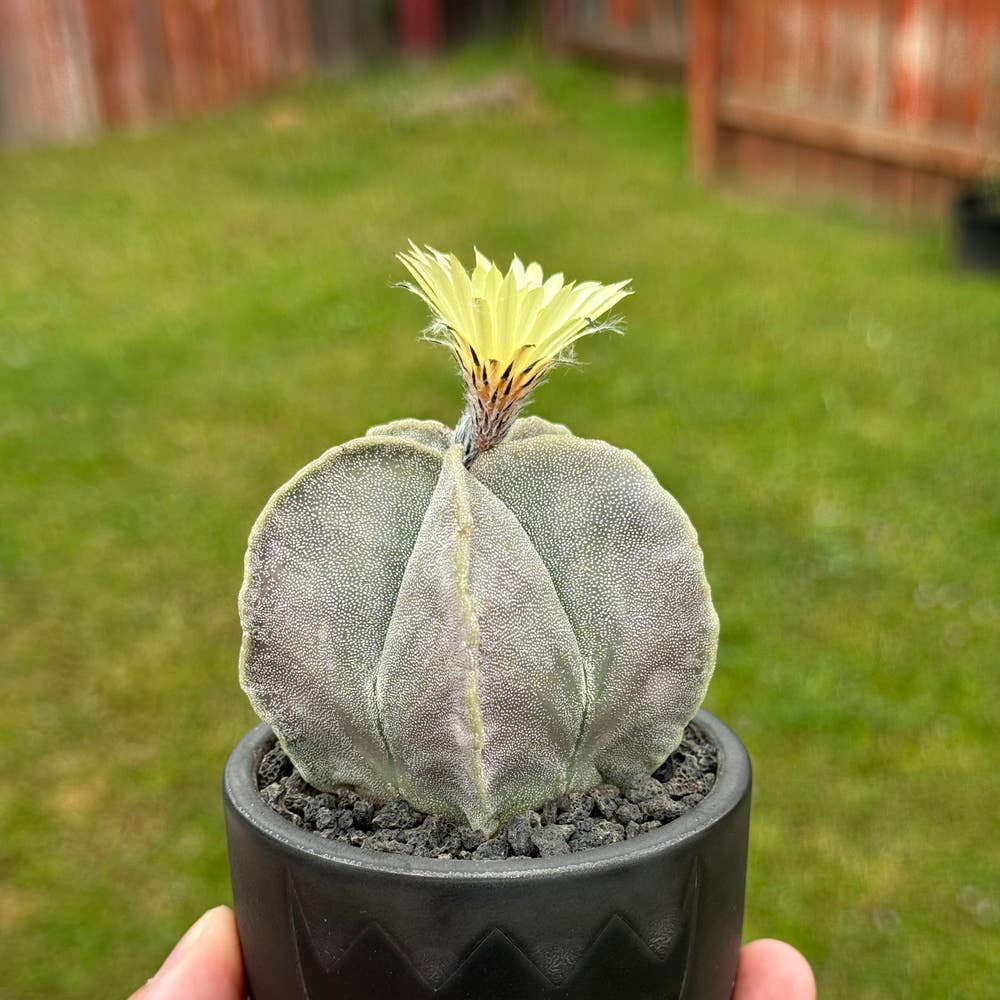
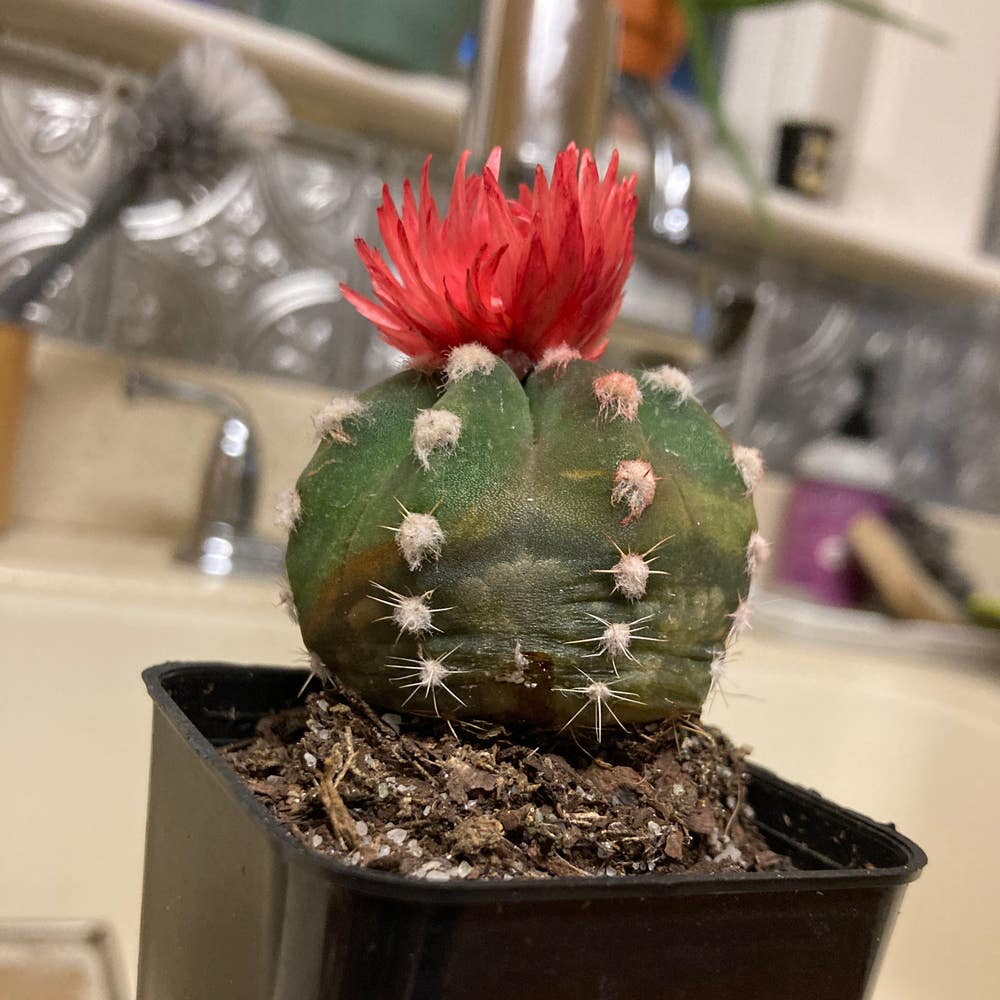
🌵 How Often Do I Need to Water My Bishop's Cap Cactus?
Astrophytum myriostigma
By the Greg Editorial Team
Jun 18, 2024•3 min read
This article was created with the help of AI so we can cover more plants for you. May contain errors. See one? Report it here.
- 🌵 Shriveled skin means water me, yellowing means too much love.
- Seasons change, so does watering - more in summer, less in winter.
- Right pot and soil mix are key for perfect moisture balance.
When to Water: Reading Your Cactus's Thirst Cues
🌵 Spotting Thirsty Cactus Signs
Shriveled and wrinkled skin on your Bishop's Cap Cactus is a silent alarm for thirst. If the plant's once plump pads now resemble a deflated balloon, it's time to give it a drink. The soil's dryness should be your guide; if it feels like a desert, your cactus is likely dreaming of rain.
🚱 Too Much Love: Overwatering Symptoms
Yellowing or softening of the stem is the cactus equivalent of a white flag. Overzealous watering leads to waterlogged tissues, causing your cactus to become as mushy as overcooked vegetables. If the pot feels heavier than usual or the soil smells like a damp basement, you've crossed the line from caretaker to water torturer.

Tailoring Watering to Your Environment
💦 Seasonal Shifts in Watering Needs
Summer's heat cranks up your Bishop's Cap Cactus's thirst—watering becomes a more frequent gig. As winter rolls in, your cactus chills out on the hydration, so you should too. It's a dance with the seasons, and you're leading.
🏡 The Impact of Home Conditions
Your cactus's watering needs are as sensitive to your home's conditions as a soufflé to an oven door slam. Bright light beams a signal for more water, while a cooler, dim room tells you to ease up. Humidity plays its part too—high humidity means less watering, dry air means grab that watering can more often. Keep a vigilant eye on these factors, and you'll keep your cactus happy.

The Perfect Home: Pot and Soil Essentials
🏺 Choosing the Right Pot Size and Material
Selecting the right pot is crucial for Bishop's Cap Cactus care. A pot too snug can restrict root growth, while an oversized one can lead to moisture buildup and root rot. Aim for a pot that's just a size up from your cactus's current home.
Material-wise, terracotta is your ally. Its porous nature allows the soil to dry out more efficiently, reducing the risk of overwatering. Plastic can be used but requires vigilance to prevent waterlogging. Ensure your chosen pot has ample drainage holes to let excess water escape.
🌱 Soil Mix Mastery
Your cactus's soil mix is like its personal hydration station. It needs to strike a balance between retaining enough moisture for the roots to absorb and draining quickly to avoid sogginess. Mix in ingredients like perlite or pumice for improved drainage.
Consider adding coir or peat moss to help the soil retain moisture just long enough for the cactus to drink its fill without becoming waterlogged. The goal is to create a mix that mimics the cactus's natural, arid conditions, providing a well-draining yet supportive environment.

Creating a Watering Schedule That Works
💧 Starting a Routine
Establishing a baseline watering schedule is like setting up a coffee maker the night before; you'll thank yourself later. Start with a general rule of thumb: water when the top inch of soil feels dry. But remember, your Bishop's Cap Cactus is not a one-sip wonder—it craves a personalized touch.
🔄 Observing and Tweaking
Your cactus's needs will evolve—like your taste in music. Pay attention to its subtle signs of thirst or overindulgence. If you notice your cactus playing the drama queen, it's time to tweak the schedule. Keep a log, make adjustments, and soon you'll be in perfect harmony with your spiky friend's hydration needs.
⚠️ Safety First
This content is for general information and may contain errors, omissions, or outdated details. It is not medical, veterinary advice, or an endorsement of therapeutic claims.
Always consult a qualified healthcare professional before using any plant as food, medicine, or supplement.
Never eat any plant (or feed one to pets) without confirming its identity with at least two trusted sources.
If you suspect poisoning, call Poison Control (800) 222-1222, the Pet Poison Helpline (800) 213-6680, or your local emergency service immediately.
Spotted an error? Please report it here.
Ensure your Bishop's Cap Cactus is never thirsty 🌵 with Greg's adaptive watering reminders that consider your home's light and humidity, for a happy, healthy cactus year-round.