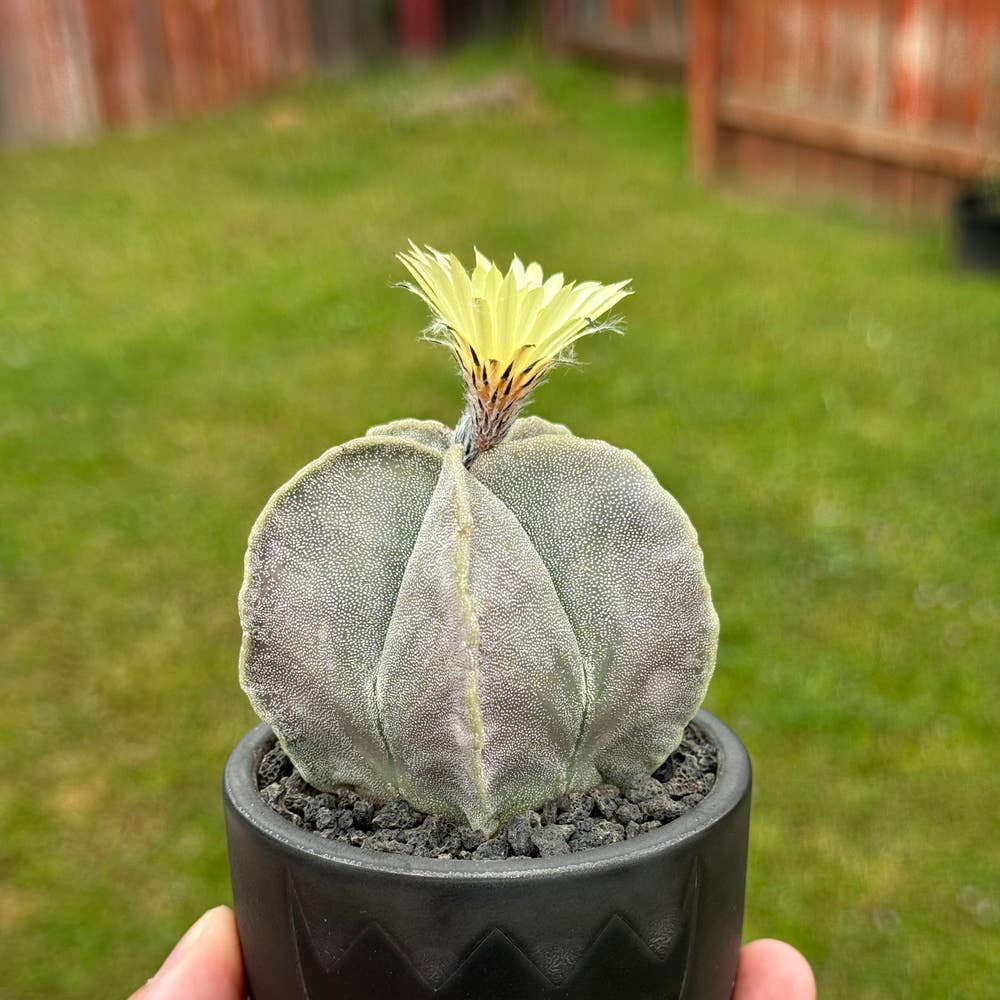
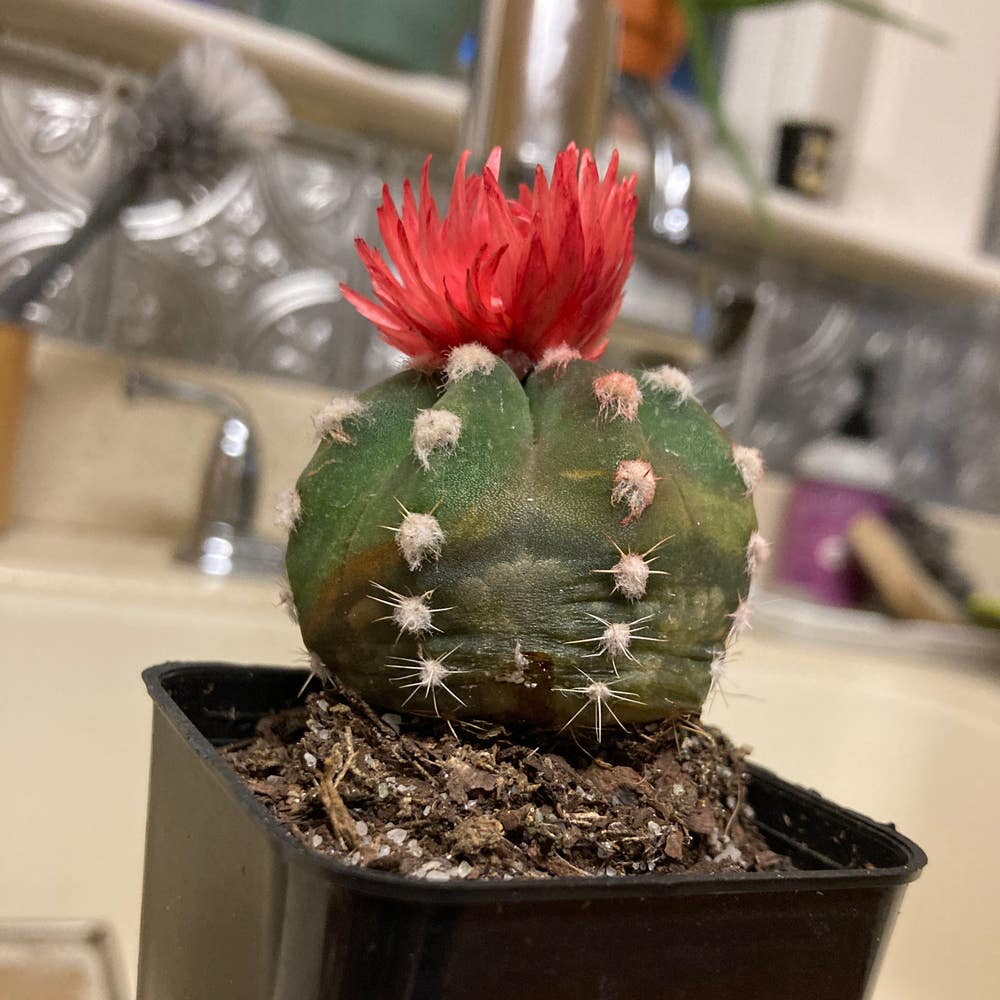
🌵 How Much Humidity Does My Bishop's Cap Cactus Need?
Astrophytum myriostigma
By the Greg Editorial Team
Jun 18, 2024•3 min read
This article was created with the help of AI so we can cover more plants for you. May contain errors. See one? Report it here.
- Ideal humidity is 40-50% for Bishop's Cap Cactus health.
- 🌵 Monitor with a hygrometer, adjust using humidifiers or dehumidifiers.
- Watch for shriveling or mold to gauge humidity needs.
Decoding Humidity for Your Bishop's Cap Cactus
💧 Absolute vs. Relative Humidity: A Quick Run-Through
In the world of cactus care, humidity isn't just a buzzword; it's a lifeline. Absolute humidity is the air's water content in grams per cubic meter—a static figure, impervious to temperature swings. It's the straight-up measure of moisture available to your Bishop's Cap Cactus.
Relative humidity, however, is the percentage of moisture in the air relative to the temperature—think of it as the air's mood swings. For your Bishop's Cap, this is the crucial stat, as it influences the plant's ability to hydrate from the air.
Why Your Local Humidity Matters
Your local humidity isn't just a weather report; it's a roadmap to your cactus's well-being. To navigate this terrain, arm yourself with a hygrometer—your secret weapon in monitoring the air's moisture content.
Remember, it's not just about the numbers; it's about understanding what they mean for your spiky companion. A humidity level that's too high invites fungal gatecrashers, while too low could leave your cactus thirstier than a tourist in the desert. Keep an eye on the hygrometer and adjust your care routine accordingly to hit that sweet spot of 40% to 60% humidity.

The Sweet Spot: Ideal Humidity Levels for Bishop's Cap Cactus
⛅️ When It's Just Right
Bishop's Cap Cactus thrives in a dry climate. The sweet spot for humidity hovers around 40-50% relative humidity. This range is like the cactus's comfort zone, where it can photosynthesize without feeling like it's in a swamp or a desert.
⚠️ Signs of Discontent
Shriveling or wilting indicates your cactus is more parched than a tourist lost in Death Valley. Conversely, if you spot mold or rot, it's a sign you've been a tad too generous with moisture. Keep an eye out for these distress signals and adjust your humidity approach accordingly.

Balancing Act: Adjusting Humidity for Your Cactus
💦 Turning Up the Moisture
Humidity can be a fickle beast for your Bishop's Cap Cactus. If your cactus is giving off Sahara vibes, it's time to dial up the moisture. Pebble trays are your go-to; just ensure the pot isn't taking a bath. A cool-mist humidifier can also offer a helping hand, giving your cactus a subtle boost without turning its world tropical.
🌵 Bringing Down the Dampness
When your cactus's environment feels more like a rainforest than a desert, it's time to cut back on the humidity. Air circulation is your best friend here. Crack a window or get a fan moving to keep the air fresh and dry. If you're dealing with a real moisture monster, a dehumidifier might be your knight in shining armor. And remember, your cactus's pot should feel light as a feather before you even think about watering again.

⚠️ Safety First
This content is for general information and may contain errors, omissions, or outdated details. It is not medical, veterinary advice, or an endorsement of therapeutic claims.
Always consult a qualified healthcare professional before using any plant as food, medicine, or supplement.
Never eat any plant (or feed one to pets) without confirming its identity with at least two trusted sources.
If you suspect poisoning, call Poison Control (800) 222-1222, the Pet Poison Helpline (800) 213-6680, or your local emergency service immediately.
Spotted an error? Please report it here.
Keep your Bishop's Cap Cactus perfectly poised 🌵 by using Greg to monitor and adjust humidity levels for peak plant health.