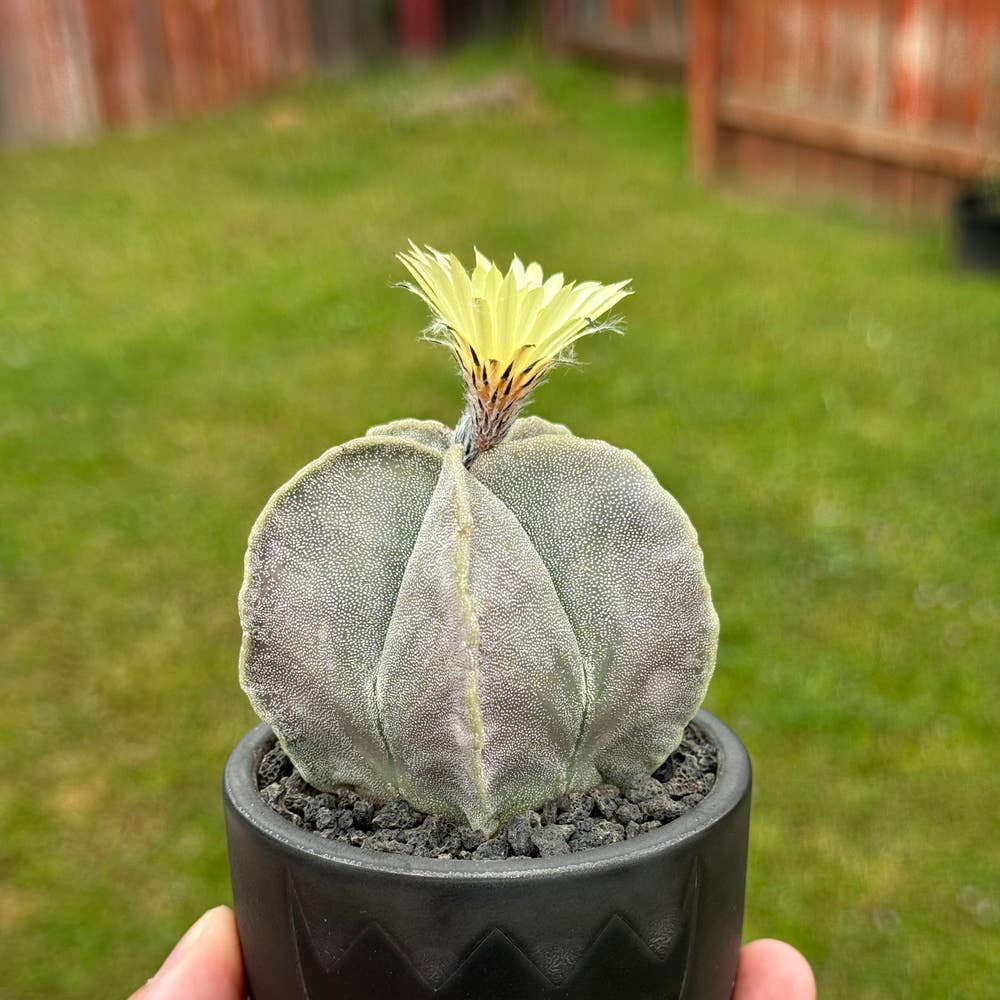
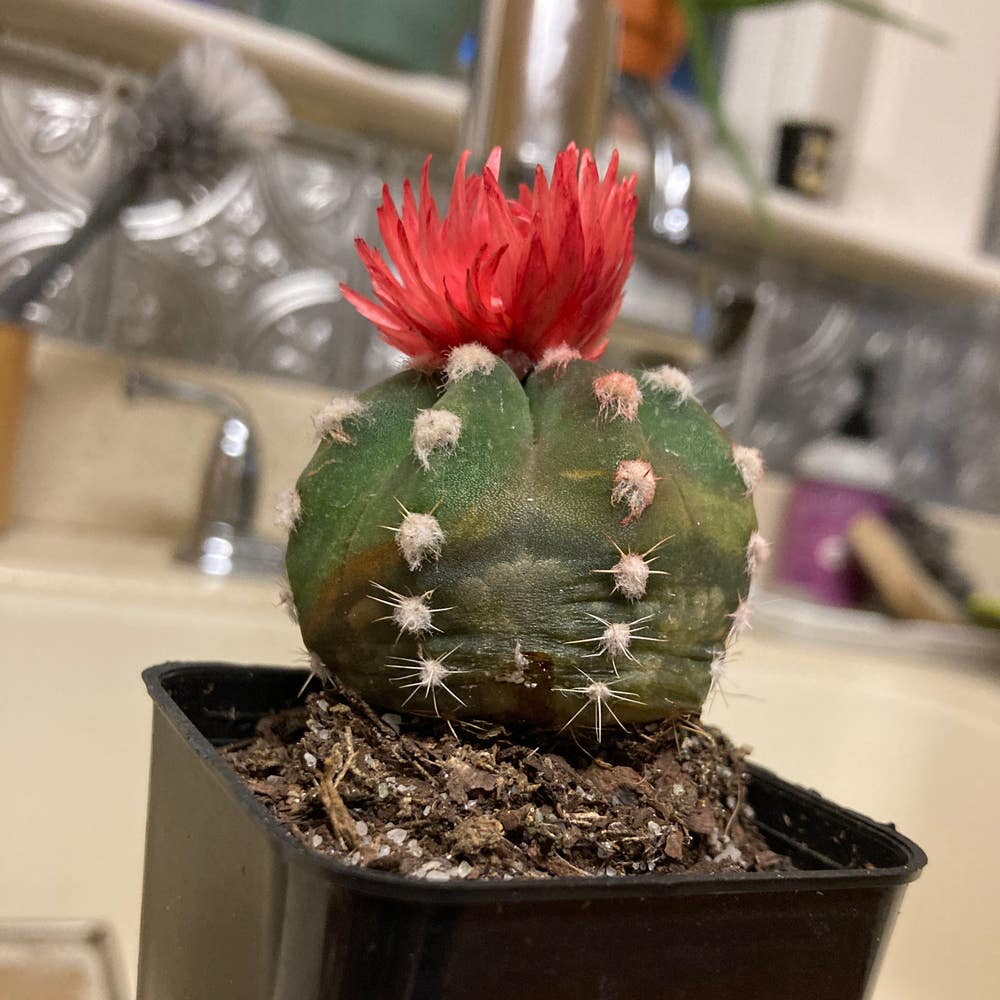
Why Are My Bishop's Cap Cactus Leaves Droopy?
Astrophytum myriostigma
By the Greg Editorial Team
Jun 18, 2024•4 min read
This article was created with the help of AI so we can cover more plants for you. May contain errors. See one? Report it here.
- Droopy leaves signal distress; over/underwatering and poor drainage are common culprits.
- Seasonal care adjustments are necessary; less water in winter, more in summer.
- Right pot and soil with good drainage and light balance are essential for health.
Spotting the Signs of Distress
🌵 Visual Cues of Droopy Leaves
When your Bishop's Cap Cactus starts to look more like a wilted salad than a desert champion, take note. Droopy leaves are the plant's white flag, signaling that all is not well in its spiky world. Look for leaves that have lost their firmness and hang down as if they've given up the fight against gravity.
Other Symptoms to Watch For
Beyond the droop, there are other red flags. Yellowing leaves might be crying out against too much sun, while brown tips could be begging for a break from the watering can. If the leaves are curling like a witch's shoe, it's probably parched. And don't ignore leaves that drop off easier than New Year's resolutions; that's your cue to spring into action. Keep an eye out for small black spots or puffiness—these are the subtle whispers before the full-blown shout for help. Remember, the underside of leaves can harbor secrets like pests or disease, so make that inspection part of your routine. If you spot trouble, don't dawdle—adjust your care faster than a chameleon on a disco ball.

Getting to the Root: Common Causes of Droopiness
🏜️ The Underwatering Conundrum
Thirst is a silent killer in the plant world. When your Bishop's Cap Cactus starts resembling a deflated balloon, it's sending an SOS. Wrinkled leaves are the plant's way of saying, "Water me, please!" Lack of water means the cells lose turgidity, leading to that all-too-sad droop.
🌊 The Overwatering Paradox
Conversely, too much love in the form of water can drown your cactus's roots. Leaves may turn as limp as a soggy sandwich, indicating they're waterlogged. Root rot is the stealthy villain here, suffocating roots and sabotaging your cactus from the ground up.
🚰 The Drainage Dilemma
Poor drainage is like a bad relationship; it's stifling. If water lingers around the roots like unwanted guests, trouble ensues. Ensure your pot has drainage holes and the soil is as free-draining as a colander. This prevents the roots from sitting in moisture, which is about as comfortable for them as a wet pair of socks.

Turning the Tide: Remedial Actions for Droopy Leaves
💧 Fine-tuning your watering routine
Striking the right balance is less about sticking to a schedule and more about a responsive approach. Check the soil's moisture by feeling the top inch—if it's dry, it's time to water. Remember, your cactus's thirst varies with the seasons; water less in winter, more in summer.
Tools and tricks for perfect watering include using a long-spout watering can for targeted hydration, avoiding a soggy situation. If you're tech-inclined, a moisture meter could become your new best friend, ensuring you're hitting that watering sweet spot every time.
🌱 Upgrading your soil and pot setup
Soil amendments for better drainage can be a game-changer. Mix in some perlite or coarse sand to make your soil as loose and airy as a cloud. This isn't just about avoiding water retention; it's about giving those roots the space to breathe.
Choosing the right pot is a balancing act—too big, and you risk waterlogging; too small, and your cactus might feel cramped. Aim for a Goldilocks pot with drainage holes, and consider terra cotta for its breathability. It's like choosing the right pair of shoes for a marathon; comfort is key.

Keeping the Perk: Preventive Strategies
🌞 Adapting to the Environment
Light and temperature are like the yin and yang for your Bishop's Cap Cactus. Too much direct sunlight, and you're at risk of a sunburnt cactus. Too little, and it's like living under a rock—growth gets stunted. Find that sweet spot of bright, indirect light where your cactus can bask without the risk of a crisp.
Temperature-wise, think of your cactus as a Goldilocks guest—not too hot, not too cold. It prefers a stable environment, so avoid placing it near drafty windows or radiators. Sudden temperature swings are as welcome as a snowstorm in July.
🍂 Seasonal Shifts in Care
As the calendar pages flip, your cactus care should pivot like a well-choreographed dance. Winter means easing up on the watering; your cactus is not throwing a thirsty party during the colder months. Come summer, it's ready to drink up a bit more, but don't turn your watering can into a floodgate.
Keep an eye on the humidity too. If your cactus could talk, it would probably ask for a desert vibe, not a tropical rainforest. A little gravel on top of the soil can help maintain moisture levels without going overboard.
Regularly check the soil—if it's as compact as a packed elevator, it's time to loosen things up. Think of it as giving your cactus room to breathe. And remember, a stable environment is the secret sauce to keeping those leaves perky. No drama, just consistent, loving care.
⚠️ Safety First
This content is for general information and may contain errors, omissions, or outdated details. It is not medical, veterinary advice, or an endorsement of therapeutic claims.
Always consult a qualified healthcare professional before using any plant as food, medicine, or supplement.
Never eat any plant (or feed one to pets) without confirming its identity with at least two trusted sources.
If you suspect poisoning, call Poison Control (800) 222-1222, the Pet Poison Helpline (800) 213-6680, or your local emergency service immediately.
Spotted an error? Please report it here.
Ensure your Bishop's Cap Cactus stands tall and thrives 🌵 with Greg's custom care reminders and environmental insights, keeping those leaves perfectly perky all year round.