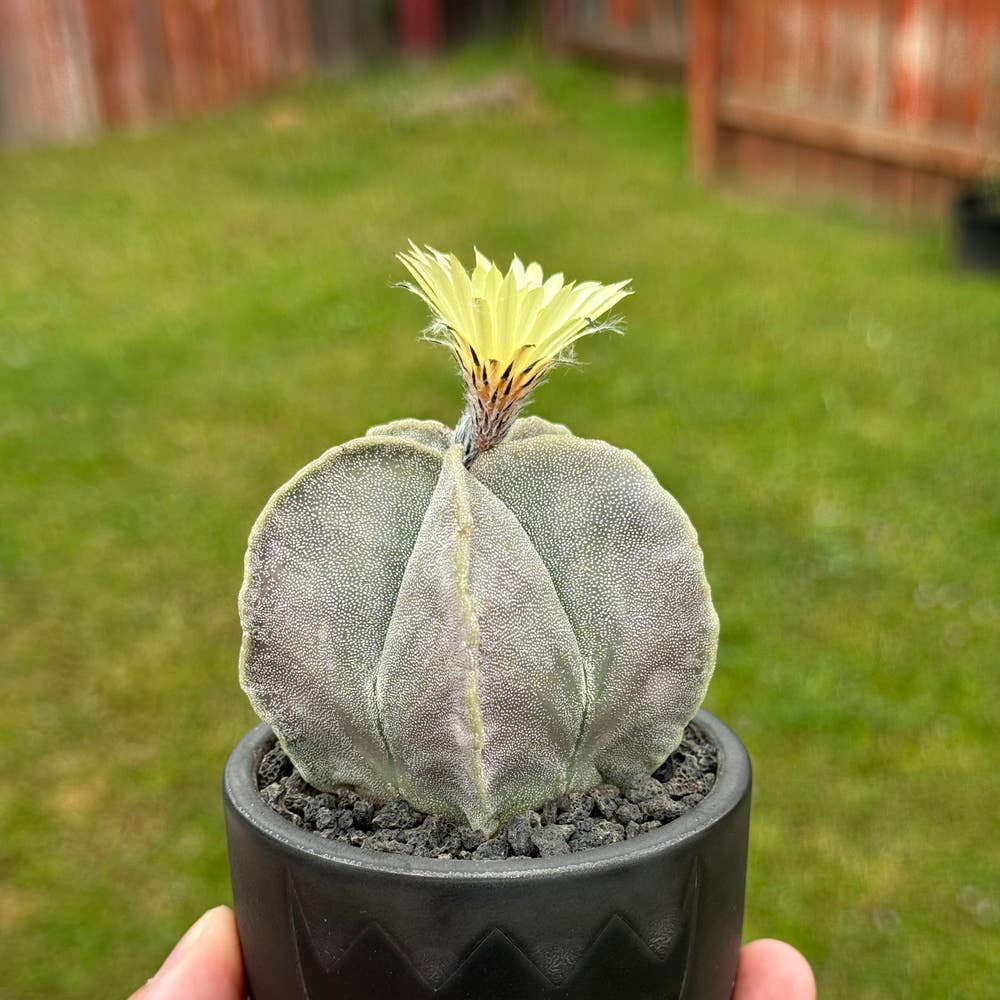
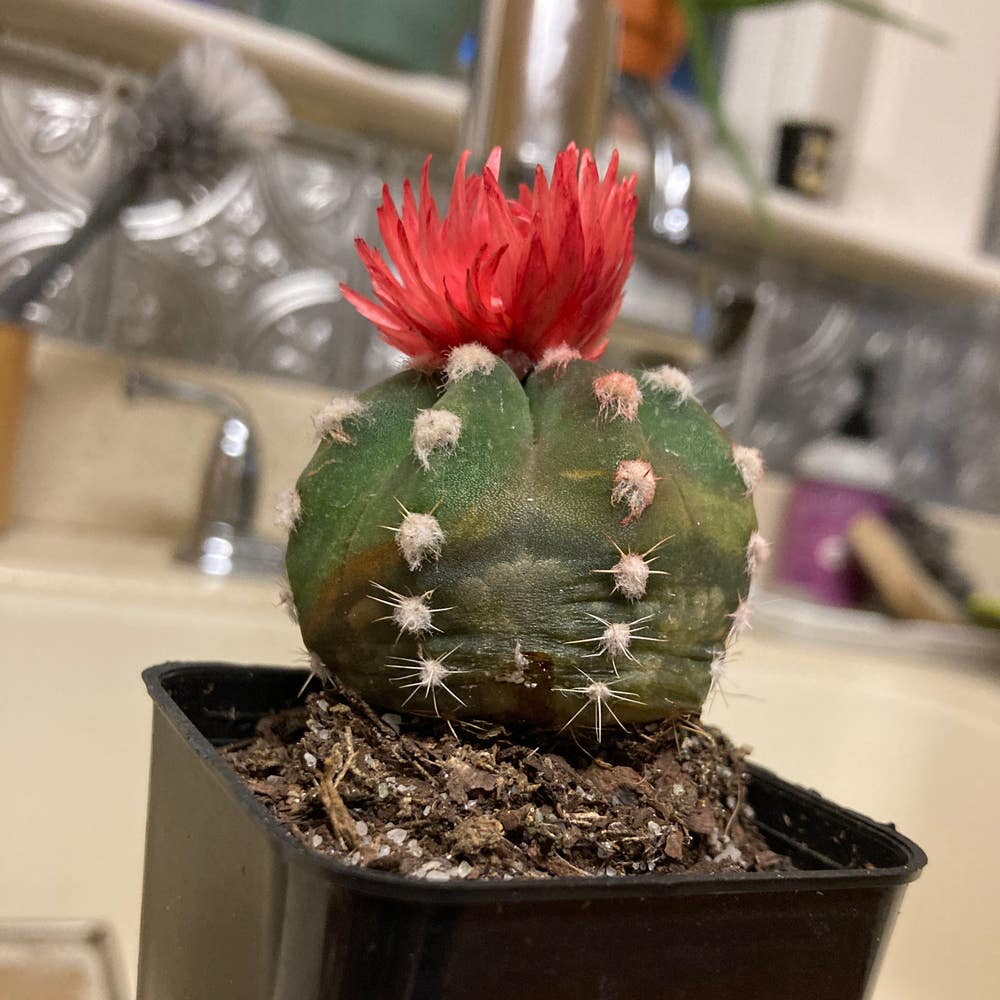
Fertilizing My Bishop's Cap Cactus
Astrophytum myriostigma
By the Greg Editorial Team
Jun 18, 2024•5 min read
This article was created with the help of AI so we can cover more plants for you. May contain errors. See one? Report it here.
- Low-Nitrogen, High-Phosphorus for healthy roots and blooms.
- Fertilize in growing season, not winter; dilute strength to avoid overload.
- Monitor and adjust based on cactus's growth and bloom responses.
Picking the Right Fertilizer for Your Bishop's Cap Cactus
💪 Low-Nitrogen, High-Phosphorus: The Winning Combo
Your Bishop's Cap Cactus craves a low-nitrogen, high-phosphorus diet. Nitrogen spurs foliage growth, but too much can make your cactus lanky and prone to pests. Phosphorus, on the other hand, is the secret sauce for robust roots and stunning blooms. Look for a fertilizer with a lower first number and a higher middle number, like 5-10-5, to hit the sweet spot.
🌱 Organic vs. Synthetic: What's Best for Your Cactus?
The organic versus synthetic debate is a garden variety soap opera. Organic fertilizers are like a slow-cooked meal, releasing nutrients at a leisurely pace and building up your soil's ecosystem. They're less likely to cause burnout, but they might come with a "farm-fresh" scent. Synthetics are the fast food of plant nutrition—quick, potent, and sometimes too much for your cactus to handle. They can lead to a nutrient overdose if you're not careful.
📊 Reading Labels: Understanding Fertilizer Ratios
Navigating fertilizer labels shouldn't require a PhD. The NPK ratio is your roadmap—Nitrogen (N), Phosphorus (P), and Potassium (K). These big three are listed in that order, and their numbers tell you their concentration. For your Bishop's Cap Cactus, you want a blend that's not too nitrogen-heavy. A balanced mix, like 10-10-10, is a safe bet, but keep an eye out for those micronutrients too. They're the unsung heroes, supporting your cactus in ways the big three can't.

Timing is Everything: When to Fertilize
🌱 Growing Season Glow-Up: Fertilizing for Optimal Health
Spring ushers in growth mode for your Bishop's Cap Cactus. It's time to break out the fertilizer—but not just any kind. Low-nitrogen, high-phosphorus blends are your cactus's best friend during this time. Think of it as a health shake for your spiky pal.
Start fertilizing as the days lengthen in spring and continue through summer. Once a month is your golden rule. It's like hitting the gym for your cactus—regular workouts result in those enviable blooms.
❄️ Winter Slumber: When to Hold Back on Fertilizer
Come winter, your cactus is more couch potato than athlete. It's chilling, not growing. This is when you put the fertilizer away. Overdoing it in winter is like feeding salad to a hibernating bear—not only unnecessary but downright disruptive.
No fertilizing in the cold months. It's the plant equivalent of a do-not-disturb sign. Your cactus is focusing on root health, not showing off with flowers. It's a natural pause, so respect it.

The Fertilizing Process: Step by Step
💧 Prepping Your Cactus: Watering Before Feeding
Before you even think about fertilizing, water your Bishop's Cap Cactus. It's like giving your cactus a good breakfast before a workout. You want the soil moist, not soggy, to ensure the roots are receptive to the nutrients they're about to receive.
🌱 Mixing it Right: Diluting Fertilizer for Cactus Safety
Dilution is key. Mix your fertilizer to a quarter or half the strength that the label recommends. This isn't a cocktail; it's more of a light spritzer for your cactus. Overdoing it can lead to nutrient overload, and nobody wants that.
🌱 Application Techniques: Getting to the Root of It
When applying, aim for the base, not the plant itself. You want to feed the soil, not give your cactus a chemical shower. This way, the roots get all the goodness without the risk of leaf burn or other unsightly damage.

Recognizing Too Much of a Good Thing: Over-Fertilization
🚨 Spotting Trouble: Signs Your Cactus is Over-Fertilized
Yellowing or browning of your cactus's tips? This could be nutrient burn, a classic over-fertilization symptom. Wilting or drooping despite proper watering is another red flag; it's like your cactus is saying, "I'm full, thanks!" Stunted growth is a silent scream for help, indicating that your green friend is overwhelmed by excess nutrients.
If you spot a white, crusty layer on the soil, that's the salt buildup from over-fertilization staging a coup. It's not a decorative feature; it's a distress signal. And if your cactus is suddenly more attractive to pests and diseases than a free buffet, it's likely weakened by fertilizer overload.
🛠️ Quick Fixes: Addressing Fertilizer Faux Pas
Caught over-fertilizing? First, stop the fertilizer—full stop. Flush the soil with water to wash away the excess, like a detox for your cactus. If there's a visible crust of fertilizer, gently remove it without turning the pot into an archaeological dig site.
Prune damaged parts to give your cactus a break. Think of it as trimming away the drama to focus on healthy growth. If the situation is dire, consider repotting with fresh soil, like giving your cactus a new lease on life.
Remember, your cactus isn't auditioning for the role of the biggest plant in the room. Less is more when it comes to fertilizing these resilient survivors. Keep an eye out, adjust as needed, and your Bishop's Cap Cactus will thank you by not sending out SOS signals.
Monitoring and Adjusting: Keeping Your Cactus Happy
🌱 Observing Growth and Bloom Responses
Watch your Bishop's Cap Cactus like it's the star of a reality TV show. Growth spurts and floriferous displays are your cues that you've nailed the fertilization routine. If blooms are more of a no-show, it might be time to tweak your approach.
🎛 Fine-Tuning Fertilization Frequency and Amount
Your cactus isn't high-maintenance, but it does crave attention. Adjust the fertilization frequency and amount based on your plant's performance. Think of it as a dial on a soundboard—every slight turn can tune the perfect balance for those lush blooms. Keep the fertilization light; overdoing it is like flooding your cactus's system with junk food.
⚠️ Safety First
This content is for general information and may contain errors, omissions, or outdated details. It is not medical, veterinary advice, or an endorsement of therapeutic claims.
Always consult a qualified healthcare professional before using any plant as food, medicine, or supplement.
Never eat any plant (or feed one to pets) without confirming its identity with at least two trusted sources.
If you suspect poisoning, call Poison Control (800) 222-1222, the Pet Poison Helpline (800) 213-6680, or your local emergency service immediately.
Spotted an error? Please report it here.
Ensure your Bishop's Cap Cactus thrives 🌵 with Greg's custom reminders to perfectly time and dilute fertilization, avoiding over-fertilization for those stunning blooms.