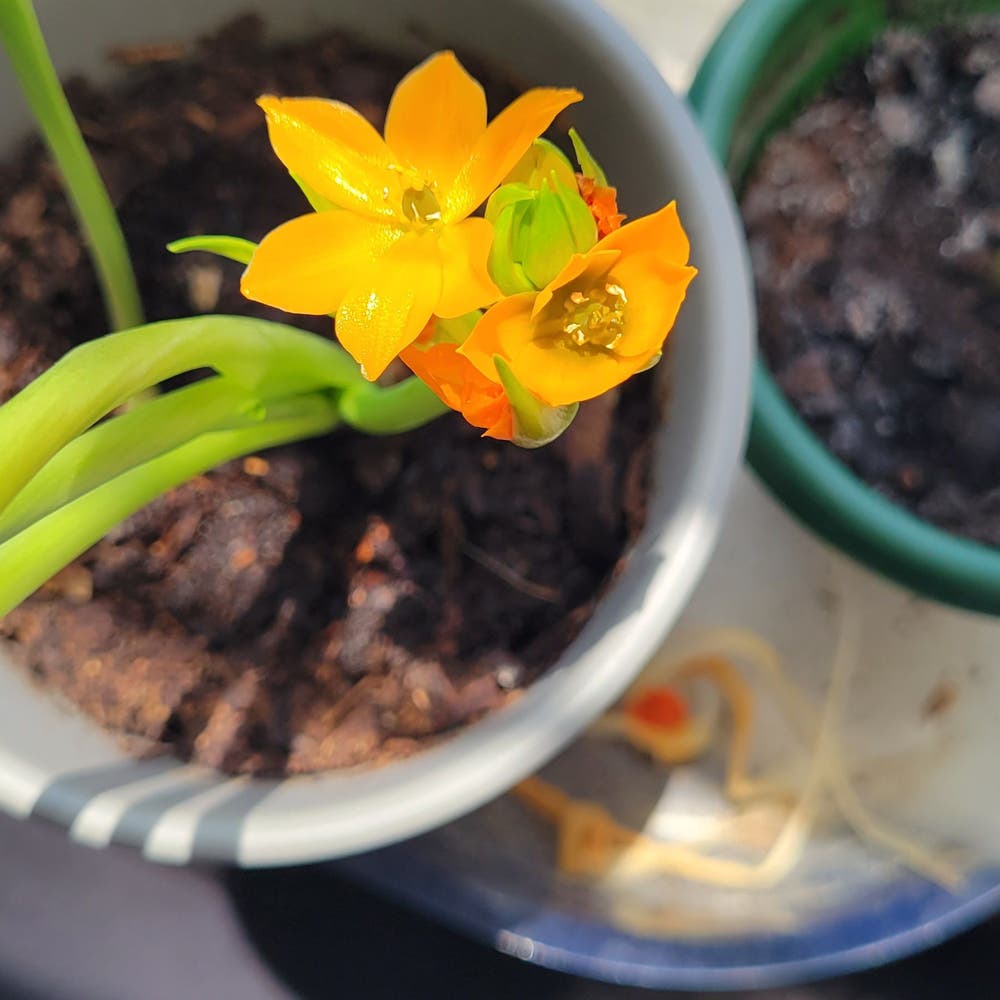
☀️ Why Your Sunstar Flower Leaves Are Turning Yellow
Ornithogalum dubium
By the Greg Editorial Team
Oct 16, 2024•5 min read
This article was created with the help of AI so we can cover more plants for you. May contain errors. See one? Report it here.
Transform your yellowing Sunstar leaves 🌼 into vibrant foliage with essential care tips for thriving plants!
- 💧 Yellow leaves often signal watering issues; balance between overwatering and underwatering is key.
- 🌱 Nutrient deficiencies, especially nitrogen and iron, cause yellowing; regular fertilization helps.
- 🐛 Pests and diseases like root rot can yellow leaves; inspect and treat promptly.
Causes of Yellowing Leaves
💧 Overwatering and Its Effects
Overwatering is a common culprit behind yellowing leaves. Symptoms include wilting, yellowing foliage, and mushy roots, which can signal serious trouble.
Proper soil drainage is crucial to prevent water retention. If your plant's roots are dark, slimy, and emit a foul odor, root rot may have set in.
🌵 Underwatering and Its Symptoms
Underwatering can also lead to yellowing leaves, often accompanied by crispy edges and drooping. Establishing a consistent watering schedule is essential to maintain moisture levels.
🥦 Nutrient Deficiencies
Nutrient deficiencies can manifest in various ways, particularly through yellowing leaves.
🌱 Nitrogen Deficiency
When nitrogen is lacking, older leaves typically yellow first, and growth may become stunted. To remedy this, use a balanced fertilizer enriched with nitrogen.
🟡 Iron Deficiency
Iron deficiency presents differently, with yellowing occurring between leaf veins while the veins themselves remain green. Applying iron chelate or a fertilizer high in iron can help restore balance.
🐛 Pest Infestations
Pests can wreak havoc on your Sunstar flower, leading to yellowing leaves.
🐜 Common Pests
Aphids often leave a sticky residue and cause curled leaves, while spider mites create fine webbing and stippled leaves. Control methods include using neem oil, insecticidal soap, or introducing beneficial insects to your garden.
🍄 Fungal Infections
Fungal infections, particularly root rot, can also cause yellowing leaves.
🌊 Root Rot
Symptoms of root rot include wilting, yellowing leaves, and mushy roots. To prevent this, ensure proper soil drainage and avoid overwatering.
Understanding these causes is the first step in addressing yellowing leaves effectively. Next, we’ll explore how to diagnose these issues accurately.
Diagnosing Yellow Leaves
👀 Visual Signs to Look For
When your Sunstar flower leaves start turning yellow, pay close attention to the color changes. Different yellowing patterns can indicate specific issues, such as nutrient deficiencies or watering problems.
Leaf texture is another crucial factor. Crispy leaves often signal underwatering, while mushy leaves suggest overwatering or root rot.
🔍 Differentiating Between Causes
To effectively diagnose the problem, distinguish between overwatering and nutrient deficiency. Overwatered plants typically exhibit yellowing across the entire leaf, while nutrient deficiencies often show yellowing starting from the older leaves.
Also, consider the position of the yellowing leaves. If older leaves are affected, it might point to nutrient issues, whereas new growth problems could indicate watering inconsistencies.
Understanding these signs will help you take the right steps to restore your plant's health. Next, let’s explore treatment options to address these yellowing leaves effectively.
Treatment Options
🌊 Adjusting Watering Practices
Establishing a consistent watering schedule is crucial for your Sunstar flower. Water when the top inch of soil feels dry to the touch, ensuring your plant receives just the right amount of moisture.
Signs of proper watering include healthy, vibrant leaves and firm roots. If your plant exhibits these traits, you’re on the right track!
🌱 Fertilization Methods for Nutrient Deficiencies
To combat nutrient deficiencies, consider the type of fertilizer you use. Balanced, slow-release fertilizers are great for steady nourishment, while liquid fertilizers can provide a quick boost when needed.
Apply fertilizers every 4-6 weeks during the growing season to keep your Sunstar thriving. Regular feeding helps maintain vibrant foliage and robust growth.
🐞 Pest Control Strategies
Organic Methods
For pest control, start with organic options like neem oil and insecticidal soap. These are safe for indoor plants and effective against common pests.
Introducing beneficial insects, such as ladybugs and lacewings, can also help keep pest populations in check naturally. They’re like tiny guardians for your garden!
Chemical Methods
If pests persist, systemic insecticides may be necessary. Use these sparingly and follow application instructions carefully to ensure safety for both your plant and the environment.
🍄 Addressing Fungal Issues
Improving soil drainage is key to preventing fungal infections. Techniques like adding perlite or sand to your potting mix can enhance drainage and keep roots healthy.
When fungal issues arise, fungicides can be effective. Apply them as directed, and choose the right type for your specific problem to ensure the best results.
With these treatment options, you can effectively address the yellowing leaves of your Sunstar flower. Next, let’s explore preventive measures to keep your plant healthy and vibrant!
Preventive Measures
Best Practices for Watering 🌊
Establishing a consistent watering schedule is crucial for your Sunstar flower. Aim for moist soil without waterlogging, as this balance supports healthy foliage and a robust root system.
Soil Selection and Drainage Tips 🪴
Choosing the right soil is essential. Opt for well-draining potting mixes to prevent excess moisture, and always use pots with drainage holes to facilitate proper water flow.
Regular Inspection for Pests and Diseases 🔍
Conduct weekly inspections to catch any issues early. Look for signs like discoloration, webbing, or sticky residue, which can indicate pest infestations or diseases.
Optimal Light and Temperature Conditions ☀️
Ensure your plant receives adequate light by placing it near windows with bright, indirect sunlight. Additionally, monitor the temperature to maintain a stable environment, which is vital for your plant's health.
By following these preventive measures, you can create an ideal environment for your Sunstar flower, reducing the risk of yellowing leaves and other issues. Next, let’s explore how to adjust care routines based on seasonal changes to keep your plant thriving year-round.
Seasonal Considerations
Adjusting Care Routines Based on Growth Cycles 🌱
As the seasons change, so should your care routine for your Sunstar flower. During the active growth phase in spring and summer, consider increasing your fertilization frequency to support robust growth.
In contrast, as temperatures drop in fall and winter, your plant will require less water. Adjust your watering schedule to prevent overwatering during these cooler months, ensuring your Sunstar thrives year-round.
By tuning into your plant's seasonal needs, you can foster a healthier, more vibrant Sunstar flower. This proactive approach not only enhances growth but also minimizes the risk of yellowing leaves.
⚠️ Safety First
This content is for general information and may contain errors, omissions, or outdated details. It is not medical, veterinary advice, or an endorsement of therapeutic claims.
Always consult a qualified healthcare professional before using any plant as food, medicine, or supplement.
Never eat any plant (or feed one to pets) without confirming its identity with at least two trusted sources.
If you suspect poisoning, call Poison Control (800) 222-1222, the Pet Poison Helpline (800) 213-6680, or your local emergency service immediately.
Spotted an error? Please report it here.
Keep your Sunstar flower vibrant 🌟 by using Greg's tailored watering and nutrient reminders to combat yellowing leaves and promote healthy growth!