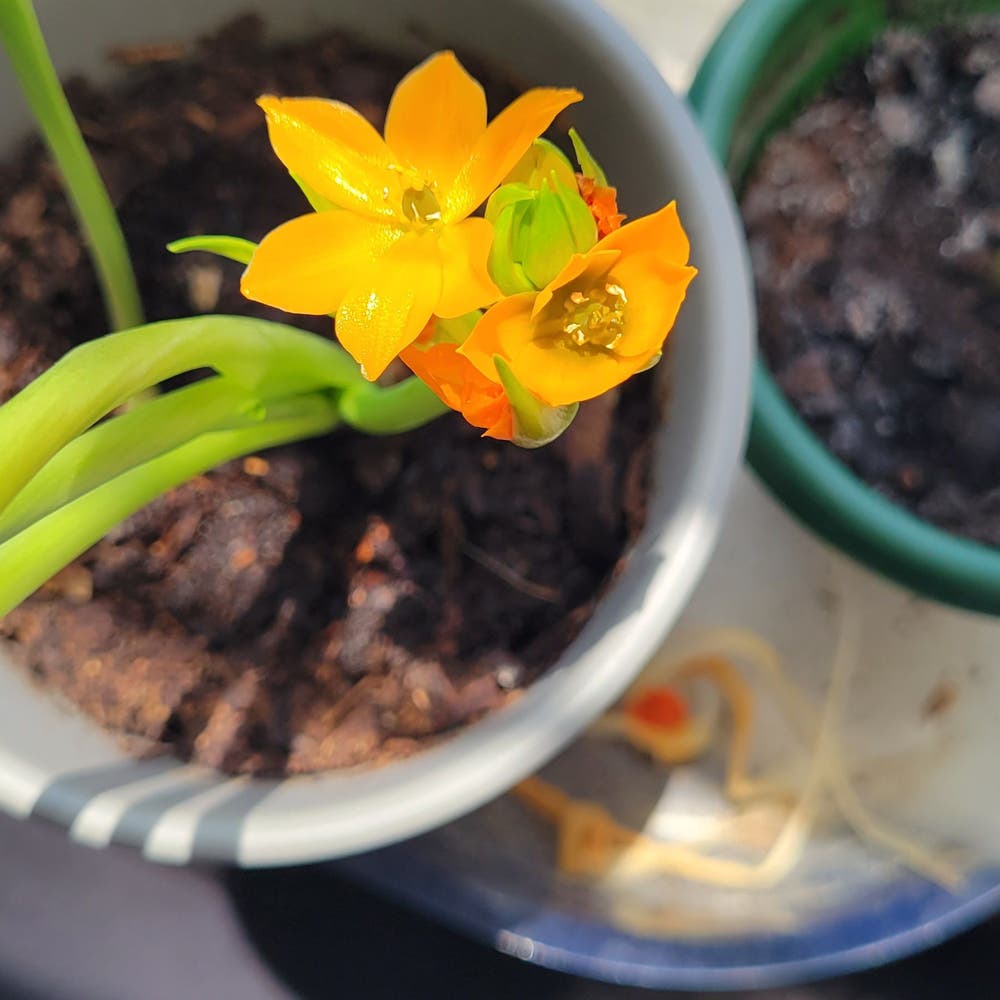
🌞 Why Are My Sun Star Leaves Curling?
Ornithogalum dubium
By the Greg Editorial Team
Jun 18, 2024•3 min read
This article was created with the help of AI so we can cover more plants for you. May contain errors. See one? Report it here.
Unravel the mystery behind your Sun Star's curling leaves and revive their splendor with ease! 🌟🍃
- Under/overwatering causes curling: Adjust watering for Sun Star plant health.
- 🌡️ Temperature and light matter: Keep between 65-75°F and provide indirect light.
- Nutrient balance is crucial: Use balanced fertilizer to prevent deficiencies.
Spotting the Signs: Leaf Curling in Sun Star Plants
🏜️ Underwatering Woes
Crisp edges and upward curling are your Sun Star's way of saying, "I'm parched!" This is a classic distress call for more water.
🚰 Overwatering Overkill
Leaves curling down? Your Sun Star might be drowning in excess moisture. Overwatering can lead to a soggy mess and curled leaves.
🌡️ Temperature Tantrums
Sun Stars aren't fans of dramatic temperature swings. Heat stress can cause leaves to curl up, while cold snaps might make them curl down.
⛅️ Light: Finding the Sweet Spot
Too much light leads to sunburnt curls, while too little leaves your Sun Star reaching and curling. Aim for that Goldilocks level of brightness.
🍽️ The Nutrient Balancing Act
Curled leaves can signal a nutrient deficiency. Keep an eye out for unusual leaf colors and textures that accompany the curling.

Turning Over a New Leaf: Fixing the Curl
💧 Fine-Tuning Watering Habits
Getting watering just right is crucial. Overdoing it leads to root rot, while stinginess can dehydrate your Sun Star. Use the touch test or a moisture meter to gauge the soil's dampness. It should feel like a wrung-out sponge—moist but not soggy. Consider the soak and dry method; water thoroughly, then wait until the top inch of soil is dry before the next watering. Consistency is key, so establish a routine that aligns with your plant's needs.
🌡️ Creating a Cozy Climate
Sun Stars don't appreciate the cold shoulder or a hot-headed environment. They prefer temperatures between 65-75°F (18-24°C). Shield them from drafts and direct heat sources. Think of placing your plant in a spot that's just as comfortable as your favorite armchair, with ample indirect sunlight.
💡 Lighting the Way to Health
Your Sun Star's leaves will tell you if they're getting too much sun or sulking in the shade. Aim for a bright, indirect light setup. Rotate the plant regularly for even exposure. If natural light is scarce, consider a grow light but keep it at a respectful distance to avoid leaf burn.
🍽️ Feeding for Foliage Fitness
Nutrient deficiencies can cause leaves to curl as a cry for help. A balanced, water-soluble fertilizer can perk them up. Apply it monthly during the growing season, diluted to half strength to avoid overfeeding. Remember, it's a snack, not a feast—overzealous fertilizing can harm more than help.

Keeping It Straight: Preventing Future Curling
🌱 Crafting a Care Routine
Consistency is the secret sauce to Sun Star leaf health. Establishing a regular care routine is like setting a rhythm for your plant's life dance.
- Watering: Keep it as regular as the tides. The touch test never lies—damp, not soggy.
- Light: Aim for the Goldilocks zone. Not too much sunbathing, not too much shade lurking.
- Temperature: Avoid the drama of extremes. Think temperate, think stable.
- Fertilization: It's a nutrient tightrope walk. Balance is everything.
👀 Vigilant Plant Parenting
Stay alert. Early signs of curling are your plant's whisper for help—don't wait for the scream.
- Inspection: Make it part of your routine, like checking your phone in the morning.
- Pest Patrol: Keep those critters in check. A healthy plant is a no-bug zone.
- Disease Defense: Quarantine new green buddies and sterilize your tools. Prevention is better than cure.
Remember, your Sun Star plant's leaves are like mood rings, color and texture changes are your heads-up. Keep the care consistent, and those leaves will stay as straight as a sunbeam.

⚠️ Safety First
This content is for general information and may contain errors, omissions, or outdated details. It is not medical, veterinary advice, or an endorsement of therapeutic claims.
Always consult a qualified healthcare professional before using any plant as food, medicine, or supplement.
Never eat any plant (or feed one to pets) without confirming its identity with at least two trusted sources.
If you suspect poisoning, call Poison Control (800) 222-1222, the Pet Poison Helpline (800) 213-6680, or your local emergency service immediately.
Spotted an error? Please report it here.
Keep your Sun Star's leaves perfectly poised 🌟 by letting Greg tailor your watering and lighting schedule to banish curling woes for good.