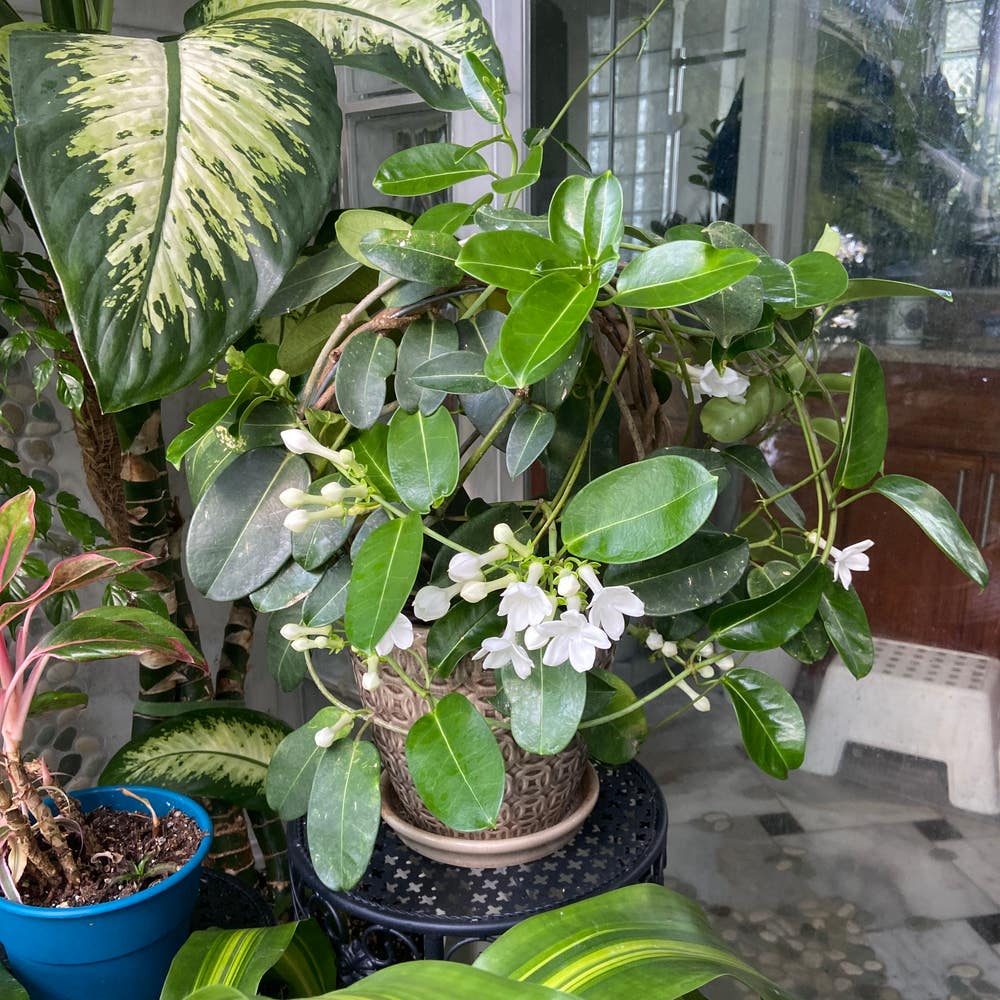
💧 Why Are My Stephanotis Leaves Droopy?
Stephanotis floribunda
By the Greg Editorial Team
Jun 18, 2024•4 min read
This article was created with the help of AI so we can cover more plants for you. May contain errors. See one? Report it here.
- Water wisely: Overwatering and underwatering both lead to droopiness.
- 🌡️ Maintain ideal temps: 70°F-80°F day, 60°F-68°F night for healthy Stephanotis.
- Soil and nutrients matter: Use well-draining soil and balanced fertilizer.
When Water Gets Tricky: Balancing Moisture for Stephanotis
🚰 Signs of Water Stress
Stephanotis plants are drama queens when it comes to water. Overwatering shows up as leaves turning yellow or brown, feeling soft, or even dropping off. The soil will also stay wet for days, like a sponge that can't let go. Underwatering, on the other hand, leaves the leaves wilted, dry, and crispy around the edges, screaming for a drink.
The Right Sip: Watering Your Stephanotis Correctly
To avoid turning your Stephanotis into a botanical sob story, check the soil before watering. Stick your finger in; if the top inch feels like a dry summer day, it's time to water. If it's damp, hold off. Think of it as giving your plant a hydration check-up.
Recovery Steps
If you've loved your Stephanotis a little too much and overwatered it, ease up on the watering and let it dry out. For the underwatered Stephanotis, give it a thorough soak and let it drain. Remember, it's about finding that Goldilocks zone - not too wet, not too dry, just right.

Light and Temperature: Finding the Sweet Spot
⚖️ Too Much or Too Little: Understanding Light Needs
Stephanotis thrives in that Goldilocks zone of lighting. Too much light scorches leaves, leaving them dry and crispy. Too little, and your plant's growth stunts, leaves turning a telltale yellow. To gauge if your plant is getting the right amount, observe the leaf color and presence of burn marks. Adjust its position to secure bright, indirect light—think of it as a shady spot on a sunny day.
🌡️ Keeping It Comfy: Temperature Matters
Temperature is the unsung hero in the Stephanotis saga. Keep it tropical: aim for daytime temperatures between 70°F and 80°F and a cooler 60°F to 68°F at night. Watch for curling leaves—they're your plant's way of saying it's too cold. Avoid temperature swings as if avoiding spoilers for your favorite show. Remember, stability is key—your Stephanotis isn't looking for a thrill ride.

The Ground Beneath: Soil and Roots Health
🚰 Drainage is Key
Well-draining soil is non-negotiable for Stephanotis plants. It's the difference between a thriving plant and a waterlogged mess. To improve soil structure, mix in perlite or peat moss. These amendments act like bouncers, ensuring water retention is balanced with proper aeration. Regularly check your soil's moisture level; if it's consistently soggy, it's time to adjust your watering routine or soil composition. Also, keep those drainage holes clear; a clogged pot is like a dam, and you want a free-flowing river for your plant's roots.
🌱 Root Check
Inspecting roots for health is like a wellness check for your plant. Gently remove the Stephanotis from its pot to check for signs of rot—mushy, brown roots spell trouble. Healthy roots should be firm and white or tan. If you encounter root rot, it's time for action: trim the damaged roots and repot in fresh, well-draining soil. Remember, the right soil and root care are your plant's foundation for those perky leaves we're all aiming for.

Feeding Your Stephanotis: Nutrient Needs and Deficiencies
💡 Spotting the Signs of Starvation
Yellowing leaves or stunted growth in your Stephanotis might not just be a cry for attention—they're red flags for nutrient deficiencies. A soil test can be your best friend here, revealing what's missing from your plant's diet. Look out for older leaves losing their vibrant green or new growth looking as twisted as a bad hair day.
🍽️ The Fertilizer Fix
Choosing the right fertilizer is like picking a multivitamin; it needs to be balanced. A potassium-rich liquid fertilizer is your go-to during the growing season, applied fortnightly from spring to late summer. But don't get heavy-handed—over-fertilizing can lead to nutrient burn, making the leaves look like they've had too much sun. Stick to a schedule, and watch your Stephanotis perk up like it's had a shot of espresso.
Proactive Care: Keeping Stephanotis Leaves Perky
📅 Consistent Care Routine
Establishing a care schedule is crucial to prevent Stephanotis leaves from becoming droopy. Like a well-oiled machine, a routine keeps everything running smoothly.
🕵️♂️ Monitoring and Adjusting
Regularly assess plant health and be prepared to tweak care practices. It's like being a plant's personal trainer, constantly adjusting the regimen to keep it in top shape.
⚠️ Safety First
This content is for general information and may contain errors, omissions, or outdated details. It is not medical, veterinary advice, or an endorsement of therapeutic claims.
Always consult a qualified healthcare professional before using any plant as food, medicine, or supplement.
Never eat any plant (or feed one to pets) without confirming its identity with at least two trusted sources.
If you suspect poisoning, call Poison Control (800) 222-1222, the Pet Poison Helpline (800) 213-6680, or your local emergency service immediately.
Spotted an error? Please report it here.
Revive droopy Stephanotis by letting Greg's custom reminders 🌱 ensure you hit the sweet spot for watering and care, keeping your leaves perfectly perky.