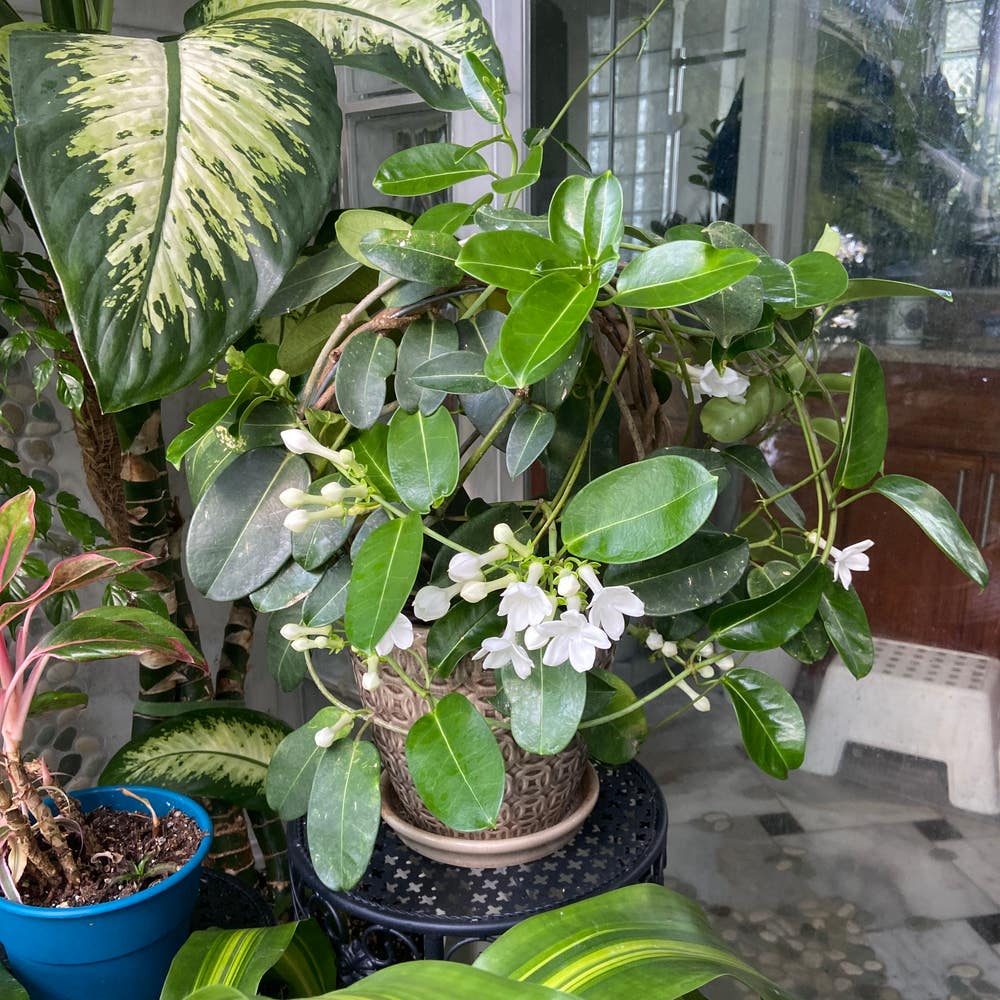
How to Cure Root Rot in Your Madagascar Jasmine 🩹
Stephanotis floribunda
By the Greg Editorial Team
Sep 30, 2024•5 min read
This article was created with the help of AI so we can cover more plants for you. May contain errors. See one? Report it here.
- 💧 Overwatering causes root rot; ensure soil dries out between waterings.
- 🌱 Healthy roots are white; brown or black roots indicate rot.
- 🧼 Disinfect pots and use well-draining soil to prevent future infections.
Causes of Root Rot
Understanding the causes of root rot is crucial for keeping your Madagascar Jasmine healthy. Let's dive into the key factors that contribute to this common issue.
💧 Overwatering
Overwatering is the most significant culprit. When the soil remains too moist, it creates anaerobic conditions that suffocate the roots, leading to decay.
🕳️ Poor Soil Drainage
Next up is poor soil drainage. Compacted or heavy soils trap water, preventing it from flowing freely. This stagnant moisture can quickly lead to root rot.
🍄 Fungal Infections
Fungal infections are another major factor. Pathogens like Pythium and Phytophthora thrive in overly wet conditions, attacking the roots and causing them to rot.
🌬️ Environmental Factors
Lastly, environmental factors play a role. High humidity combined with low air circulation creates a perfect storm for root rot to develop.
By recognizing these causes, you can take proactive steps to protect your plant. Next, we’ll explore how to identify the symptoms of root rot, so you can act quickly if your Madagascar Jasmine shows signs of distress.
Symptoms of Root Rot
Identifying Signs 🌱
Root rot can sneak up on your Madagascar Jasmine, but there are clear signs to watch for. One of the first symptoms is wilting leaves, which can be alarming, especially if you're watering adequately.
Another red flag is yellowing leaves. This often indicates stress and nutrient deficiency, signaling that your plant is struggling.
Root Discoloration 🟤
When you inspect the roots, look for discoloration. Healthy roots should be white or light tan; if you see brown or black roots, it's a strong indication of rot.
Foul Odor 🤢
Lastly, pay attention to any foul odor coming from the soil or roots. A musty smell is a telltale sign that your plant is in trouble and needs immediate attention.
Recognizing these symptoms early can make a significant difference in your plant's recovery. Next, let’s explore how to diagnose root rot effectively.
How to Diagnose Root Rot
Diagnosing root rot in your Madagascar Jasmine is crucial for saving your plant. Here are some effective methods to identify the issue early.
👀 Visual Inspection
Start with a thorough visual inspection of the roots. Look for any discoloration; healthy roots should be white or light tan, while black or mushy roots indicate rot.
💧 Soil Moisture Test
Next, perform a soil moisture test. You can use a moisture meter for accuracy or simply stick your finger into the soil about an inch deep. If it feels wet, your plant might be overwatered.
🚿 Assessing Drainage
Finally, assess the drainage of your pot. Observe how water behaves when you water your plant. If it pools on the surface or takes too long to drain, your pot may not be providing adequate drainage.
By following these diagnostic methods, you can catch root rot early and take action to save your Madagascar Jasmine. Now that you know how to diagnose the problem, let’s explore how to effectively cure root rot.
Curing Root Rot
🛠️ Step-by-Step Treatment Process
Dealing with root rot can feel daunting, but with a clear plan, you can save your Madagascar Jasmine. Follow these steps to effectively cure root rot.
✂️ 1. Remove the Plant from Its Pot
Start by gently loosening the soil around the roots. This step is crucial to avoid further damaging the plant.
🔍 2. Inspect the Roots
Carefully check the roots for any signs of trouble. Trim away any black or mushy roots, as these indicate decay.
🧼 3. Clean the Pot
Next, disinfect the pot to prevent future infections. Use a bleach solution, mixing one part bleach with nine parts water for effective cleaning.
🌱 4. Prepare Fresh Soil
Opt for a well-draining potting mix to promote healthy growth. A cactus mix or a blend with added perlite works wonders.
🌿 5. Repot the Plant
Place your Madagascar Jasmine in the cleaned pot with fresh soil. Ensure the roots are spread out to encourage even growth.
💧 6. Water Sparingly
After repotting, water the plant sparingly. Allow the soil to dry out before the next watering to avoid reintroducing root rot.
By following these steps, you can rejuvenate your Madagascar Jasmine and help it thrive once again. Next, let’s explore how to prevent root rot from occurring in the first place.
Preventing Root Rot
🌱 Soil Types
Choosing the right soil is crucial for your Madagascar Jasmine. Opt for a well-draining potting mix, and consider adding amendments like perlite or sand to enhance drainage.
💧 Watering Techniques
Watering wisely can make all the difference. Allow the top 1-2 inches of soil to dry out between waterings; using the finger test is a simple way to check moisture levels.
🕳️ Pot Drainage
Proper drainage is essential for healthy roots. Ensure your pots have drainage holes, and consider using terracotta pots for their breathability, which helps prevent excess moisture buildup.
By following these best practices, you can significantly reduce the risk of root rot and keep your Madagascar Jasmine thriving. Next, let’s explore how to diagnose root rot effectively.
⚠️ Safety First
This content is for general information and may contain errors, omissions, or outdated details. It is not medical, veterinary advice, or an endorsement of therapeutic claims.
Always consult a qualified healthcare professional before using any plant as food, medicine, or supplement.
Never eat any plant (or feed one to pets) without confirming its identity with at least two trusted sources.
If you suspect poisoning, call Poison Control (800) 222-1222, the Pet Poison Helpline (800) 213-6680, or your local emergency service immediately.
Spotted an error? Please report it here.
Revive your Madagascar Jasmine from root rot with Greg's tailored watering reminders and soil moisture tests, ensuring your plant stays happy and healthy! 🌿