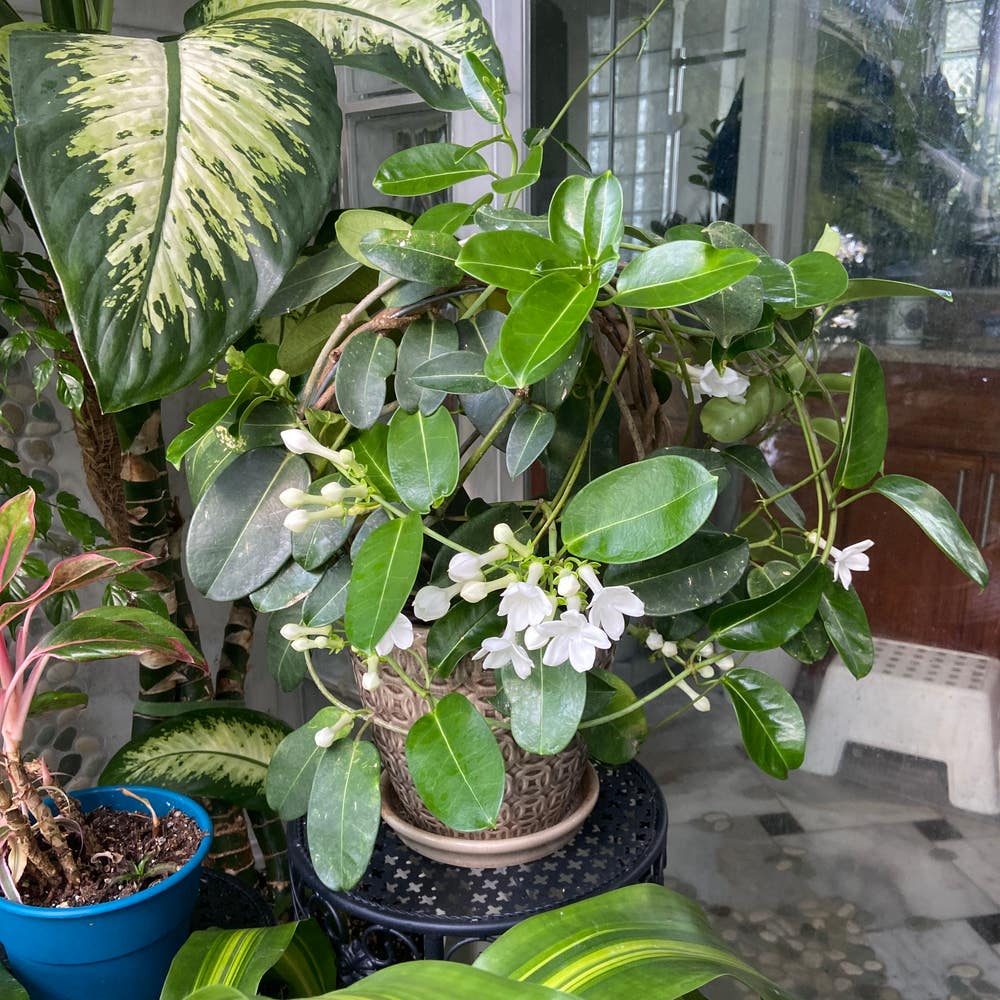
💧 Ultimate Guide to Fixing Droopy Leaves on Madagascar Jasmine
Stephanotis floribunda
By the Greg Editorial Team
Sep 30, 2024•6 min read
This article was created with the help of AI so we can cover more plants for you. May contain errors. See one? Report it here.
- 💧 Droopy leaves indicate overwatering or underwatering; check soil moisture regularly.
- 🌡️ Environmental stress and poor drainage can worsen droopiness; ensure stable conditions.
- 🌿 Humidity levels of 50-70% are ideal; boost humidity for healthier Madagascar Jasmine.
Common Causes of Droopy Leaves
Droopy leaves on Madagascar Jasmine can be a sign of various underlying issues. Understanding these causes is essential for restoring your plant's health.
💧 Overwatering
Excess moisture is a common culprit, leading to root rot. When the roots sit in soggy soil, they can't breathe, causing the leaves to droop.
🚰 Underwatering
On the flip side, insufficient moisture can also stress your plant. If the soil is too dry, the leaves will curl and droop, signaling that your Madagascar Jasmine needs a drink.
🌬️ Environmental Stress
Temperature fluctuations and drafts can create an unstable environment. Sudden changes can shock the plant, resulting in droopy leaves.
🕳️ Soil Drainage Issues
Poorly draining soil retains excess water, exacerbating the risk of root rot. Ensuring your soil has good drainage is crucial for healthy roots and leaves.
🌫️ Humidity Requirements
Madagascar Jasmine thrives in humidity levels between 50-70%. Low humidity can lead to leaf turgor loss, causing tips to brown and leaves to droop.
Recognizing these common causes is the first step toward a healthier plant. Next, we’ll delve into how to diagnose the specific problem affecting your Madagascar Jasmine.
Diagnosing the Problem
🌊 Signs of Overwatering
Overwatering can be a sneaky culprit behind droopy leaves. Look for signs like leaf wilting, where leaves appear limp and soft, indicating they’re drowning.
Yellowing leaves often signal root stress, while root rot symptoms include a foul smell from the soil and mushy roots. If the soil feels consistently wet or soggy, it’s a clear indicator that your Madagascar Jasmine is getting too much water.
💧 Signs of Underwatering
On the flip side, underwatering can also lead to droopiness. If you notice leaf droop, with leaves curling or drooping downwards, your plant might be thirsty.
Check the soil condition; if it’s pulling away from the pot edges, that’s a sign of dryness. Crispy leaf edges and wilting leaves that appear shriveled and lack firmness are also telltale signs of dehydration.
🌫️ Impact of Humidity on Leaf Droop
Humidity plays a crucial role in the health of your Madagascar Jasmine. The ideal humidity levels for optimal growth are between 50-70%.
If the humidity is too low, you might see symptoms like leaf tips browning and curling. Maintaining proper humidity is essential to prevent stress and droop, ensuring your plant thrives.
Understanding these signs will help you take action before the situation worsens. Next, let’s explore effective solutions for droopy leaves.
Solutions for Droopy Leaves
🌊 Adjusting Watering Practices
To revive your Madagascar Jasmine, start by assessing the soil moisture. Use a moisture meter or simply stick your finger into the soil to gauge its dampness.
Next, adjust your watering frequency based on the season and the plant's specific needs. During warmer months, you may need to water more frequently, while in cooler months, reduce the frequency.
When you do water, ensure you do it thoroughly. Water until you see excess draining out of the pot, which helps prevent both overwatering and underwatering.
🕳️ Improving Soil Drainage
Soil composition plays a crucial role in your plant's health. Opt for a well-draining potting mix that includes materials like peat and perlite.
Make sure your pots have drainage holes to allow excess water to escape. If you notice that the soil is compacted or retains too much moisture, consider repotting your plant into fresh, well-draining soil.
💧 Increasing Humidity Levels
Humidity is vital for Madagascar Jasmine. In dry environments, using a humidifier can help maintain the ideal moisture levels.
Another simple trick is to place your pots on trays filled with water and pebbles. This creates a mini-humidity boost around your plants.
Grouping your Madagascar Jasmine with other humidity-loving plants can also help. They’ll create a microclimate that keeps the humidity levels up, promoting healthier growth.
By implementing these solutions, you can effectively address droopy leaves and enhance the overall vitality of your Madagascar Jasmine.
Next, let’s explore some preventative measures to keep your plant thriving long-term.
Preventative Measures
Best Practices for Care 🌱
Regular monitoring is key to keeping your Madagascar Jasmine healthy. Check the soil moisture and leaf health weekly to catch any issues early.
Placement matters too. Avoid drafts and extreme temperature changes to create a stable environment for your plant.
Establish a consistent watering routine based on the plant's needs. This helps prevent both overwatering and underwatering, ensuring your Jasmine thrives.
Seasonal Care Considerations ☀️
Adjust your care routine in winter. Reduce watering frequency during dormancy to prevent root rot.
In summer, increase humidity and watering as temperatures rise. Your plant will appreciate the extra moisture during its active growth period.
Spring is the perfect time for fertilizing and repotting. This supports new growth and keeps your Madagascar Jasmine vibrant.
Monitoring Environmental Conditions 🌡️
Maintain a temperature range between 18°C to 24°C (65°F to 75°F). This is ideal for your plant's growth and overall health.
Humidity checks are essential. Use hygrometers to monitor indoor humidity levels and ensure they stay within the optimal range.
Lastly, ensure your plant gets adequate indirect sunlight. Proper light exposure is crucial for healthy growth and vibrant leaves.
By following these preventative measures, you can keep your Madagascar Jasmine flourishing and minimize the risk of droopy leaves. Next, let’s explore some common misconceptions that can lead to care mistakes.
Common Misconceptions
Myths About Droopy Leaves 🌿
Many plant owners believe that droopy leaves always indicate overwatering. However, both overwatering and underwatering can lead to this issue, making it crucial to assess the situation carefully.
Another common myth is that Madagascar Jasmine doesn't require humidity. In reality, this plant thrives in humid environments, and neglecting this need can lead to droopy leaves and overall poor health.
Clarifying Care Requirements 📚
Understanding the importance of well-draining soil is vital for preventing root rot. A good potting mix allows excess water to escape, keeping roots healthy.
It's also essential to adjust your watering practices based on environmental conditions. Factors like temperature and humidity can significantly impact how much water your Madagascar Jasmine needs.
Recognizing signs of stress early can make a big difference. By observing your plant closely, you can intervene before droopy leaves become a more significant issue.
With these clarifications, you'll be better equipped to care for your Madagascar Jasmine and keep those leaves perky and vibrant. Next, let’s explore some effective solutions for droopy leaves.
⚠️ Safety First
This content is for general information and may contain errors, omissions, or outdated details. It is not medical, veterinary advice, or an endorsement of therapeutic claims.
Always consult a qualified healthcare professional before using any plant as food, medicine, or supplement.
Never eat any plant (or feed one to pets) without confirming its identity with at least two trusted sources.
If you suspect poisoning, call Poison Control (800) 222-1222, the Pet Poison Helpline (800) 213-6680, or your local emergency service immediately.
Spotted an error? Please report it here.
Keep your Madagascar Jasmine's leaves perky 🌿 by using Greg's tailored watering reminders and moisture checks to ensure it thrives in the perfect environment!