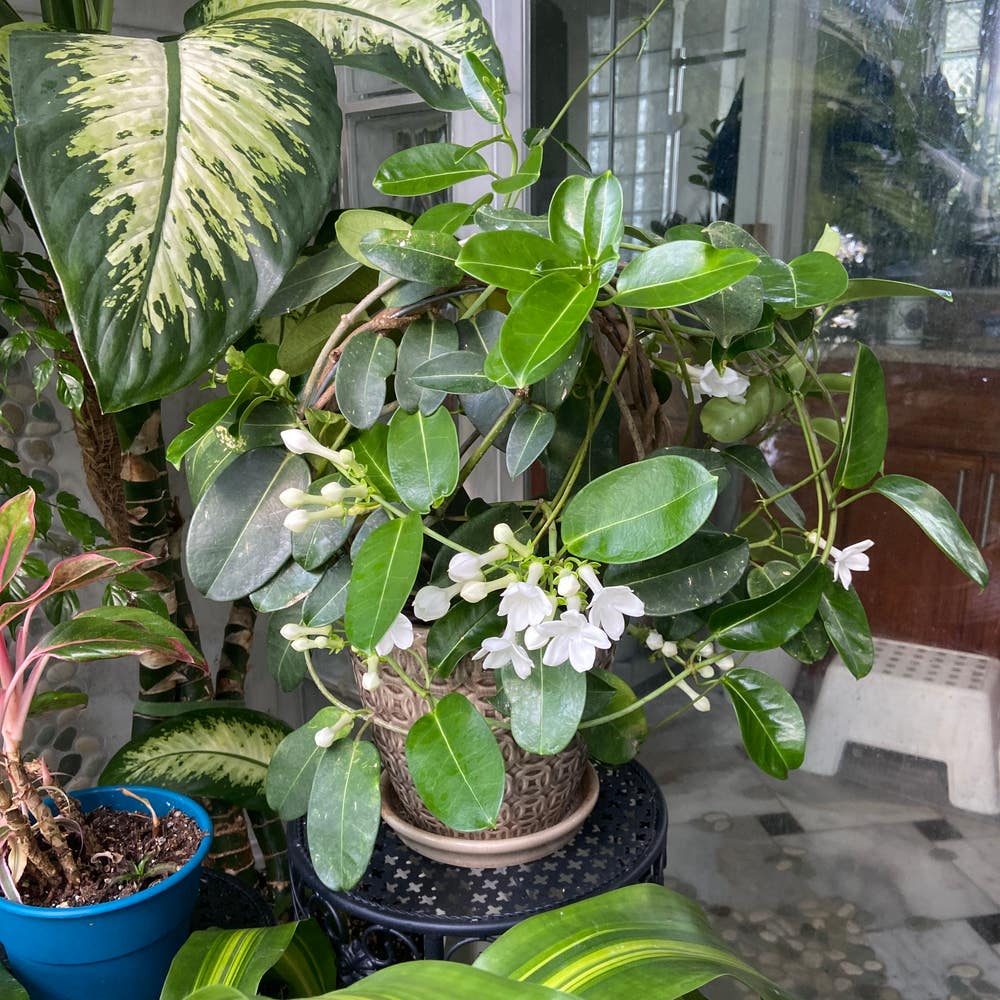
Best Tips for Dropping Leaves on Madagascar Jasmine 🌸
Stephanotis floribunda
By the Greg Editorial Team
Sep 30, 2024•7 min read
This article was created with the help of AI so we can cover more plants for you. May contain errors. See one? Report it here.
- 🌱 Madagascar Jasmine drops leaves due to low humidity, temperature changes, or inadequate light.
- 💧 Overwatering causes root rot; ensure well-draining soil and proper watering techniques.
- 🐛 Regular pest inspections are vital for maintaining Madagascar Jasmine's health and preventing leaf drop.
Causes of Leaf Drop
🌪️ Environmental Stress Factors
Madagascar Jasmine can be sensitive to its surroundings. Common stressors include low humidity, temperature fluctuations, and inadequate light, all of which can lead to leaf drop.
Maintaining a stable environment is crucial for optimal growth. A consistent climate helps your plant thrive and reduces the risk of stress-related issues.
💧 Overwatering and Root Rot
Overwatering is a common pitfall for plant owners. Symptoms include yellowing leaves, wilting, and mushy roots, signaling that your plant is in distress.
Root rot occurs when roots sit in waterlogged soil, leading to decay. Ensuring well-draining soil is vital to prevent water accumulation and protect your plant's health.
🏜️ Underwatering and Drought Stress
On the flip side, underwatering can also cause problems. Signs include dry, crispy leaves and noticeable leaf drop, indicating your plant is thirsty.
Prolonged drought can severely affect plant health, leading to stunted growth. Consistent watering practices are essential to keep your Madagascar Jasmine hydrated and happy.
🐛 Pest Infestations
Pests can wreak havoc on your Madagascar Jasmine. Common culprits include spider mites and aphids, which can cause stippled leaves, webbing, and visible insects.
These pests not only damage leaves but also compromise the overall vitality of the plant. Regular inspections can help catch infestations early, ensuring your plant remains healthy.
🥦 Nutrient Deficiencies
Nutrient deficiencies can also lead to leaf drop. Key nutrients to watch for include nitrogen, potassium, and magnesium, which are essential for robust growth.
Symptoms of deficiencies often manifest as pale leaves and poor growth. Balanced fertilization is crucial to maintaining plant health and preventing these issues.
Understanding these causes can empower you to take proactive steps in caring for your Madagascar Jasmine. By addressing environmental factors, watering practices, pest management, and nutrient needs, you can help your plant thrive and minimize leaf drop.
Diagnosing Leaf Drop Issues
🌧️ Identifying Symptoms of Overwatering
Overwatering is a common issue that can lead to significant leaf drop. Key indicators include yellowing leaves, wilting, and mushy roots.
To check soil moisture levels, insert your finger about an inch into the soil. If it feels wet, hold off on watering.
💧 Recognizing Signs of Underwatering
Underwatering can also cause your Madagascar Jasmine to drop leaves. Look for dry, crispy leaves and noticeable leaf drop.
To assess soil dryness, feel the top inch of soil. If it’s bone dry, it’s time to hydrate your plant.
🐛 Checking for Pests and Diseases
Pests can wreak havoc on your plant's health. Inspect for common pests like spider mites and aphids through visual checks and sticky traps.
Look for stippled leaves, webbing, or visible insects. These signs indicate a pest problem that needs immediate attention.
🌱 Assessing Soil Conditions
Soil conditions play a crucial role in plant health. Check for proper drainage and texture to ensure your plant thrives.
Evaluate soil moisture retention by observing how quickly water drains after watering. Good drainage is essential to prevent root issues.
🌬️ Evaluating Humidity Levels
Madagascar Jasmine thrives in humidity levels between 50% to 70%. Maintaining this range is vital for preventing leaf drop.
You can measure humidity with a hygrometer. If levels are low, consider using a humidifier or pebble trays to boost moisture.
By diagnosing these issues early, you can take proactive steps to keep your Madagascar Jasmine healthy and vibrant. Next, let’s explore effective strategies for preventing leaf drop altogether.
Preventing Leaf Drop
Proper Watering Techniques 💧
Watering your Madagascar Jasmine correctly is crucial for its health. Allow the top inch of soil to dry out before watering again to prevent overwatering.
Using room temperature water is also essential. Cold water can shock the roots, leading to stress and potential leaf drop.
Ideal Humidity Levels 🌫️
Maintaining the right humidity is vital for your plant's well-being. Aim for a humidity level between 50% and 70% to keep your Madagascar Jasmine thriving.
To achieve this, consider using pebble trays, humidifiers, or misting the leaves regularly. Consistent humidity helps prevent leaf drop and promotes lush growth.
Soil Selection and Drainage Tips 🌱
Choosing the right soil is key to preventing waterlogging. Opt for a well-draining potting mix that allows excess moisture to escape.
Ensure your pots have drainage holes. This simple step can make a significant difference in preventing root rot and keeping your plant healthy.
Fertilization Schedule and Nutrient Balance 🌿
A balanced fertilization schedule supports robust growth. Fertilize your Madagascar Jasmine every 4-6 weeks during the growing season.
Using a balanced fertilizer with an appropriate NPK ratio ensures your plant receives essential nutrients. This practice helps maintain vibrant leaves and overall vitality.
Seasonal Care Adjustments 🍂
Adjusting your care routine with the seasons is essential. Monitor changes in light, temperature, and humidity as the year progresses.
Being attentive to these factors helps your Madagascar Jasmine adapt and thrive. Regularly check on your plant's health to catch any issues early.
By implementing these preventive measures, you can significantly reduce the risk of leaf drop. Next, let’s explore how to diagnose specific leaf drop issues effectively.
Treating Leaf Drop Problems
🌊 Steps to Take for Overwatered Plants
Assess Soil Moisture and Drainage: Start by checking if the soil feels soggy. If it does, your plant is likely overwatered.
Remove the Plant from Its Pot: Gently take the plant out of its pot to inspect the roots. Look for any signs of rot, which appear as dark, mushy areas.
Trim Away Any Rotten Roots: Use clean scissors to cut away the affected roots. This helps prevent further damage to the plant.
Repot in Fresh, Dry Soil: Choose a well-draining potting mix and repot your plant. This will give it a fresh start.
Adjust Watering Schedule: Going forward, allow the top inch of soil to dry out before watering again. This helps prevent future overwatering issues.
💧 Remedies for Underwatered Plants
Soak the Plant in Water: Place the pot in a basin of water for about 30 minutes. This allows the soil to absorb moisture.
Gradually Increase Watering Frequency: After rehydrating, start watering more regularly. Monitor how quickly the soil dries out.
Monitor Soil Moisture Levels Closely: Use your finger to check the soil moisture. Aim for a balance—neither too dry nor too wet.
🐞 Pest Control Methods
Organic Pest Control Options: Consider using neem oil or insecticidal soap to tackle pests. These are effective and less harmful to your plant.
Introduce Beneficial Insects: Ladybugs and lacewings can help keep pest populations in check. They’re nature’s little helpers!
Regular Monitoring and Early Intervention: Keep an eye on your plant. Catching pests early can save your Madagascar Jasmine from significant damage.
🌡️ Adjusting Environmental Conditions
Stabilize Temperature and Humidity Levels: Aim for a consistent environment. Use a thermometer and hygrometer to monitor conditions.
Avoid Drafts and Extreme Temperature Changes: Keep your plant away from windows and doors where drafts can occur. Stability is key to plant health.
🌱 Rehabilitating Stressed Plants
Techniques for Reviving Stressed Madagascar Jasmine: Start by pruning any damaged leaves. This helps the plant focus its energy on new growth.
Adjust Care Practices: Ensure you’re meeting the plant’s needs for light, water, and nutrients. Small adjustments can make a big difference.
Provide Optimal Conditions: Create a nurturing environment with the right humidity and temperature.
Patience and Consistent Care: Recovery takes time. Stay committed to your plant’s care, and you’ll see improvement.
By addressing these leaf drop issues, you can help your Madagascar Jasmine thrive again. Next, let’s explore how to prevent these problems from occurring in the first place.
⚠️ Safety First
This content is for general information and may contain errors, omissions, or outdated details. It is not medical, veterinary advice, or an endorsement of therapeutic claims.
Always consult a qualified healthcare professional before using any plant as food, medicine, or supplement.
Never eat any plant (or feed one to pets) without confirming its identity with at least two trusted sources.
If you suspect poisoning, call Poison Control (800) 222-1222, the Pet Poison Helpline (800) 213-6680, or your local emergency service immediately.
Spotted an error? Please report it here.
Keep your Madagascar Jasmine leafy and lush 🌱 by using Greg's tailored watering reminders and humidity tips to combat leaf drop and promote healthy growth!