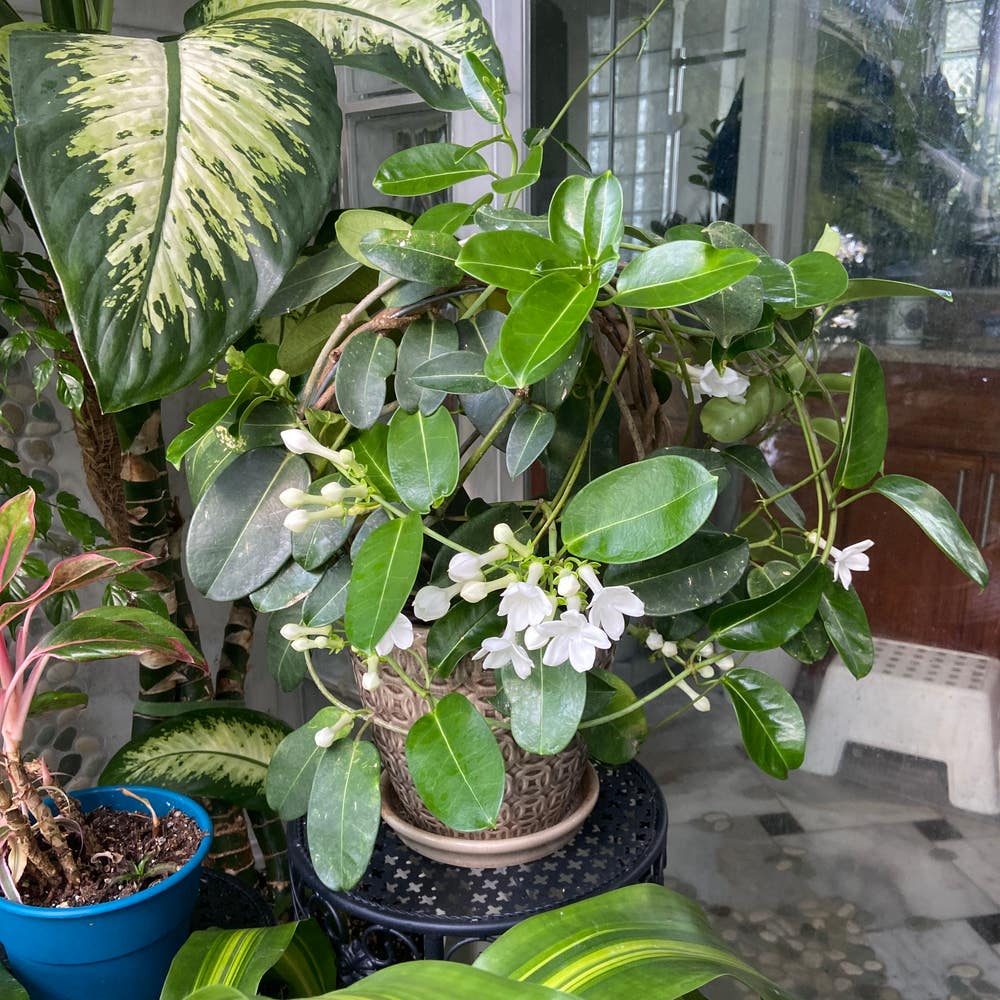
Dealing with Bugs on Your Madagascar Jasmine 🐞
Stephanotis floribunda
By the Greg Editorial Team
Sep 30, 2024•5 min read
This article was created with the help of AI so we can cover more plants for you. May contain errors. See one? Report it here.
- 🕷️ Identify pests like spider mites and aphids by checking for webbing and curling leaves.
- 🌱 Regular maintenance and inspections enhance Madagascar Jasmine's natural defenses against pests.
- 🐞 Introduce natural predators like ladybugs for effective, eco-friendly pest control.
Common Pests
🕷️ Spider Mites
Identification
Spider mites are tiny, spider-like creatures often lurking on the undersides of leaves. Look for fine webbing and stippled leaves as telltale signs of their presence.
Damage Caused
These pests can cause leaves to turn yellow and drop prematurely. If left untreated, they may lead to overall plant decline.
Treatment Options
For chemical solutions, consider using acaricides specifically targeting spider mites. Alternatively, organic options like neem oil or insecticidal soap can be effective; increasing humidity around the plant also helps.
🐢 Scale Insects
Identification
Scale insects appear as small, waxy bumps on stems and leaves, often showing up as white or brown patches. Their presence can be subtle but damaging.
Damage Caused
These pests secrete honeydew, resulting in sticky leaves. They weaken the plant by sucking sap, which can hinder growth.
Treatment Options
Chemical treatments include systemic insecticides. For an organic approach, use rubbing alcohol on a cotton swab to remove scales, or introduce natural predators like ladybugs.
❄️ Mealybugs
Identification
Mealybugs are identifiable by their white, cotton-like masses on leaves and stems, often found in leaf axils. Their fluffy appearance can be deceiving.
Damage Caused
They cause yellowing leaves and stunted growth, and can lead to sooty mold due to honeydew secretion.
Treatment Options
Chemical treatments involve insecticidal sprays. For organic solutions, neem oil or a mixture of water and dish soap can work wonders, along with manual removal using a cotton swab.
🐜 Aphids
Identification
Aphids are small, soft-bodied insects that can be green, black, or brown. They often cluster on new growth, making them easy to spot.
Damage Caused
These pests cause curling leaves and stunted growth, and they can transmit plant viruses, posing a significant threat to your Madagascar jasmine.
Treatment Options
For chemical control, broad-spectrum insecticides are effective. Alternatively, introduce beneficial insects like ladybugs or use insecticidal soap for an organic solution.
🦋 Whiteflies
Identification
Whiteflies are small, white, moth-like insects that flutter up when disturbed. They typically hide on the undersides of leaves.
Damage Caused
These pests can cause yellowing leaves and reduced vigor, and they may lead to sooty mold from honeydew secretion.
Treatment Options
Chemical options include insecticides specifically targeting whiteflies. For organic methods, yellow sticky traps and insecticidal soap can help manage their population.
Understanding these common pests is crucial for maintaining the health of your Madagascar jasmine. By identifying them early and choosing the right treatment options, you can keep your plant thriving and beautiful.
Pest Resistance
Natural Resistance Characteristics 🌿
Madagascar Jasmine boasts moderate resistance to pests, thanks to its thick leaves and fragrant oils. This natural defense mechanism makes it generally resilient against many common pests that might otherwise wreak havoc on less fortified plants.
Benefits of Resilience 💪
The plant's robust structure not only helps it fend off pests but also contributes to its overall health. This resilience means that with proper care, your Madagascar Jasmine can thrive even in the face of potential threats.
Importance of Maintenance 🧹
While the plant has its defenses, regular maintenance is crucial. Keeping the plant healthy through optimal watering, light, and nutrition enhances its natural resistance, making it even less appealing to pests.
Conclusion 📜
Understanding the natural resistance of Madagascar Jasmine empowers you to take proactive steps in its care. By fostering a healthy environment, you can enjoy a flourishing plant that stands strong against common pests.
Next, let’s explore effective prevention strategies to keep your Madagascar Jasmine thriving and pest-free.
Prevention Strategies
🛡️ Preventative Measures
Regular inspections are your first line of defense against pests. Check your Madagascar Jasmine frequently for any early signs of trouble, like discoloration or unusual spots.
Maintaining optimal growing conditions is equally crucial. Ensure your plant has the right light, water, and nutrients to thrive, as a healthy plant is less likely to attract pests.
🧼 Plant Hygiene Tips
Keeping your plant clean can make a significant difference. Wipe down the leaves with a damp cloth to remove dust and any lurking pests.
Additionally, rotating your plants regularly helps ensure they receive even light exposure. This simple practice can promote balanced growth and reduce the risk of pest infestations.
By implementing these strategies, you can create a healthier environment for your Madagascar Jasmine, making it less appealing to unwanted visitors. Next, let’s explore general pest management techniques to keep your plant thriving.
General Pest Management
🌱 Integrated Pest Management (IPM) Principles
Integrated Pest Management (IPM) is your go-to strategy for keeping your Madagascar Jasmine thriving. This approach combines cultural, biological, and chemical methods to create a balanced ecosystem that effectively controls pests.
Cultural practices include maintaining optimal growing conditions, such as proper watering and light exposure. Biological methods involve introducing beneficial insects, while chemical options should be used as a last resort to minimize harm to the environment.
🔍 Importance of Early Detection
Early detection is crucial in pest management. Regularly monitoring your plants allows you to catch infestations before they escalate.
Quick action can significantly minimize damage and prevent pests from spreading to other plants. Make it a habit to inspect your Madagascar Jasmine frequently, ensuring it remains healthy and vibrant.
By focusing on these principles, you can cultivate a resilient plant that stands strong against pests. This proactive approach not only protects your Jasmine but also enhances your gardening experience.
Distinguishing Between Similar Pests
🕵️♂️ Identification Tips
Identifying pests on your Madagascar Jasmine can be tricky. Start by observing the size, color, and location of the pests on the plant.
Using a magnifying glass can significantly enhance your ability to spot these tiny invaders. This tool helps you see details that are otherwise easy to miss.
🖼️ Visual Cues
To accurately identify pests, compare their features with online pest pictures. This can help you confirm what you're dealing with.
Pay attention to the specific damage patterns associated with each pest type. Different pests leave unique signs, making it easier to pinpoint the problem.
Understanding these identification tips and visual cues will empower you to take action swiftly. Early detection is key to keeping your Madagascar Jasmine healthy and thriving.
⚠️ Safety First
This content is for general information and may contain errors, omissions, or outdated details. It is not medical, veterinary advice, or an endorsement of therapeutic claims.
Always consult a qualified healthcare professional before using any plant as food, medicine, or supplement.
Never eat any plant (or feed one to pets) without confirming its identity with at least two trusted sources.
If you suspect poisoning, call Poison Control (800) 222-1222, the Pet Poison Helpline (800) 213-6680, or your local emergency service immediately.
Spotted an error? Please report it here.
Keep your Madagascar Jasmine thriving and pest-free 🌱 with Greg's tailored care reminders and pest identification tools that empower you to act swiftly against any bug invasion!