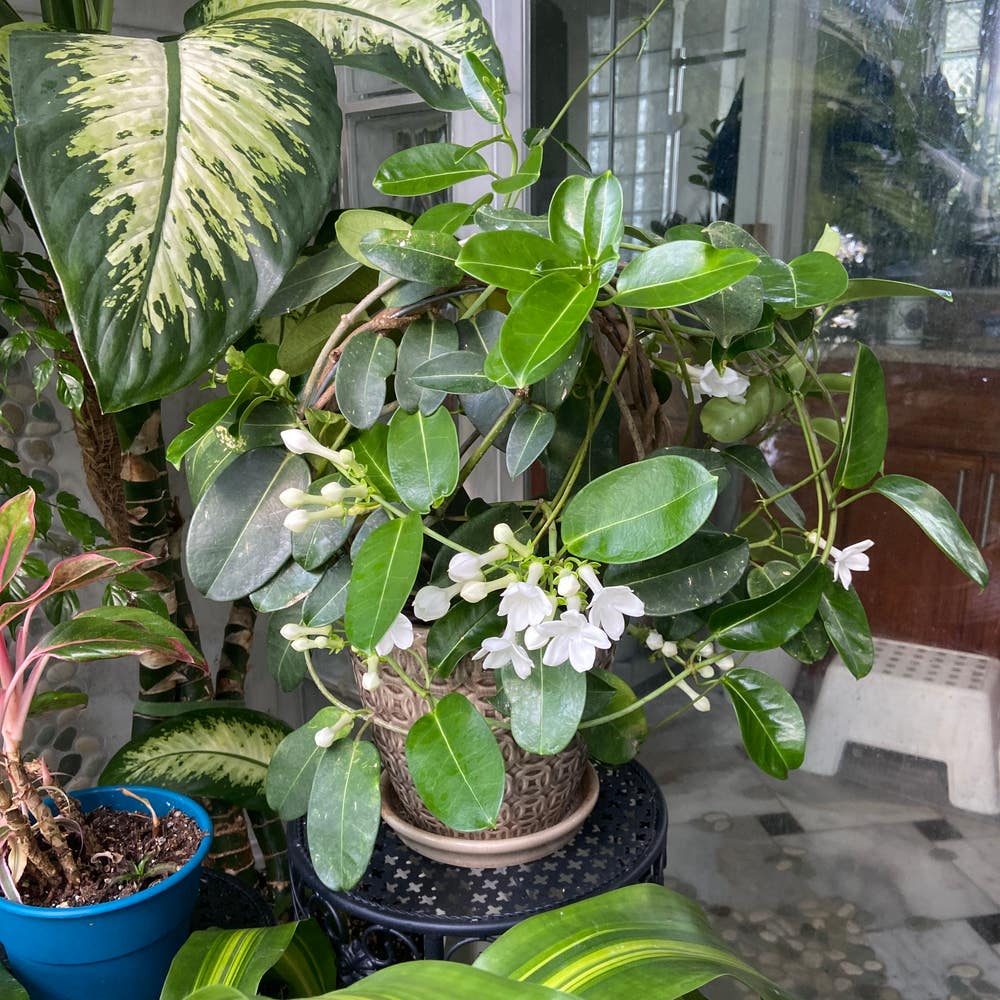
Is Direct Sunlight Good for My Stephanotis?
Stephanotis floribunda
By the Greg Editorial Team
Jun 18, 2024•3 min read
This article was created with the help of AI so we can cover more plants for you. May contain errors. See one? Report it here.
- 🌿 Bright, indirect light is ideal for Stephanotis, like a forest canopy.
- 🌞 Morning sun is best; avoid harsh midday rays with sheer curtains.
- 🧭 Window direction matters for optimal Stephanotis growth and health.
Stephanotis Sunlight Needs: A Delicate Dance
⛅️ Stephanotis Sunlight Preferences
In the wild, Stephanotis thrives under the dappled light of forest canopies. Mimicking this environment at home means providing bright, indirect light. The sweet spot? A place where sunbeams are softened, like behind a sheer curtain or just out of the sun's direct kiss.
⚠️ Signs of Too Much Sun
Sunburned leaves are the Stephanotis' cry for help, showing up as crispy, brown edges. If your plant looks like it's been in a tanning bed too long, it's time to act. Immediate steps include moving it to a shadier spot and ensuring it's not the plant equivalent of a sunbather without sunscreen.

Protecting Stephanotis from the Harsh Sun
🌞 Creative Shading Techniques
Sheer curtains are the unsung heroes in the plant world, diffusing that harsh sunlight like a pro. Think of them as sunglasses for your Stephanotis. But don't just hang them up and forget about it; adjusting the curtains as the sun moves ensures your plant gets the light it craves without the burn.
Positioning is everything. Sometimes, you've got to channel your inner chess master and move your Stephanotis to a spot that's just right. It's not just about dodging the sunbeams; it's about giving your plant a strategic advantage in the game of growth.
🌞 Sunlight Intensity Throughout the Day
Timing is key. Let your Stephanotis soak up the morning sun when it's gentle and welcoming. As the day progresses and the sun turns from friend to foe, relocate your plant to a spot with softer light.
Seasons change, and so should your plant care strategy. When summer cranks up the heat, your Stephanotis might need extra shielding. Come winter, you might find yourself chasing every sliver of sunlight. Stay on your toes and adapt to keep your green buddy happy year-round.

Windows: The Gateways of Light for Stephanotis
💡 Direction Matters: North, South, East, or West?
Your Stephanotis isn't just picky about its potting mix; window direction is a big deal too. In the Northern Hemisphere, south-facing windows are the VIP lounges of sunlight. They're the prime real estate for plants that love a good tan. But if you're chilling in the Southern Hemisphere, it's the north-facing windows that are soaking up the sun's glory.
Adjusting Stephanotis placement is crucial, depending on where you are on the globe. A north-facing window might be the plant's zen zone if you're getting too much heat from the south. East or west? They're the middle ground, offering a mix of light without the intensity of a midday sun showdown.
🌞 The Balancing Act: Direct Sun vs. Bright Indirect Light
Finding the perfect spot for your Stephanotis is like choosing the right seat in a movie theater. Too close and you're overwhelmed; too far and you're squinting. Bright indirect light is the sweet spot. An east-facing window serves up a breakfast of gentle morning light, while west-facing ones dish out an afternoon tea of sunshine.
South-facing windows might require a sheer curtain cameo to soften the harsh rays. And if you're stuck with a north-facing window, don't despair. It's the underdog that can still offer a consistent, albeit softer, light buffet for your leafy friend. Just remember, like all good things in life, it's all about balance.

⚠️ Safety First
This content is for general information and may contain errors, omissions, or outdated details. It is not medical, veterinary advice, or an endorsement of therapeutic claims.
Always consult a qualified healthcare professional before using any plant as food, medicine, or supplement.
Never eat any plant (or feed one to pets) without confirming its identity with at least two trusted sources.
If you suspect poisoning, call Poison Control (800) 222-1222, the Pet Poison Helpline (800) 213-6680, or your local emergency service immediately.
Spotted an error? Please report it here.
With Greg's PlantVision, you can perfectly position 📍 your Stephanotis to bask in the ideal balance of light, ensuring vibrant growth without the risk of sunburn.