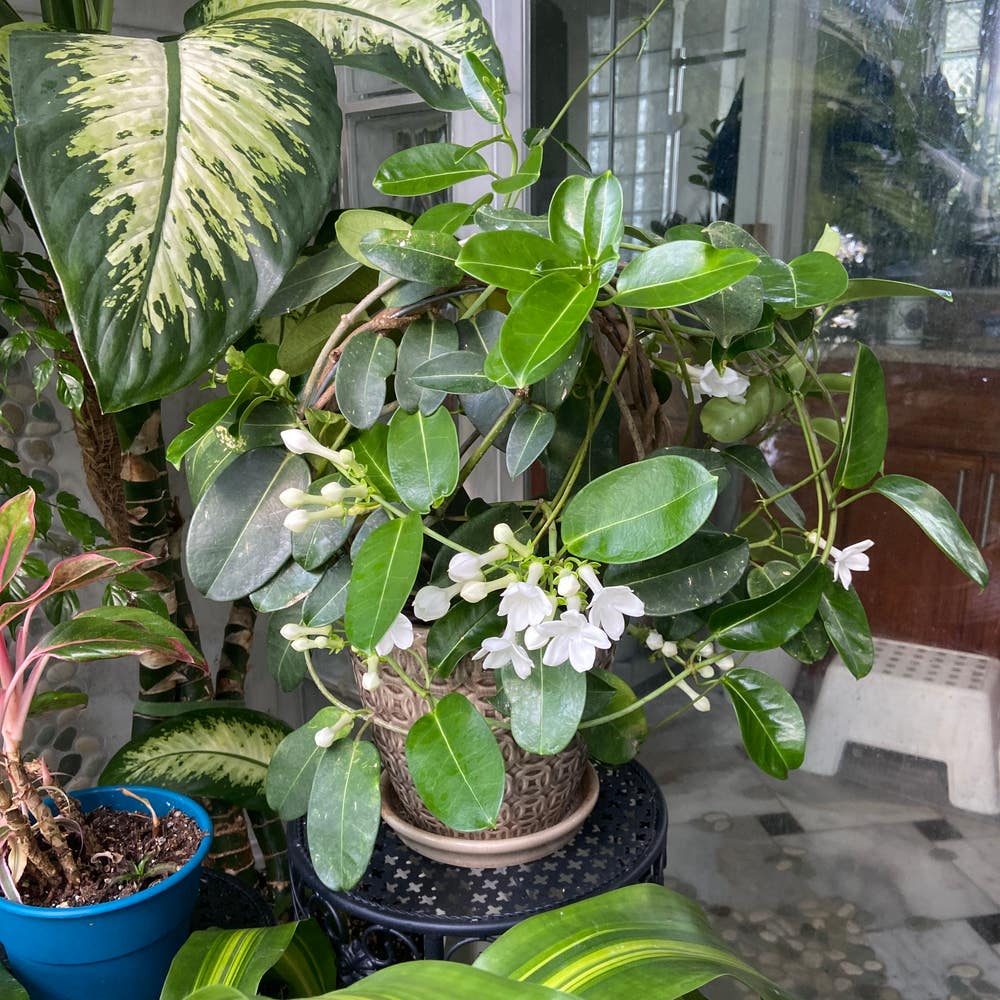
Why Are There Brown Spots on My Stephanotis Leaves?
Stephanotis floribunda
By the Greg Editorial Team
Jun 18, 2024•4 min read
This article was created with the help of AI so we can cover more plants for you. May contain errors. See one? Report it here.
- Fungal, bacterial, or stress cause brown spots on Stephanotis leaves.
- Diagnose with visual inspection and environmental assessment.
- Treat with fungicides/bactericides and adjust care routines.
Spotting the Culprits: Identifying Causes of Brown Spots
🍄 Fungal Foes
Fungal infections are the sneakiest of adversaries, leaving brown spots as their signature. These spots may be accompanied by a colorful halo, a telltale sign of their presence. High humidity and poor air circulation are the perfect playgrounds for these pathogens. Look for small, scattered spots or larger, concentric rings that indicate different types of fungal infections.
🦠 Bacterial Bullies
Bacterial leaf spot can masquerade as its fungal counterpart but often presents as water-soaked lesions with a yellow border. These spots are the bacterial calling card, and they thrive in conditions similar to fungi. If you notice a slimy texture or a foul smell, bacteria might be your culprit.
🌿 Environmental Stress Signals
Brown spots can also be a distress signal from your Stephanotis, indicating environmental stress. Overwatering, poor drainage, or extreme temperature fluctuations can cause these unsightly blemishes. Spots caused by environmental factors often have a distinct pattern or location, such as sunburn spots on the top leaves or waterlogged spots on the underside.
Remember, the first step in the battle against brown spots is identifying the enemy. Keep your eyes peeled for these clues, and your Stephanotis will thank you.

Playing Detective: How to Diagnose Brown Spots
🔍 Visual Clues
Leaf inspection is your first move in the brown spot whodunit. Look for rusty patches, a telltale sign of nutrient issues, or circular spots that could indicate fungal or bacterial parties. Spots with concentric rings or dark margins are also clues pointing towards leaf spot diseases. Flip the leaves; sometimes the culprits like to skulk on the underside.
Symptom Checklist
- Check the soil moisture: Soggy soil often spells overwatering.
- Inspect for pests: They're sneaky and might be feasting on the undersides of leaves.
- Assess plant health: Are the spots dry and crispy or water-soaked? The texture speaks volumes.
- Observe spot patterns: Are they isolated or widespread? Size and quantity matter.
- Root reconnaissance: Mushy, discolored roots could mean root rot.
- Environmental evaluation: Has the plant been sunbathing too long or shivering in the cold?
- Record observations: Keep a log. It's like a detective's notebook for your plant's health saga.
- Consider a lab test: If the mystery persists, it's time to call in the pros.
Remember, early intervention is key to prevent the brown spot blues from turning into a full-blown leaf apocalypse.

The Rescue Plan: Treating Brown Spots
🦠 Combating Pathogens
When your Stephanotis is under siege by fungal invaders or bacterial bullies, it's time to fight back. Fungicides and bactericides are your allies in this battle. For fungal foes, a copper-based fungicide is your weapon of choice. Coat every leaf like you're painting the Sistine Chapel's ceiling, and stick to the reapplication schedule religiously.
For bacteria, the approach is similar but tailored—use the recommended bactericide and ensure thorough coverage. Safety gear is non-negotiable; suit up as if you're entering a post-apocalyptic wasteland. And always, without fail, follow the label's instructions as if they were the laws of physics.
Adjusting Care Routines
Sometimes, the best offense is a good defense. Adjust your watering habits to avoid giving pathogens a moist playground. Ensure the soil is dry to the touch before rewatering—think of it as the plant's thirst meter.
Humidity levels can turn your Stephanotis' home into a tropical paradise or a desert wasteland. Aim for the sweet spot where the air isn't too heavy but also not bone-dry. If you're indoors, consider a humidifier or a pebble tray to keep things just right. Remember, your plant's environment should be more like a well-maintained terrarium, not a rainforest or a sauna.

Keeping It Green: Prevention Strategies
🕵️ Routine Check-ups
Regular monitoring is your plant’s insurance policy against the onslaught of brown spots. Make it a habit to inspect your Stephanotis as if you're looking for Waldo in those crowded picture books. Spot something? Act fast. Early detection is the difference between a quick fix and a plant obituary.
🏥 Pruning with Purpose
When it comes to pruning, think of yourself as a plant surgeon—remove only the diseased or damaged leaves to prevent the spread of any issues. Keep your tools sterile; a dirty pruner is like a double agent for plant disease. After the snip-snip, keep an eye out for new growth—it's a sign your plant is thanking you for the intervention.
⚠️ Safety First
This content is for general information and may contain errors, omissions, or outdated details. It is not medical, veterinary advice, or an endorsement of therapeutic claims.
Always consult a qualified healthcare professional before using any plant as food, medicine, or supplement.
Never eat any plant (or feed one to pets) without confirming its identity with at least two trusted sources.
If you suspect poisoning, call Poison Control (800) 222-1222, the Pet Poison Helpline (800) 213-6680, or your local emergency service immediately.
Spotted an error? Please report it here.
Ease your Stephanotis's brown spot blues by tracking plant health with Greg's guidance 🌿, where a community of experts is ready to help you every step of the way.