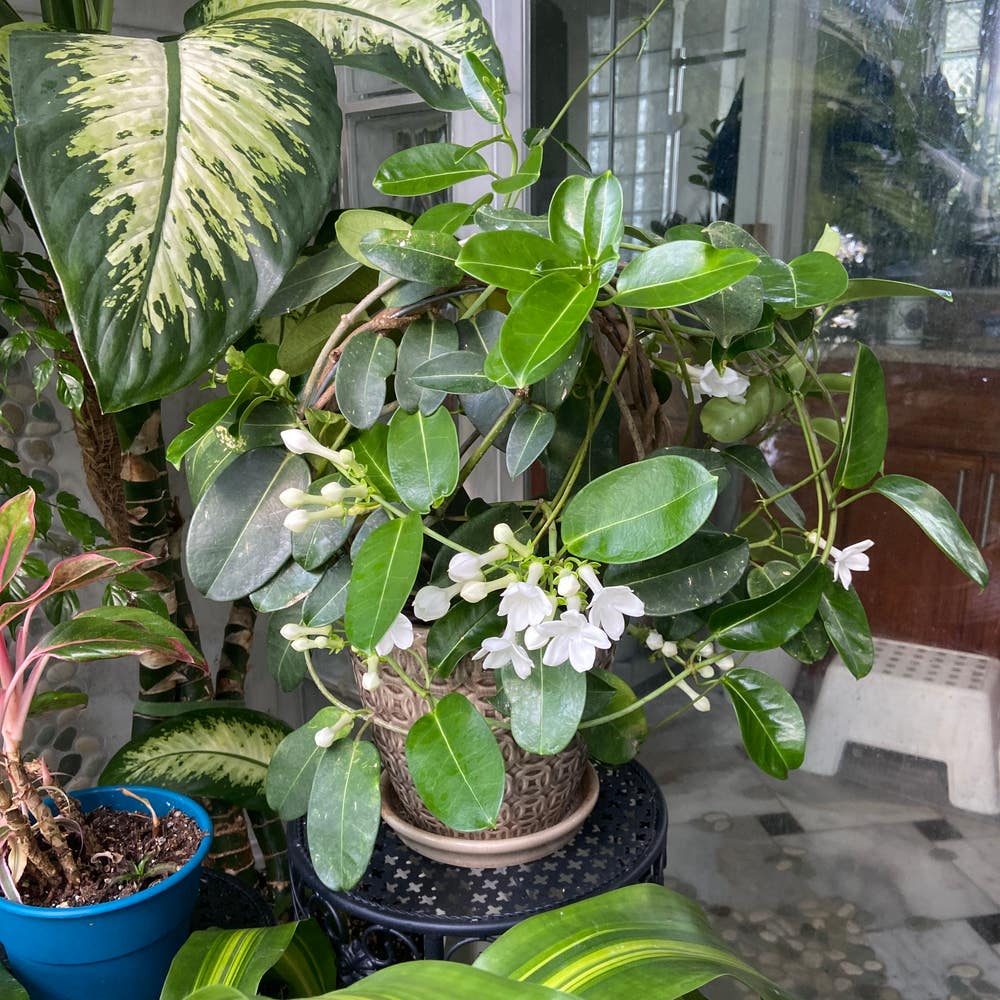
How Often Should I Water My Stephanotis?
Stephanotis floribunda
By the Greg Editorial Team
Jun 18, 2024•3 min read
This article was created with the help of AI so we can cover more plants for you. May contain errors. See one? Report it here.
- Wilting or yellow leaves? Check for underwatering or overwatering.
- Adjust watering with seasons and plant growth phases.
- Use deep watering and proper pots for healthy Stephanotis roots.
Spot the Signs: Is Your Stephanotis Thirsty or Drowning?
🏜️ Symptoms of Underwatering
Wilting is the Stephanotis's silent scream for hydration. When the soil feels like a dust bowl, it's a clear sign you've neglected the watering can. Leaves dropping faster than your weekend plans? That's your Stephanotis begging for a drink.
🚰 Symptoms of Overwatering
Yellow leaves are the plant's way of saying, "I'm drowning here!" If your Stephanotis's roots feel mushier than overcooked noodles, you've got root rot on your hands. Spot moldy soil? It's like your plant's living in a bad neighborhood, and it's time for a cleanup.

When to Water: Timing is Everything
💃 Seasonal Watering Shifts
In the dance of the seasons, your Stephanotis's thirst levels change. Spring and summer bring about a growth spurt, demanding more frequent watering. As the plant enters fall and winter, it hits the snooze button, and your watering should follow suit, becoming less frequent. It's about syncing with nature's rhythms, not sticking to a rigid calendar.
🖐 Checking Soil Moisture
Trust your touch—the finger test is your go-to move. Plunge your finger into the soil up to the second knuckle; if it feels dry, it's showtime for the watering can. If it's moist, give it a break. For those who prefer gadgets, a soil moisture meter can be your sidekick in this hydration heist. Remember, the top two inches of soil are the tell-tale zone. Dry? Water. Damp? Wait. It's that simple.

Perfecting Your Watering Technique
💧 Deep Watering for Deep Roots
Deep watering isn't just a suggestion; it's the backbone of a thriving Stephanotis. By soaking the soil thoroughly, you're not just quenching thirst, you're inviting roots to venture deeper, creating a sturdier plant. Aim to water until you see runoff from the drainage holes, signaling the entire root zone has been reached. This isn't a daily drill—once or twice a week during growth phases should hit the mark. Always check that the top inch of soil is dry before going in for another round.
💦 Misting and Bottom Watering
Misting is like a quick splash on the face—it's refreshing but doesn't replace a good drink. Use it to boost humidity, not as a stand-in for watering. Bottom watering, on the other hand, is a stealth approach that encourages roots to seek moisture from below. It's ideal for parched plants playing hard to get. Just place your pot in a tray of water and let the soil sip at its own pace. Remember, the goal is moist, not a swampy mess. Keep an eye on the clock; too long in the tray and you're flirting with root rot.

Creating the Ideal Watering Environment
💧 Choosing the Right Soil Mix
Well-draining soil isn't a luxury; it's a Stephanotis lifeline. Opt for a mix that includes perlite or coarse sand to keep those roots breathing, not swimming. Think of it as the difference between a wetsuit and a snorkel—one's for diving deep, the other's for staying afloat.
🌱 Pot and Drainage Essentials
The pot's size and material aren't just about aesthetics—they're about survival. Terracotta and unglazed clay are the MVPs here, wicking away excess moisture like a pro. And those drainage holes at the bottom? Non-negotiable. They're the difference between a happy plant and a case of root rot.
⚠️ Safety First
This content is for general information and may contain errors, omissions, or outdated details. It is not medical, veterinary advice, or an endorsement of therapeutic claims.
Always consult a qualified healthcare professional before using any plant as food, medicine, or supplement.
Never eat any plant (or feed one to pets) without confirming its identity with at least two trusted sources.
If you suspect poisoning, call Poison Control (800) 222-1222, the Pet Poison Helpline (800) 213-6680, or your local emergency service immediately.
Spotted an error? Please report it here.
Ensure your Stephanotis thrives with just-right watering 🌿 by letting Greg tailor reminders to your plant's seasonal needs and your home's environment.