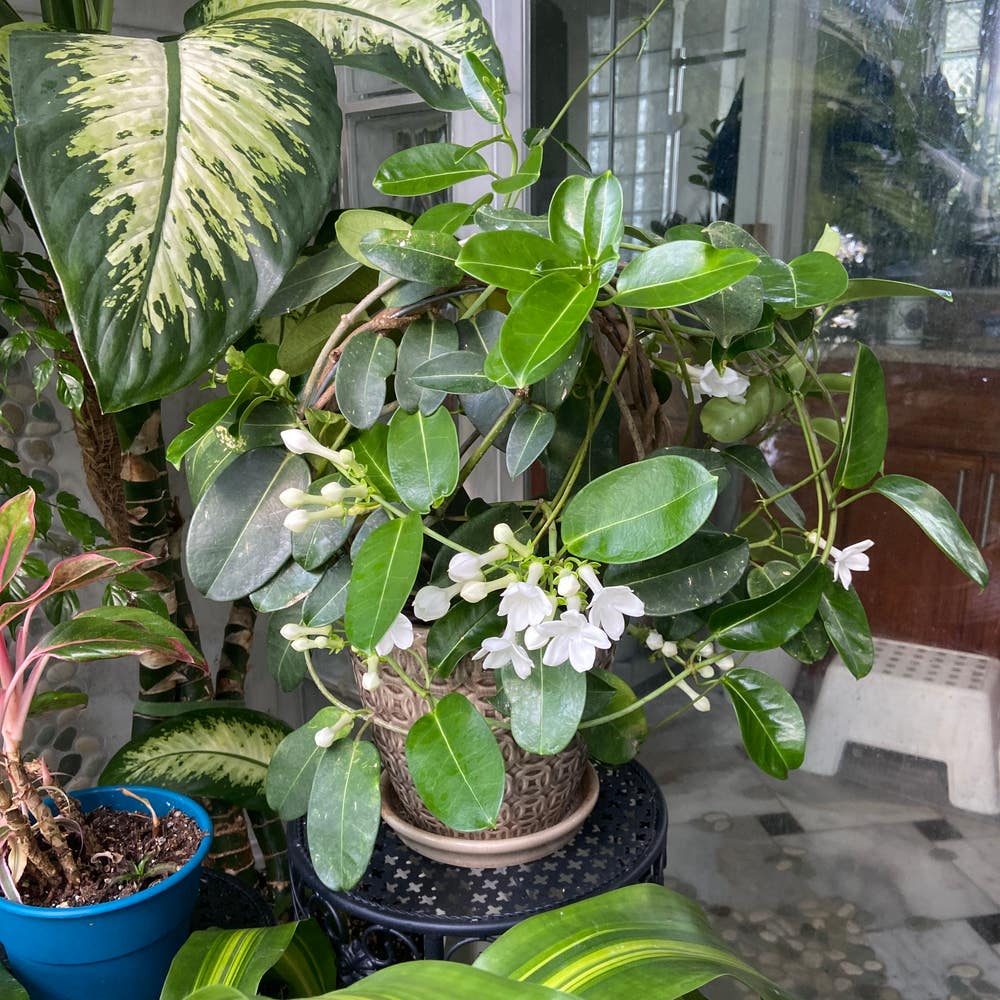
What Do I Do About Stephanotis Root Rot?
Stephanotis floribunda
By the Greg Editorial Team
Jun 18, 2024•4 min read
This article was created with the help of AI so we can cover more plants for you. May contain errors. See one? Report it here.
- 🍂 Yellow leaves and wilting signal Stephanotis root rot.
- ✂️ Prune and repot to give affected plants a fresh start.
- 💧🌬️ Water wisely and ensure air circulation to prevent future issues.
Spotting the Red Flags: Symptoms of Root Rot in Stephanotis
🚨 Visual Clues: Yellowing Leaves and Wilting
Yellowing leaves and wilting are your Stephanotis's way of waving a white flag. It's not being dramatic; it's in trouble. Wilting is the plant equivalent of a fainting spell, and it's your cue to play plant detective.
🕵️ Below the Surface: Inspecting the Roots
Dig a little deeper, literally. Gently unearth the Stephanotis and brush off the excess soil. Healthy roots are firm and white, like fresh mozzarella. If they're brown, mushy, or smell like last week's forgotten leftovers, you've got a case of root rot. Snip the damaged roots with sterilized shears—think of it as giving your plant a life-saving surgery.

First Response: Immediate Actions to Combat Root Rot
🚱 Stop the Soak: Halting Overwatering
Overwatering is the silent killer of Stephanotis. When you spot trouble, pause the watering. Your plant's not on a swim team; it doesn't need to be submerged. Check the soil: if the top inch feels like a wet sponge, it's time to back off. Let the soil's surface dry out before you even think about the watering can again.
🌬️ Let it Breathe: Enhancing Soil Aeration
Roots are like introverts; they need space to breathe. If your Stephanotis is gasping for air, fluff up the soil. Use a fork or your fingers to gently loosen the soil without going all Edward Scissorhands on the roots. This simple act can help oxygen reach the roots, which is like giving your plant a shot of espresso on a Monday morning.

Surgical Strike: Pruning and Repotting
🌱 Snip the Damage: Pruning Affected Roots
When root rot attacks your Stephanotis, it's time to channel your inner surgeon. First, yank the plant out of its pot like you're uncovering a buried treasure. Next, give those roots a spa day by rinsing off the soil to see what you're dealing with. Healthy roots are the strong, silent type—firm and white. Rotten roots are the drama queens—brown, mushy, and likely to cause a scene. Snip these troublemakers at the junction where they meet the healthy tissue. Remember, you're on a rescue mission, not a rampage—trim judiciously. Overdoing it can send your plant into shock, like a bad haircut on picture day.
🌿 Fresh Start: Repotting in Healthy Soil
Now, let's talk about your Stephanotis's new digs. Choose a pot with drainage holes that's cozy but not cramped—think studio apartment, not a shoebox. Mix up a well-draining soil that's like a gourmet meal for your plant's roots—rich in nutrients but not waterlogged. Repot gently, treating the roots with the care of a brain surgeon. Once settled, water your plant like it's a delicate tea ceremony—deeply, but infrequently. This encourages roots to grow strong and independent, like sending your kids off to college. Remember, fresh soil is non-negotiable—it's the difference between a fresh start and repeating history.

Prevention is Key: Long-Term Care Adjustments
💧 Water Wisely: Perfecting Your Watering Technique
Stephanotis thrives on consistency. Tailor a watering schedule that's just right—moist soil without the sogginess. Use room temperature water to avoid shocking the delicate roots. In winter, ease up on the H2O; your plant's not throwing back cocktails, it's sipping tea. When summer rolls around, it'll need a bit more to drink, but don't turn your pot into a swimming pool.
🏺 The Right Home: Selecting Pots and Soil
Your pot's a lifeboat, and it needs holes. Drainage is non-negotiable to keep root rot at bay. Choose a well-draining soil mix that's as light and airy as a soufflé. Regular garden soil is a no-go—it clings to water like a bad habit. Remember, your Stephanotis isn't into wet feet.
💨 Keep it Airy: Ensuring Good Air Circulation
Air flow is like good gossip; it needs to circulate. Keep your Stephanotis in a spot where it can breathe easy, with stable humidity that doesn't swing like a pendulum. Rotate the pot occasionally for even growth—think of it as your plant's personal spin class. And if your green thumb is more of a green pinky, consider a fan or open window to keep the air moving.
⚠️ Safety First
This content is for general information and may contain errors, omissions, or outdated details. It is not medical, veterinary advice, or an endorsement of therapeutic claims.
Always consult a qualified healthcare professional before using any plant as food, medicine, or supplement.
Never eat any plant (or feed one to pets) without confirming its identity with at least two trusted sources.
If you suspect poisoning, call Poison Control (800) 222-1222, the Pet Poison Helpline (800) 213-6680, or your local emergency service immediately.
Spotted an error? Please report it here.
Combat Stephanotis root rot with pruning and perfect watering 💧 using Greg's reminders and community tips for a flourishing, healthy plant.