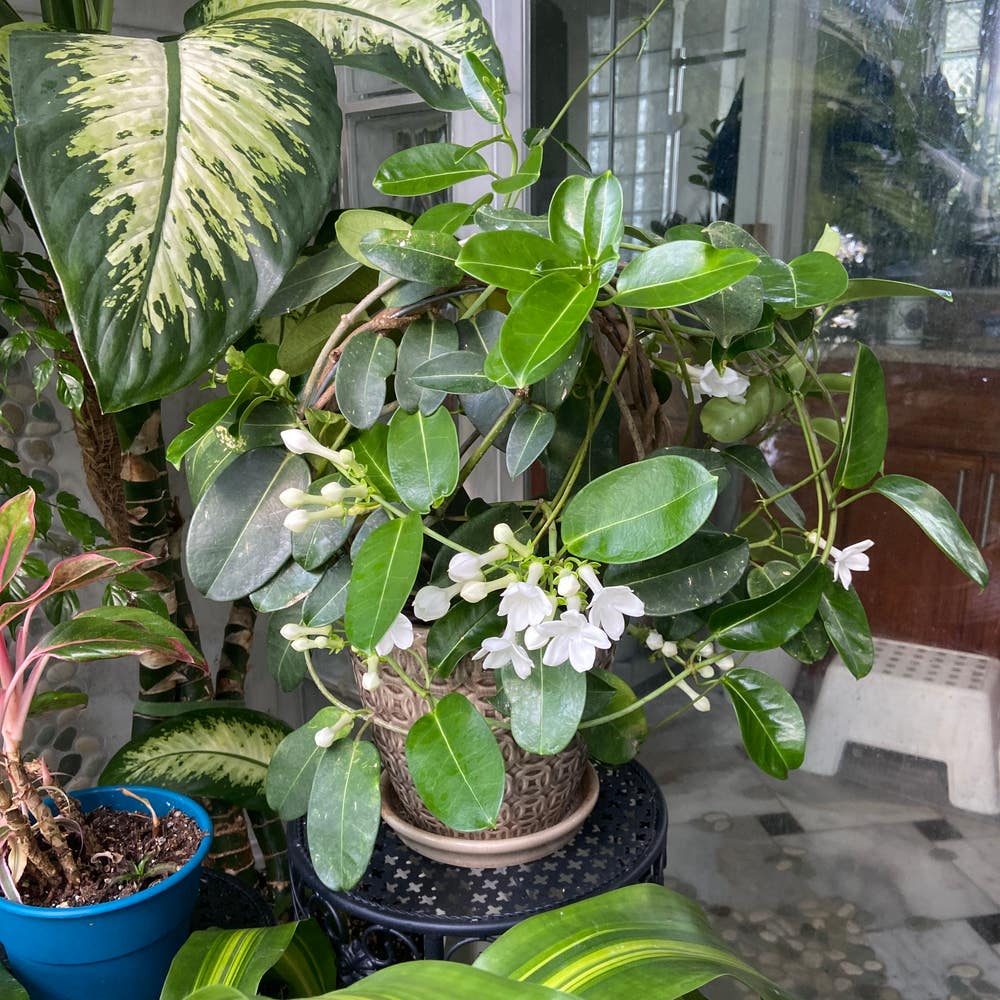
🌸 Madagascar Jasmine Is Not an Annual
Stephanotis floribunda
By the Greg Editorial Team
Sep 30, 2024•6 min read
This article was created with the help of AI so we can cover more plants for you. May contain errors. See one? Report it here.
- 🌺 Madagascar Jasmine is a perennial, thriving year after year in tropical climates.
- 🌱 Its deep roots allow regrowth after dormancy, ensuring long-term garden success.
- 🌞 Climbing habit maximizes sunlight, enhancing growth and aesthetic appeal in gardens.
Genetic Characteristics
Genetic Traits 🌱
Madagascar Jasmine, scientifically known as Stephanotis floribunda, belongs to the Apocynaceae family. Native to Madagascar, this plant thrives in tropical climates, showcasing its unique adaptability to various environments.
Its genetic makeup allows for remarkable adaptations that support long-term growth. This includes a robust structure that can withstand environmental stresses, ensuring it remains a perennial favorite in gardens.
Taxonomy and Native Habitat 🌍
Understanding the taxonomy of Madagascar Jasmine reveals its place in the plant kingdom. This climbing vine is not just a pretty face; it has evolved in Madagascar's diverse ecosystems, where it has developed traits that promote resilience and longevity.
The native habitat plays a crucial role in its growth. The warm, humid conditions of Madagascar provide the ideal backdrop for this plant, allowing it to flourish and adapt over time.
Adaptations for Long-Term Growth 🌿
Madagascar Jasmine exhibits several adaptations that enhance its ability to thrive year after year. Its climbing nature allows it to reach sunlight efficiently, while its woody stems provide structural support.
Additionally, the plant's deep root system is designed for energy storage, enabling it to bounce back even after harsh conditions. This resilience is a testament to its evolutionary journey, making it a standout in any garden setting.
As we delve deeper into the physiological traits that support its perennial growth, we’ll uncover more about how this remarkable plant continues to thrive in diverse environments.
Physiological Traits Supporting Perennial Growth
🌱 Growth Habit
Madagascar Jasmine is a climber by nature, thriving on support structures like trellises or fences. This climbing habit not only enhances its aesthetic appeal but also allows it to reach sunlight more effectively.
The plant develops woody stems over time, which contribute to its durability and longevity. These sturdy stems are essential for supporting the plant as it grows, enabling it to withstand various environmental conditions.
⚡ Energy Storage
One of the remarkable traits of Madagascar Jasmine is its ability to store energy in its roots. This energy reserve is crucial for regrowth, especially after periods of dormancy or stress.
When conditions are favorable, the plant taps into these stored resources to sprout new growth. This capability is a significant factor in its classification as a perennial, allowing it to thrive year after year.
As we explore the lifecycle of Madagascar Jasmine, it’s essential to understand how these physiological traits contribute to its resilience and adaptability. This foundation sets the stage for a deeper dive into its lifecycle compared to true annuals.
Lifecycle Comparison
Lifecycle vs. True Annuals 🌱
Madagascar Jasmine, unlike true annuals, showcases a unique lifecycle that allows it to thrive year after year. Its growth stages include a robust vegetative phase, followed by a prolonged flowering period that can last for several months.
This perennial nature grants it resilience against environmental changes. While annuals may wither with the seasons, Madagascar Jasmine adapts, ensuring it remains vibrant even in fluctuating conditions.
Flowering and Seed Production 🌼
One of the standout features of Madagascar Jasmine is its potential for year-round flowering. This continuous bloom not only enhances its aesthetic appeal but also attracts a variety of pollinators, enriching the garden ecosystem.
In terms of seed production, Madagascar Jasmine employs strategic methods to ensure its survival. It produces seeds that can remain dormant until conditions are favorable, allowing it to thrive in diverse environments.
This adaptability makes it a fascinating choice for gardeners looking to cultivate a resilient, beautiful plant. As we explore the implications of its lifecycle, we can see how these traits influence gardening strategies and plant care.
Misconceptions and Exceptions
🌱 Conditions for Annual-like Behavior
Madagascar Jasmine can sometimes behave like an annual plant, primarily due to environmental factors. In regions with extreme temperatures or insufficient sunlight, its growth may be stunted, leading to a shorter lifecycle.
These unsuitable climates can force the plant to conserve energy, limiting its flowering and overall vitality. Consequently, gardeners might mistakenly perceive it as an annual when it's merely responding to its environment.
🌍 Regional Variations
Geographic differences play a significant role in how Madagascar Jasmine thrives. In its native habitat, it flourishes with ample support and favorable conditions, showcasing its perennial nature.
However, in other regions, local adaptations can alter its growth patterns. Variations in soil type, moisture levels, and temperature can significantly impact its resilience and flowering potential.
Understanding these regional differences is crucial for gardeners looking to cultivate this beautiful plant successfully. By recognizing the unique needs of Madagascar Jasmine in various environments, you can better appreciate its true perennial characteristics.
As we explore gardening implications next, consider how these insights can enhance your approach to cultivating Madagascar Jasmine in your garden.
Gardening Implications
Advantages of Perennial Nature 🌼
Madagascar Jasmine is a perennial gem, offering a long-term investment for gardeners. Its ability to thrive year after year not only enhances the garden's aesthetics but also reduces the need for frequent replanting.
Garden Design Strategies 🏗️
Incorporating climbing structures can maximize the beauty of Madagascar Jasmine. Pairing it with companion plants creates a lush, vibrant display while promoting a healthy ecosystem.
Seasonal Management 📅
Timing is crucial for maintaining your Madagascar Jasmine. Pruning should be done at the right moment to encourage robust growth and abundant blooms, ensuring your garden remains stunning throughout the seasons.
Transitioning to the next section, let's explore how to maximize the longevity of your Madagascar Jasmine through effective management practices.
Maximizing Longevity
🌱 Management Tips
To ensure your Madagascar Jasmine thrives, focus on proper watering and fertilization. Water deeply but infrequently, allowing the soil to dry out between sessions to prevent root rot.
For fertilization, use a balanced, slow-release fertilizer during the growing season. This supports robust growth and vibrant blooms, making your plant a standout in any garden.
🌼 Health and Flowering Practices
Regularly monitor your Madagascar Jasmine for pests and diseases. Look out for common issues like aphids or spider mites, which can hinder growth and flowering.
Implementing preventive measures, such as neem oil or insecticidal soap, can keep these pests at bay. Healthy plants are more resilient and will reward you with abundant flowers.
⚠️ Challenges and Solutions
Climate can pose challenges for your Madagascar Jasmine, especially in extreme conditions. If you live in a region with harsh winters or scorching summers, consider providing additional protection.
Using mulch can help regulate soil temperature and moisture levels. Additionally, consider relocating your plant to a more sheltered spot during extreme weather to enhance its longevity.
By following these management tips and addressing potential challenges, you can enjoy the beauty of Madagascar Jasmine for years to come. Next, let’s explore the gardening implications of this perennial gem.
⚠️ Safety First
This content is for general information and may contain errors, omissions, or outdated details. It is not medical, veterinary advice, or an endorsement of therapeutic claims.
Always consult a qualified healthcare professional before using any plant as food, medicine, or supplement.
Never eat any plant (or feed one to pets) without confirming its identity with at least two trusted sources.
If you suspect poisoning, call Poison Control (800) 222-1222, the Pet Poison Helpline (800) 213-6680, or your local emergency service immediately.
Spotted an error? Please report it here.
Ensure your Madagascar Jasmine thrives for years to come 🌿 with Greg's customized care tips and watering reminders that make plant parenting a breeze!