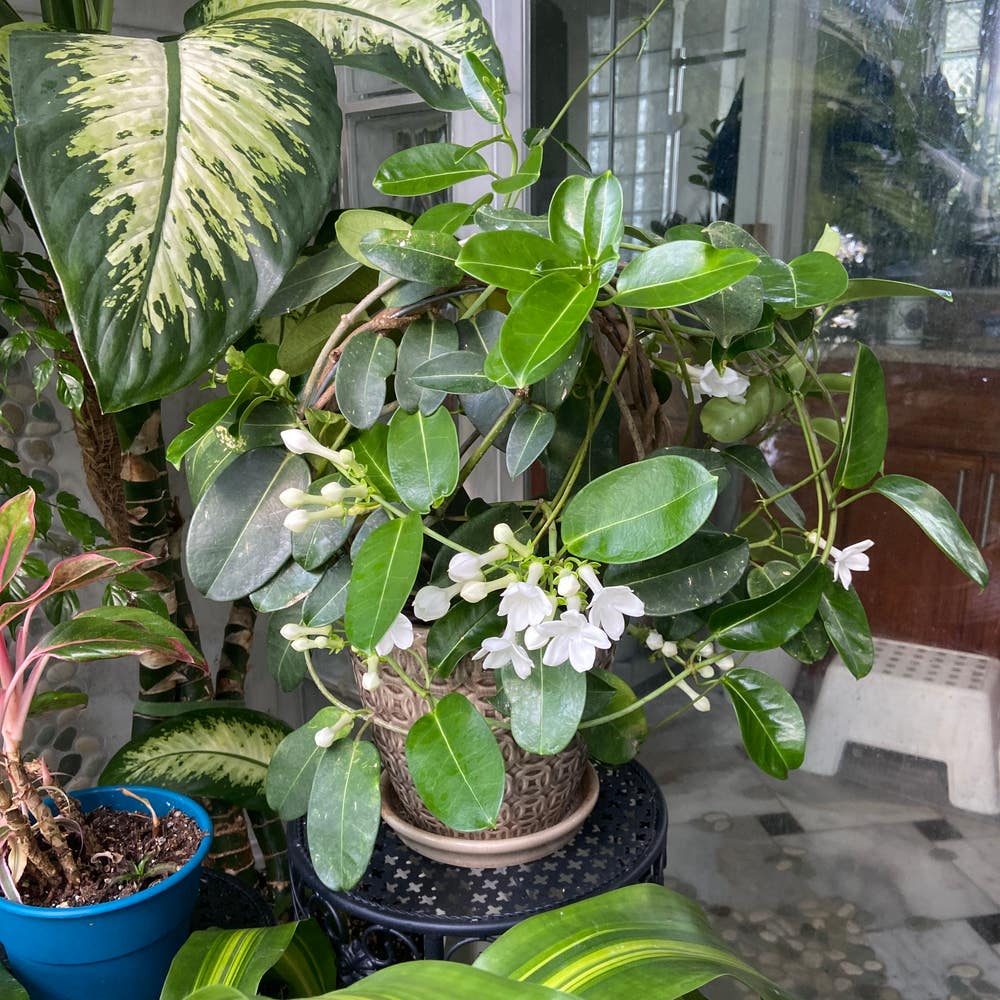
How to Determine When Your Madagascar Jasmine Needs Water 💧
Stephanotis floribunda
By the Greg Editorial Team
Sep 30, 2024•5 min read
This article was created with the help of AI so we can cover more plants for you. May contain errors. See one? Report it here.
- 💧 Water every 1-2 weeks, adjusting for temperature and humidity changes.
- 🌱 Yellowing leaves indicate over-watering; check for root rot signs.
- 📏 Use a moisture meter or finger test to assess soil hydration accurately.
Ideal Watering Frequency
General Guidelines 🌊
Watering your Madagascar Jasmine is crucial for its health. Aim to water every 1-2 weeks, but be ready to adjust based on environmental conditions.
Factors Influencing Frequency 🌡️
Several factors can affect how often you should water. Keep an eye on temperature, humidity, pot size, and the plant's growth stage to determine the best schedule for your Jasmine.
Understanding these elements will help you provide the right care, ensuring your plant thrives. By being attentive to its needs, you can create a nurturing environment that promotes healthy growth.
Seasonal Adjustments 🌦️
As seasons change, so should your watering routine. During warmer months, your plant may need more frequent watering due to increased evaporation rates. Conversely, in cooler months, you might find that your Madagascar Jasmine requires less water as its growth slows down.
Conclusion 🌱
By mastering the ideal watering frequency, you set the stage for a flourishing Madagascar Jasmine. Next, let’s explore the signs of over-watering to ensure your plant remains healthy and vibrant.
Signs of Over-Watering
Symptoms to Watch For 🌿
Over-watering can be a sneaky problem for your Madagascar Jasmine. One of the first signs is yellowing leaves, which often indicates stress and potential root rot.
Another red flag is wilting despite wet soil. This happens when the roots are so saturated that they can’t absorb water effectively. Lastly, if you notice a foul odor from the soil, it’s a clear sign of decaying roots, which can be detrimental to your plant’s health.
Prevention Strategies 🚫💧
To keep your Madagascar Jasmine thriving, start with well-draining soil. This minimizes water retention and helps prevent root rot.
Additionally, allow the top inch of soil to dry out before re-watering. This simple step can make a significant difference in maintaining the right moisture balance for your plant.
By being vigilant about these signs and implementing effective prevention strategies, you can ensure your Madagascar Jasmine stays healthy and vibrant. Next, let’s explore the signs of under-watering, so you can keep your plant in perfect balance.
Signs of Under-Watering
Symptoms to Watch For 🌵
Under-watering can sneak up on you, leaving your Madagascar Jasmine looking sad. Watch for drooping leaves, which signal a lack of moisture.
Crispy leaf edges are another telltale sign of dehydration. If you notice soil pulling away from the pot edges, it indicates extreme dryness, and your plant is in distress.
Prevention Strategies 💧
To keep your plant thriving, regularly check soil moisture levels. This simple habit can prevent prolonged dry periods that stress your plant.
Adjust your watering frequency based on seasonal changes and the growth stage of your Madagascar Jasmine. Staying attuned to these factors will help ensure your plant remains healthy and vibrant.
With these tips, you can confidently nurture your plant, setting the stage for a flourishing garden. Next, let’s explore effective watering techniques to keep your Madagascar Jasmine hydrated.
Measuring Soil Moisture
🌡️ How to Use a Moisture Meter
Using a moisture meter is a straightforward way to gauge your Madagascar Jasmine's hydration needs.
- Insert the probe into the soil up to the indicated depth.
- Wait for the reading to stabilize.
- Interpret the moisture level based on the meter's scale.
This method provides a quick and accurate assessment, ensuring your plant gets just the right amount of water.
✋ Manual Methods for Checking Soil Moisture
If you don't have a moisture meter handy, there are simple manual methods to check soil moisture.
- Finger Test: Insert a finger into the soil up to the second knuckle; if it feels dry, it's time to water.
- Visual Inspection: Look for soil color and texture; dark, clumpy soil typically indicates adequate moisture.
These techniques can help you stay in tune with your plant's needs without any fancy gadgets.
🔍 Indicators of Moisture Levels in Soil
Understanding the texture and appearance of the soil can also guide your watering routine.
- Light, Crumbly Soil: This indicates dryness and suggests your plant needs water soon.
- Dark, Compact Soil: This usually means the soil is adequately moist.
- Soggy Soil: If the soil feels overly wet, it may signal over-watering, which can harm your plant.
By regularly checking these indicators, you can maintain a healthy watering schedule for your Madagascar Jasmine.
With these moisture-checking techniques, you'll be well-equipped to keep your plant thriving. Next, let’s explore effective watering techniques to ensure your Madagascar Jasmine gets the hydration it craves.
Watering Schedule and Reminders
Setting Up a Watering Schedule 🌧️
Creating a consistent watering schedule is essential for your Madagascar Jasmine's health. Tailor it to the plant's specific needs and the environmental conditions around it.
During blooming periods, be prepared to adjust the frequency. Your plant may require more water as it puts energy into producing beautiful flowers.
Using the Greg Plant Care App for Reminders 📱
To stay on top of your watering routine, consider using the Greg Plant Care App. This handy tool allows you to set reminders based on your established schedule.
The app also helps you track moisture levels, ensuring you can adjust care as needed. It's like having a personal plant assistant right in your pocket!
Adjusting Schedule Based on Seasonal Changes 🍂
As the seasons change, so should your watering habits. Increase the frequency during warmer months when evaporation rates are higher.
Conversely, reduce watering during cooler months when your plant's growth slows down. This simple adjustment can make a significant difference in keeping your Madagascar Jasmine thriving.
By following these guidelines, you can ensure your plant receives the right amount of water throughout the year. Next, let’s explore effective watering techniques to further enhance your plant care routine.
⚠️ Safety First
This content is for general information and may contain errors, omissions, or outdated details. It is not medical, veterinary advice, or an endorsement of therapeutic claims.
Always consult a qualified healthcare professional before using any plant as food, medicine, or supplement.
Never eat any plant (or feed one to pets) without confirming its identity with at least two trusted sources.
If you suspect poisoning, call Poison Control (800) 222-1222, the Pet Poison Helpline (800) 213-6680, or your local emergency service immediately.
Spotted an error? Please report it here.
Keep your Madagascar Jasmine thriving with tailored watering reminders 🌿 from Greg, ensuring you never miss a beat in its hydration needs!