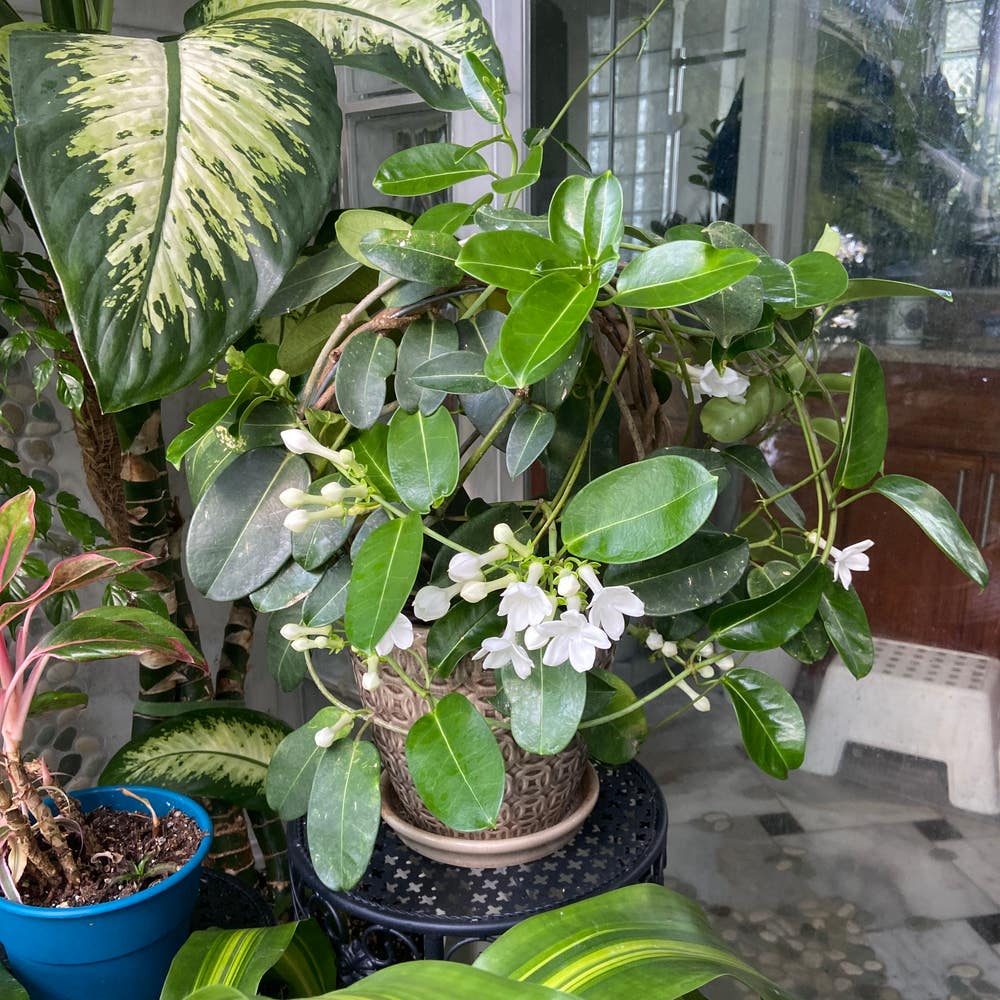
Why Is My Stephanotis Not Doing Well?
Stephanotis floribunda
By the Greg Editorial Team
Jun 18, 2024•4 min read
This article was created with the help of AI so we can cover more plants for you. May contain errors. See one? Report it here.
- 🌱 Yellow or drooping leaves? Adjust watering routine and soil drainage.
- ☀️🌡️ Bright, indirect light and 21°C-23°C for healthy Stephanotis.
- 🕵️♂️ Watch for pests and mold, use insecticidal soap or improve air circulation.
When Water Works Against You
💧 Spotting Over-watering
Yellowing leaves and root rot are the plant's way of waving a white flag. If your Stephanotis is sitting in soil that's more saturated than a soaked sponge, it's time to rethink your watering routine.
Quick fixes include a soil drainage check-up—make sure your pot isn't holding water like a dam. Adjust your watering schedule to match the plant's cries for help, not the calendar.
🏜️ The Under-watering Dilemma
When your Stephanotis's leaves droop like a disappointed parent, it's parched. Crispy leaves are the plant's last-ditch effort to tell you it's thirsty.
To bounce back, establish a hydration routine that's more regular than your morning coffee. Water when the soil feels dry to the touch, but don't drown it in your eagerness to make amends.

Light and Temperature: The Balancing Act
🌞 Too Much Sun, Too Little Light
Stunted growth and pale leaves scream "help!" when your Stephanotis gets the wrong light. Bright, indirect sunlight is the golden ticket it needs to thrive.
🌡️ Temperature Swings
Browning leaves and wilting are your Stephanotis' way of saying it can't handle the heat—or the cold. Consistency is key: aim to keep your space between 21°C-23°C to avoid these temperature tantrums.

Unwelcome Guests and Unseen Problems
🐜 Pests: The Tiny Terrors
Stephanotis plants can become unwilling hosts to a variety of pests. Spider mites, mealybugs, and thrips are the usual suspects, often leaving behind webbing, sticky honeydew, or simply parading around as tiny moving dots on your plant.
🕵️ Spotting the Invaders
Check for webbing under leaves or along stems, a surefire sign of spider mites. Mealybugs, on the other hand, look like tiny cottony tufts nestled in leaf axils or under leaves. Thrips are a bit trickier to spot, but their damage appears as stippled or silvery leaves.
🚪 Show Them the Door
To evict these freeloaders, start with a strong blast of water to knock them off. Follow up with insecticidal soap or neem oil treatments. For severe infestations, you might need to bring out the big guns—miticides or systemic insecticides.
Fungal Foes and Mold
Fungi and mold can be as stealthy as a cat burglar, sneaking in with little warning. Look for white fuzz or unsightly leaf spots as evidence of their trespassing.
🍄 Mold and Fungus Giveaways
White powdery mildew or sooty mold are common fungal issues. They often present as patches or a dusty coating on leaves. If your Stephanotis is sporting a new fuzzy white coat, it's time for some fungal remediation.
💨 Clearing the Air
Boost air circulation around your plant—stale air is a fungal paradise. Make sure your Stephanotis isn't sitting in a humidity trap. Sometimes, a simple fan can be your best ally. If the situation calls for it, consider a fungicide, but always as a last resort. Remember, prevention is better than cure, so keep those leaves dry and give your plant room to breathe.

Root of the Matter: Tackling Root Rot
🌱 Recognizing Root Rot
When your Stephanotis starts to smell more like a compost bin than a fragrant vine, root rot may be the culprit. If the plant seems to collapse in despair, it's time to play plant detective.
🏥 Surgery and Recovery
🕵️♂️ Root Autopsy
First, gently remove your Stephanotis from its pot for a root inspection. Healthy roots are firm and white, but if you find a mushy, brown mess, it's time for some root surgery.
✂️ The Snip-and-Repot Method
- Trim the Damage: With sterilized scissors, cut away the rotten roots. It's like editing a bad scene out of your plant's life story.
- Fresh Soil: Repot your Stephanotis in well-draining soil to give it a new lease on life.
- Post-op Care: Avoid overwatering post-surgery. Think of water as medicine—too much can be as harmful as too little.
Remember, root rot is a stealthy foe. Stay vigilant and your Stephanotis will thank you with lush growth and fragrant blooms.
⚠️ Safety First
This content is for general information and may contain errors, omissions, or outdated details. It is not medical, veterinary advice, or an endorsement of therapeutic claims.
Always consult a qualified healthcare professional before using any plant as food, medicine, or supplement.
Never eat any plant (or feed one to pets) without confirming its identity with at least two trusted sources.
If you suspect poisoning, call Poison Control (800) 222-1222, the Pet Poison Helpline (800) 213-6680, or your local emergency service immediately.
Spotted an error? Please report it here.
Nurture your Stephanotis back to peak health 🌱 with Greg's custom care plans and a community of experts to prevent yellow leaves, pests, and root rot.