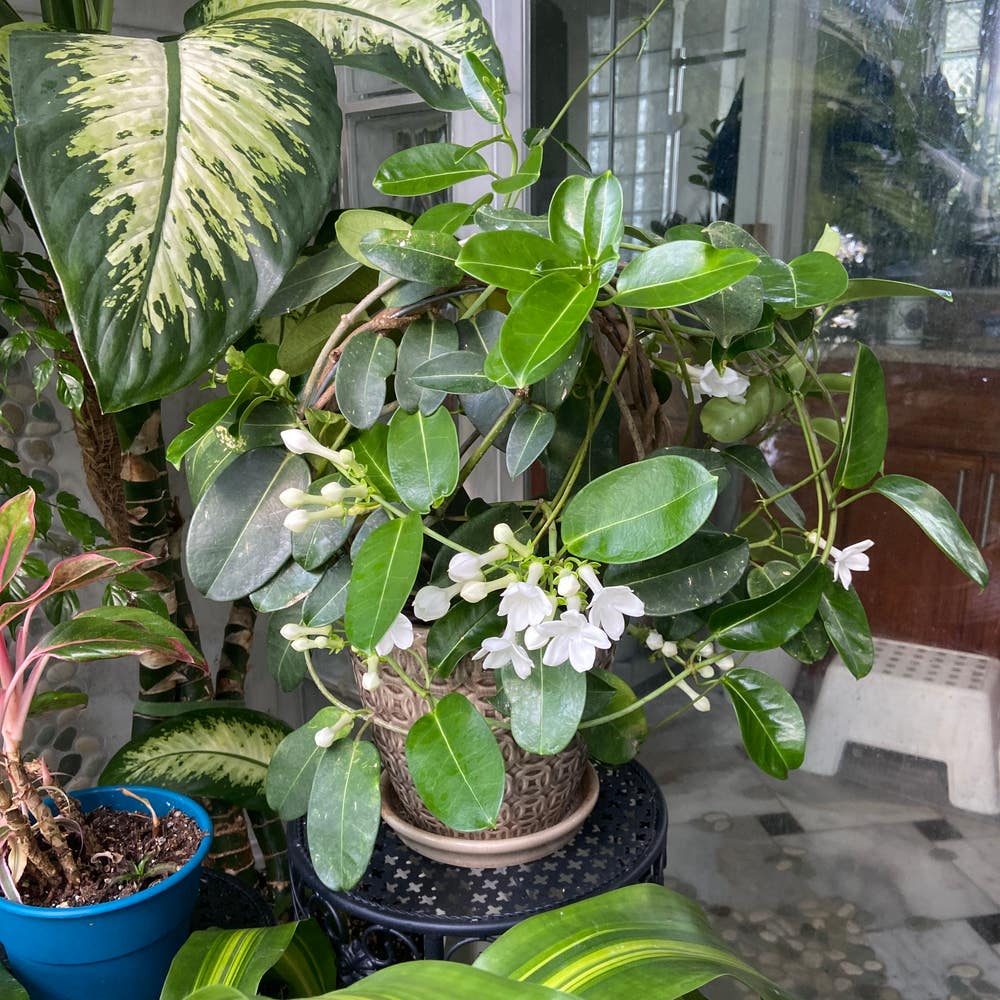
🌼 Why Your Madagascar Jasmine Leaves Are Falling Over
Stephanotis floribunda
By the Greg Editorial Team
Sep 30, 2024•6 min read
This article was created with the help of AI so we can cover more plants for you. May contain errors. See one? Report it here.
- 💧 Overwatering and underwatering cause leaf drop; adjust watering practices accordingly.
- 🌞 Bright, indirect light is essential; avoid direct sunlight to prevent leaf scorch.
- 🌿 Regularly inspect roots for rot; healthy roots are key to thriving Madagascar Jasmine.
Diagnosing the Problem
🌊 Identifying Signs of Overwatering
Overwatering is a common issue for Madagascar Jasmine. Look for visual indicators like soggy soil and yellowing leaves, which signal that your plant is drowning.
To confirm, inspect the roots. If they feel mushy or have a dark color, root rot may be present, requiring immediate action.
💧 Recognizing Underwatering Symptoms
On the flip side, underwatering can also cause distress. Check for crispy leaf edges and drooping foliage, which indicate your plant is thirsty.
Using a moisture meter can help you gauge soil moisture levels accurately. This tool ensures you’re watering just right.
🐛 Checking for Pests and Diseases
Pests and diseases can wreak havoc on your Madagascar Jasmine. Conduct a visual inspection by looking under leaves and at stem joints for any unwanted guests.
Signs of disease include black spots or mold. Catching these early can save your plant from further damage.
🌡️ Assessing Environmental Conditions
Environmental factors play a crucial role in plant health. Madagascar Jasmine thrives in bright, indirect light, so ensure it’s getting the right exposure.
Temperature is another key player. Use a thermometer to check that your plant is in a comfortable range, ideally between 65°F and 75°F.
Lastly, humidity matters too. A hygrometer can help you assess moisture levels in the air, ensuring your plant feels right at home.
With these diagnostic steps, you can pinpoint the issues affecting your Madagascar Jasmine. Next, let’s explore preventive measures to keep your plant thriving.
Preventive Measures
Proper Watering Techniques 🌊
Watering your Madagascar Jasmine is crucial for its health. Adjust your watering schedule based on the season and the size of your plant to ensure it thrives.
Use the soak and drain method to prevent overwatering. This technique allows the roots to absorb moisture while preventing soggy soil that can lead to root rot.
Ideal Humidity Levels 💧
Humidity plays a significant role in your plant's well-being. To increase humidity, consider using humidifiers or pebble trays filled with water.
Grouping plants together can also create a microclimate that boosts humidity levels. This simple trick can make a noticeable difference in your plant's health.
Best Soil Types and Drainage Practices 🌱
Choosing the right soil mix is essential for your Madagascar Jasmine. A peat-based mix with perlite is highly recommended for optimal drainage and aeration.
Don't overlook the importance of drainage holes in your pots. These holes prevent water from accumulating, reducing the risk of root rot.
Recommended Fertilization Schedule 🌼
Fertilizing your plant correctly can enhance its growth. Aim to fertilize every 4-6 weeks during the growing season for the best results.
Use balanced liquid fertilizers to provide essential nutrients. This will keep your plant vibrant and healthy.
Light Requirements and Placement ☀️
Light is vital for your Madagascar Jasmine's growth. Ensure it receives bright, indirect light for optimal health.
Avoid placing it in direct sunlight, as this can scorch the leaves. Finding the right spot can make all the difference in your plant's vitality.
By following these preventive measures, you can create a thriving environment for your Madagascar Jasmine. This foundation will help you tackle any issues that arise and ensure your plant remains healthy and vibrant.
Treatment Solutions
Adjusting Watering Practices 🌊
Overwatering can be a common issue for Madagascar Jasmine. To correct this, start by allowing the soil to dry out completely.
If you notice root rot, remove the affected roots to promote healthier growth.
On the flip side, underwatering can also lead to leaf drop. Gradually increase your watering frequency and keep a close eye on soil moisture levels to ensure your plant thrives.
Improving Humidity Levels 💧
Humidity plays a crucial role in the health of your Madagascar Jasmine. Misting the leaves can help; aim to do this a few times a week, especially during dry spells.
Another effective method is using humidity trays. Simply fill a shallow tray with water and pebbles, then place your plant on top. This setup will help maintain moisture around your plant.
Pest Control Methods 🐛
Organic Options
If pests are a concern, consider using neem oil. Mix it with water and spray it on the affected areas, ensuring you cover both the tops and undersides of the leaves.
Insecticidal soap is another effective organic option. Apply it directly to the pests, following the instructions for best results.
Chemical Options
For more severe infestations, you might need chemical pesticides. Always read the safety precautions before use, and apply them in the evening to minimize harm to beneficial insects.
Timing is key; apply pesticides during the early morning or late afternoon for optimal effectiveness.
Soil Amendments for Better Drainage 🪴
Improving soil drainage can prevent many issues. Consider adding perlite, sand, or bark to your soil mix to enhance aeration.
A good mixing ratio is about 1 part amendment to 2 parts potting soil. This will help ensure your Madagascar Jasmine has the drainage it needs to thrive.
Recovery Techniques for Stressed Plants 🌱
If your plant is showing signs of stress, pruning damaged leaves can help. Remove any yellowing or brown leaves to encourage new growth.
Keep an eye on your plant's recovery. Look for signs of improvement, such as new leaf growth or a return to vibrant color, to know your care adjustments are working.
With these treatment solutions, your Madagascar Jasmine can bounce back and flourish. Next, let's explore seasonal considerations to keep your plant healthy year-round.
Seasonal Considerations
🌱 Seasonal Changes Affecting Leaf Drop
Temperature fluctuations can significantly impact your Madagascar Jasmine's health. As seasons change, so should your care routine to ensure your plant thrives.
- Temperature Sensitivity: Sudden drops or rises in temperature can stress your plant, leading to leaf drop.
- Routine Adjustments: Pay attention to seasonal shifts and modify your watering and light exposure accordingly.
❄️ Winter Care Tips
During winter, your Madagascar Jasmine requires special attention.
- Watering Frequency: Reduce watering as the plant's growth slows down. Overwatering in winter can lead to root rot.
- Draft Protection: Keep your plant away from cold drafts and windows to prevent chilling.
☀️ Summer Care Adjustments
Summer brings warmth, and your plant will need a bit more TLC.
- Increased Watering: As temperatures rise, increase your watering frequency to keep the soil consistently moist.
- Pest Monitoring: Be vigilant for pests, as warmer months can lead to infestations. Regular checks will help you catch issues early.
By adjusting your care routine with the seasons, you can keep your Madagascar Jasmine healthy and vibrant year-round. Next, let’s explore treatment solutions to address any existing issues your plant may face.
⚠️ Safety First
This content is for general information and may contain errors, omissions, or outdated details. It is not medical, veterinary advice, or an endorsement of therapeutic claims.
Always consult a qualified healthcare professional before using any plant as food, medicine, or supplement.
Never eat any plant (or feed one to pets) without confirming its identity with at least two trusted sources.
If you suspect poisoning, call Poison Control (800) 222-1222, the Pet Poison Helpline (800) 213-6680, or your local emergency service immediately.
Spotted an error? Please report it here.
Keep your Madagascar Jasmine thriving 🌿 by using Greg's tailored care reminders to master the perfect balance of watering, light, and humidity for vibrant growth!