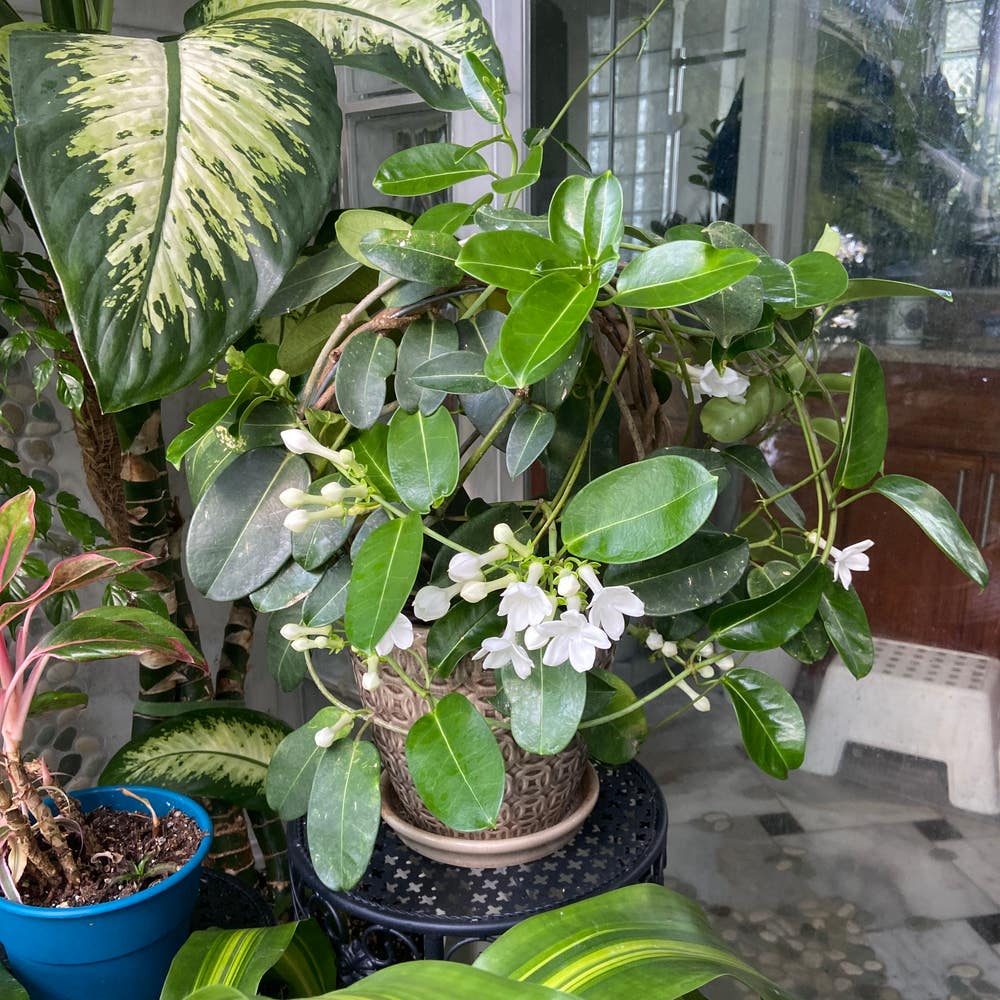
✂️ Best Tips for Pruning Madagascar Jasmine
Stephanotis floribunda
By the Greg Editorial Team
Sep 30, 2024•4 min read
This article was created with the help of AI so we can cover more plants for you. May contain errors. See one? Report it here.
- ✂️ Master pruning techniques like heading back and thinning for healthier Madagascar Jasmine.
- 🌱 Spring is the best time to prune, promoting vibrant growth and blooms.
- ⚠️ Avoid over-pruning to prevent weakening your plant and reducing flowering.
Types of Pruning Cuts
✂️ Heading Back
Heading back involves cutting back stems to encourage bushier growth. This technique is perfect for shaping your Madagascar Jasmine and promoting lateral growth, making your plant fuller and more vibrant.
🌿 Thinning
Thinning is the process of removing entire stems to reduce density. This method enhances light penetration and air circulation, helping your plant thrive and preventing issues like mold or pests.
🌱 Rejuvenation Pruning
Rejuvenation pruning is a more severe approach, where older plants are cut back significantly. This technique stimulates new growth and revitalizes the plant, making it look fresh and healthy again.
Understanding these pruning cuts is essential for maintaining the health and beauty of your Madagascar Jasmine. With the right techniques, you can ensure your plant flourishes beautifully.
Next, let’s explore when to prune for optimal results.
When to Prune
🌱 Best Seasons for Pruning
Spring is the prime time for pruning Madagascar Jasmine. This season encourages shaping and stimulates new growth, giving your plant a fresh start.
In the fall, consider light pruning to prepare the plant for winter dormancy. This helps it conserve energy and stay healthy through the colder months.
✂️ Signs That Pruning is Needed
An overgrown appearance is a clear indicator that your plant needs attention. If you notice excessive length or density, it’s time to prune.
Look for dead or damaged stems as well; these are signs of disease or pest damage. Additionally, if your plant shows reduced flowering, with fewer blooms than in previous seasons, it’s a good cue to grab those shears.
🌼 Timing for Deadheading
Deadheading should be done immediately after flowering. This encourages new blooms and keeps your plant vibrant.
Aim to deadhead every few weeks during the blooming season. Regular maintenance will ensure your Madagascar Jasmine continues to thrive and look its best.
With these pruning tips in mind, you’ll be well-equipped to keep your Madagascar Jasmine healthy and flourishing. Next, let’s dive into the practical steps for effective pruning.
How to Prune
Step-by-Step Pruning Guide 🌿
Pruning Madagascar Jasmine is essential for its health and beauty. Follow these steps for effective pruning:
- Assess the plant: Look for areas that need attention, such as overgrown stems or dead branches.
- Choose the right tools: Ensure your pruning shears are clean and sharp to make precise cuts.
- Remove dead or damaged stems: Cut back to healthy tissue to promote new growth.
- Thin out crowded areas: Selectively remove stems to improve airflow and light penetration.
- Shape the plant: Trim to your desired size and form, enhancing its overall appearance.
Specific Techniques for Different Growth Stages ✂️
Young Plants
For young Madagascar Jasmine, focus on shaping. This encourages a strong framework for future growth.
- Light pruning: Remove any weak or crossing stems to promote a healthy structure.
Mature Plants
Mature plants require different techniques to maintain their vitality.
- Thinning: Remove older stems to make way for new growth.
- Heading back: Shorten long stems to keep the plant’s shape tidy.
How to Shape the Plant for Optimal Growth 🌱
Shaping your Madagascar Jasmine is crucial for its development.
- Training as a vine: Use trellises or supports to guide growth upward.
- Shaping as a shrub: Regularly trim to maintain bushiness and fullness.
By following these pruning techniques, you’ll ensure your Madagascar Jasmine thrives beautifully. Next, let’s explore the importance of deadheading to keep your plant blooming vibrantly.
Common Pruning Mistakes
✂️ Over-Pruning and Its Effects
Over-pruning can severely weaken your Madagascar Jasmine, leading to reduced flowering. If you notice excessive leaf drop or stunted growth, it’s a clear sign you’ve cut back too much.
🛠️ Not Using the Right Tools
Using dull or inappropriate tools can create ragged cuts, making your plant vulnerable to disease. Always prioritize maintenance by regularly sharpening and disinfecting your tools to ensure clean cuts.
👀 Ignoring Plant Health Indicators
Pay attention to signs of stress in your plants, such as wilting, yellowing leaves, or pest infestations. Regular observation is key; it helps you determine when your Madagascar Jasmine needs a little extra care.
Understanding these common mistakes can enhance your pruning skills and keep your plants thriving. Next, let’s explore the essential steps for effective deadheading to promote continuous blooming.
⚠️ Safety First
This content is for general information and may contain errors, omissions, or outdated details. It is not medical, veterinary advice, or an endorsement of therapeutic claims.
Always consult a qualified healthcare professional before using any plant as food, medicine, or supplement.
Never eat any plant (or feed one to pets) without confirming its identity with at least two trusted sources.
If you suspect poisoning, call Poison Control (800) 222-1222, the Pet Poison Helpline (800) 213-6680, or your local emergency service immediately.
Spotted an error? Please report it here.
Keep your Madagascar Jasmine blooming beautifully 🌼 by using Greg's tailored pruning reminders and expert tips to help you master the art of plant care!