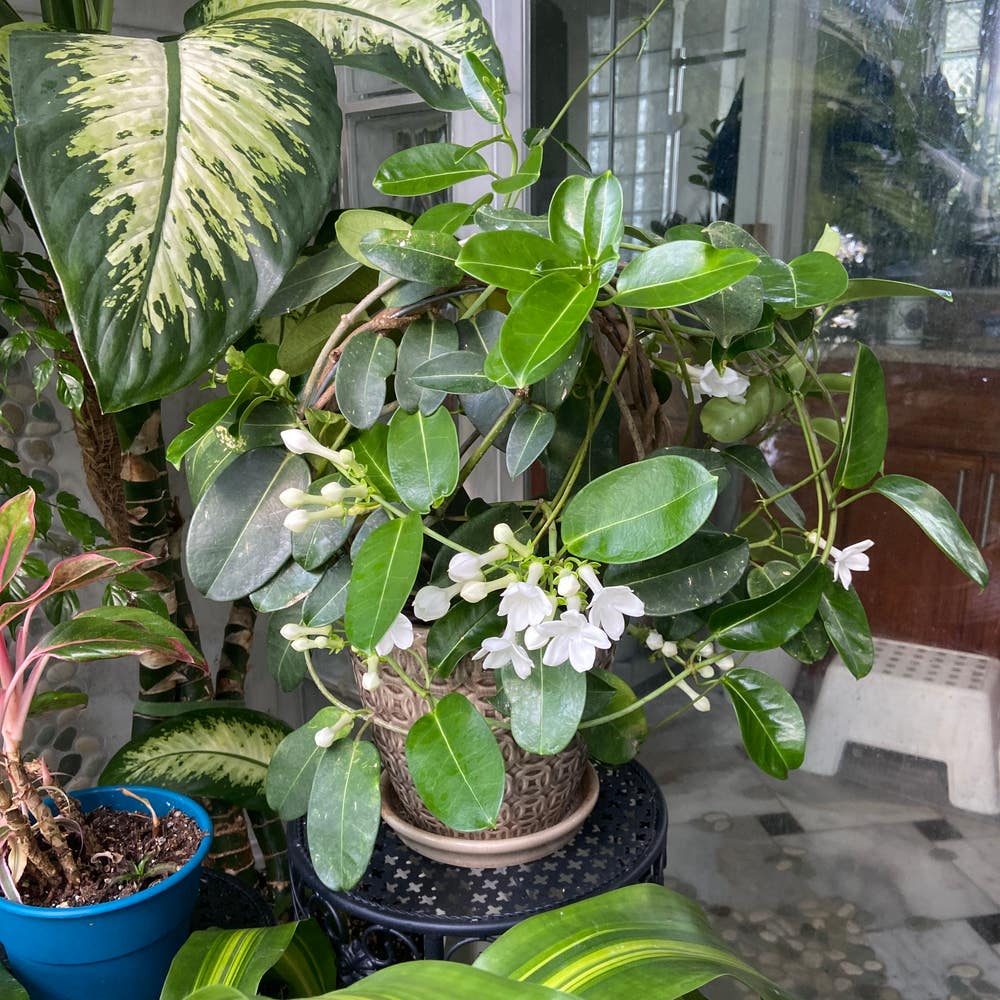
🌸 Madagascar Jasmine Roots 101
Stephanotis floribunda
By the Greg Editorial Team
Sep 30, 2024•6 min read
This article was created with the help of AI so we can cover more plants for you. May contain errors. See one? Report it here.
- 🌱 Madagascar Jasmine has fibrous roots for effective nutrient absorption and adaptability.
- 💧 Avoid overwatering to prevent root rot; let soil dry between waterings.
- 🌿 Healthy roots are white and firm; monitor for signs of distress regularly.
Root System Characteristics
🌱 Type of Root System
Madagascar Jasmine features a fibrous root system, which is crucial for its growth. This type of root system has an extensive surface area, allowing for efficient nutrient uptake from the soil.
In comparison to taproot systems, fibrous roots have their own set of advantages and disadvantages. While taproots can reach deeper water sources, fibrous roots spread out more, making them better at absorbing nutrients from a wider area.
🔍 Specific Characteristics
One of the standout traits of Madagascar Jasmine's roots is their adaptability to various soil conditions. Whether in sandy, loamy, or clay soils, these roots can thrive, making the plant versatile in different environments.
However, they are also sensitive to overwatering. Excess moisture can lead to root rot, which poses significant risks to the plant's health. Understanding this sensitivity is key to maintaining a thriving Madagascar Jasmine.
With a solid grasp of these root system characteristics, you can better care for your plant and ensure it flourishes. Next, let’s explore the root depth and spread to understand how these factors influence overall growth.
Root Depth and Spread
Typical Patterns 🌱
Madagascar Jasmine typically boasts a root depth of 12 to 24 inches (30 to 60 cm). Its roots can spread impressively, extending up to 3 feet (90 cm) in diameter.
Growth Patterns and Care Implications 🌿
The depth and spread of these roots play a crucial role in the plant's stability and nutrient access. A well-established root system ensures that the plant can efficiently absorb water and nutrients, promoting healthy growth.
Providing adequate space for root expansion is vital. If roots are cramped, the plant may struggle to thrive, leading to stunted growth and nutrient deficiencies.
Understanding these growth patterns helps you create an optimal environment for your Madagascar Jasmine. By ensuring ample space, you support a robust root system that enhances the overall health of the plant.
Next, we’ll explore how watering and fertilizing practices impact root health and growth.
Watering and Fertilizing
🌊 Impact on Watering Needs
Watering your Madagascar Jasmine requires a delicate balance. It's crucial to allow the soil to dry out between waterings to prevent waterlogged roots.
Overwatering can lead to root rot, a common issue that can devastate your plant. Keep an eye out for yellowing leaves or a foul odor, which are telltale signs that your plant may be suffering.
🌱 Fertilization Strategies
When it comes to fertilizing, opt for a balanced fertilizer specifically designed for fibrous root systems. These fertilizers provide essential nutrients without overwhelming the delicate roots.
Timing is everything. Fertilize during the growing season, typically every 4-6 weeks, to support robust growth. This approach ensures your Madagascar Jasmine thrives and maintains its vibrant health.
Understanding the watering and fertilizing needs of your Madagascar Jasmine is key to nurturing a flourishing plant. With the right care, you can promote a strong root system that supports overall plant vitality.
Next, let’s explore the best practices for transplanting and maintaining root health.
Transplanting and Root Health
Best Practices 🌱
Timing is crucial when transplanting Madagascar Jasmine. The best season is typically spring, just as the plant begins to wake from dormancy. This timing allows the roots to establish themselves before the heat of summer sets in.
When it comes to techniques, minimizing root disturbance is key. Gently loosen the soil around the roots and lift the plant out with as much of the root ball intact as possible. This helps maintain the plant's health and encourages quicker recovery.
Common Issues and Solutions ⚠️
Root rot is a common concern during transplanting. It often arises from overwatering or poorly draining soil, leading to mushy roots that can emit a foul odor. To prevent this, ensure your pot has adequate drainage and allow the soil to dry out between waterings.
If you notice signs of root rot, act quickly. Remove the affected roots and repot the plant in fresh, well-draining soil. Regularly inspecting roots during transplanting can help maintain their health and prevent future issues.
With these practices, you can ensure your Madagascar Jasmine thrives in its new home, setting the stage for robust growth and resilience.
Identifying and Maintaining Root Health
Visual Cues 🌱
Healthy roots are a plant's lifeline. Look for roots that are white and firm, indicating vitality and good nutrient uptake.
On the flip side, unhealthy roots show distress. Brown, mushy roots with a foul odor signal problems like root rot, which can jeopardize your Madagascar Jasmine's health.
Maintenance Tips 🛠️
To keep those roots thriving, prioritize well-draining soil. This prevents water accumulation, which can lead to root rot.
Regularly inspect root health during repotting. Catching issues early can save your plant from serious damage and ensure it continues to flourish.
By understanding these visual cues and maintenance tips, you can effectively support your Madagascar Jasmine's root system, setting the stage for a robust and vibrant plant.
Addressing Rootbound Plants
Definition and Signs 🌱
Rootbound plants occur when the roots grow too densely, circling around the pot instead of spreading out. This often happens when a plant has outgrown its container, leading to stunted growth and nutrient deficiencies.
Common signs of a rootbound Madagascar Jasmine include roots visibly growing out of the drainage holes and a noticeable slowdown in growth. If your plant seems to be struggling despite proper care, it might be time to investigate its root situation.
Solutions 🛠️
Recognizing when to repot is crucial. Ideally, you should check your plant every year or so, especially if you notice the signs mentioned earlier. If the roots are tightly packed, it’s time for a new home.
When repotting, use safe techniques to relieve rootbound conditions. Gently tease apart the roots if they’re tightly wound, and consider trimming any excessively long or damaged roots. This encourages healthier growth and allows your Madagascar Jasmine to thrive in its new space.
By addressing rootbound issues promptly, you ensure your plant remains healthy and vibrant. Next, let’s explore the role of roots in plant resilience and how they help your Madagascar Jasmine withstand various stress factors.
The Role of Roots in Plant Resilience
🌪️ Stress Factors
Madagascar Jasmine faces several stress factors that can impact its health. Drought, pests, and diseases are the primary culprits that can weaken this beautiful plant.
Drought conditions can lead to insufficient water supply, affecting root function. Pests, such as aphids or spider mites, can sap the plant's vitality, while diseases may compromise root integrity.
💪 Enhancing Resilience
Strong roots are essential for withstanding these environmental stressors. They anchor the plant and facilitate nutrient and water uptake, which is crucial for overall health.
To promote root health, consider these strategies:
- Soil Quality: Use well-draining soil to prevent waterlogging.
- Regular Watering: Ensure consistent moisture without overwatering.
- Fertilization: Apply balanced fertilizers during the growing season to support root development.
By focusing on these aspects, you can enhance the resilience of your Madagascar Jasmine, ensuring it thrives even in challenging conditions.
Understanding the role of roots is key to nurturing a robust plant. With the right care, your Madagascar Jasmine can flourish, showcasing its beauty and resilience.
⚠️ Safety First
This content is for general information and may contain errors, omissions, or outdated details. It is not medical, veterinary advice, or an endorsement of therapeutic claims.
Always consult a qualified healthcare professional before using any plant as food, medicine, or supplement.
Never eat any plant (or feed one to pets) without confirming its identity with at least two trusted sources.
If you suspect poisoning, call Poison Control (800) 222-1222, the Pet Poison Helpline (800) 213-6680, or your local emergency service immediately.
Spotted an error? Please report it here.
Unlock the secret to thriving Madagascar Jasmine roots 🌿 with Greg's personalized watering reminders and expert care tips that keep your plant healthy and vibrant!