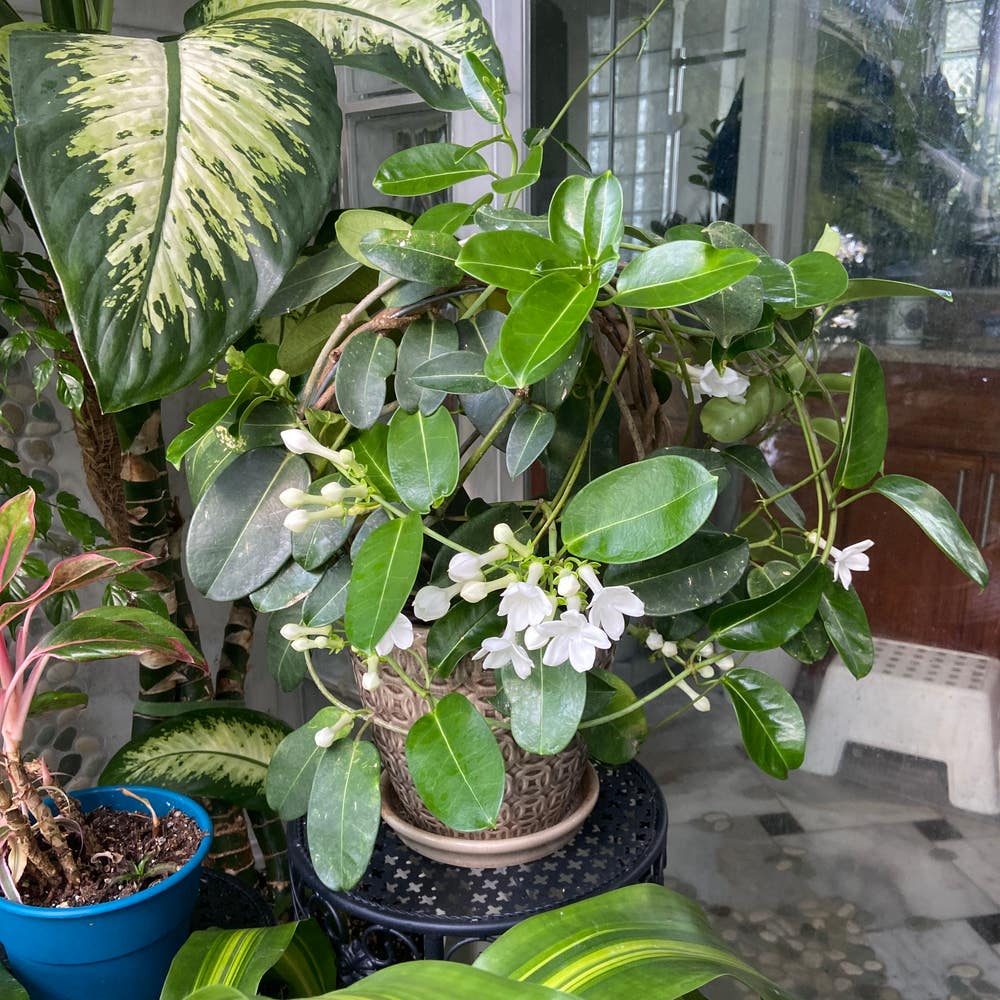
Understanding Curling Leaves on Your Madagascar Jasmine 🦋
Stephanotis floribunda
By the Greg Editorial Team
Sep 30, 2024•6 min read
This article was created with the help of AI so we can cover more plants for you. May contain errors. See one? Report it here.
- 🌱 Curling leaves indicate environmental stress; diagnose and intervene promptly for health.
- 💧 Maintain humidity between 50-70% to prevent leaf curling and support growth.
- 🌞 Bright, indirect sunlight is essential; insufficient light causes elongated stems and pale leaves.
Common Causes of Leaf Curling
🌪️ Environmental Stress
Leaf curling can be a distress signal from your Madagascar Jasmine. Look for symptoms like curling edges, discoloration, and wilting to identify the problem early.
Early diagnosis is crucial. Addressing these issues promptly can prevent further damage and ensure your plant's recovery.
🌫️ Humidity and Temperature Effects
Humidity
For optimal growth, aim for humidity levels between 50-70%. Low humidity can lead to curling leaves, browning edges, and drooping foliage.
To combat low humidity, consider using a humidifier, placing pebble trays filled with water near the plant, or misting the leaves regularly. These solutions can create a more favorable environment for your Madagascar Jasmine.
🌡️ Temperature Fluctuations
The ideal temperature range for your plant is between 20°C to 30°C (68°F to 86°F). If temperatures fluctuate too much, you may notice curling leaves, stunted growth, or even leaf drop.
To maintain stable temperatures, avoid placing your plant near drafts and consider using grow lights during cooler months. This will help keep your Madagascar Jasmine thriving.
☀️ Light Requirements
Madagascar Jasmine thrives in bright, indirect sunlight. If your plant isn't getting enough light, you might see elongated stems, leaf curl, and pale foliage.
To remedy this, reposition your plant to a brighter spot, use grow lights, or adjust window coverings to optimize light exposure. Ensuring your plant gets the right amount of light is key to its health.
Watering and Soil Care
Signs of Overwatering vs. Underwatering 🌊
Recognizing the signs of overwatering and underwatering is crucial for your Madagascar Jasmine's health. Overwatering often manifests as yellowing leaves, mushy stems, and root rot, while underwatering leads to dry, crispy leaves and wilting.
Maintaining consistent moisture is key. Aim for damp soil without letting it become waterlogged to keep your plant thriving.
Soil Composition and Drainage Needs 🪴
Choosing the right soil is essential for your plant's success. A well-draining potting mix enriched with organic matter is recommended to promote healthy growth.
Good drainage prevents root rot, which can be detrimental to your Madagascar Jasmine. Ensure your pot has drainage holes to facilitate this.
Best Practices for Watering 💧
To keep your plant hydrated, follow these best practices:
- Frequency: Water every 1-2 weeks, adjusting based on environmental conditions.
- Technique: Soak the soil thoroughly until water drains from the bottom.
- Seasonal Adjustments: Reduce watering during the winter months when the plant's growth slows.
By adhering to these guidelines, you can ensure your Madagascar Jasmine receives the right amount of water and soil care, setting the stage for vibrant growth and health.
Next, let’s explore pest and disease management to keep your plant in top shape.
Pest and Disease Management
🐜 Common Pests
Pests can wreak havoc on your Madagascar Jasmine, so it's crucial to identify them early.
Aphids
Aphids are tiny, soft-bodied insects that cluster on new growth. Look for signs like curled leaves and sticky residue, known as honeydew, which can lead to sooty mold.
Spider Mites
These minuscule pests thrive in dry conditions. Symptoms include fine webbing and stippled leaves, indicating damage.
Mealybugs
Mealybugs appear as white, cottony masses on stems and leaves. They suck sap, leading to weakened plants and potential leaf drop.
🍄 Identifying Fungal Infections
Fungal infections can be just as damaging as pests.
Common Issues
Powdery mildew and root rot are frequent culprits. Powdery mildew manifests as white, powdery spots on leaves, while root rot leads to wilting and a foul smell from the soil.
Symptoms
Watch for wilting leaves and unexpected leaf drop. These signs often indicate a fungal issue that needs immediate attention.
Prevention Methods
Good air circulation is key to preventing fungal infections. Ensure proper watering practices to avoid overly damp conditions that foster mold growth.
💊 Treatment Options
When it comes to treatment, you have several effective options.
Organic Pest Control Methods
Neem oil and insecticidal soap are excellent for managing pests without harsh chemicals. Introducing beneficial insects, like ladybugs, can also help keep pest populations in check.
Fungal Treatment Options
For fungal issues, fungicides can be effective, but improving overall plant care is equally important. Adjusting watering habits and ensuring good drainage can prevent future outbreaks.
Importance of Early Intervention
Acting quickly is essential. Early intervention can prevent the spread of pests and diseases, ensuring your Madagascar Jasmine thrives.
By staying vigilant and proactive, you can keep your plant healthy and vibrant. Next, let’s explore the nutritional needs of your Madagascar Jasmine to support its growth and resilience.
Nutritional Needs
Essential Nutrients 🌱
Madagascar Jasmine thrives on a balanced diet of essential nutrients. Key players include nitrogen, phosphorus, potassium, and various micronutrients, each contributing to the plant's overall health and vibrant leaf development.
Signs of Nutrient Deficiency 🚨
Recognizing nutrient deficiencies early can save your plant from distress. For instance, nitrogen deficiency manifests as yellowing leaves and stunted growth, while phosphorus deficiency shows up as dark green leaves with purple undertones. Potassium deficiency, on the other hand, leads to curling leaves and browning edges.
Fertilization Schedule and Methods 📅
To keep your Madagascar Jasmine flourishing, fertilize every 4-6 weeks during the growing season. Opt for balanced NPK fertilizers or organic options to provide the necessary nutrients. Always follow package instructions for application techniques and avoid over-fertilization to ensure your plant remains healthy.
By understanding and addressing the nutritional needs of your Madagascar Jasmine, you can foster a thriving environment that promotes lush growth and vibrant foliage. Next, let’s explore preventive measures to keep your plant in top shape.
Preventive Measures
Regular Maintenance Tips 🌱
Routine inspections are crucial for keeping your Madagascar Jasmine healthy. Check for pests, diseases, and environmental conditions regularly to catch any issues early.
Pruning is another essential practice. By removing dead or damaged leaves, you encourage new growth and improve the plant's overall appearance.
Seasonal Care Adjustments 🍂
As the seasons change, so should your care practices. Adjust watering, humidity, and light exposure to suit the needs of your plant throughout the year.
Preparing for winter is particularly important. Reduce watering and protect your plant from cold drafts to ensure it thrives during the colder months.
Monitoring Plant Health 📓
Keeping a care journal can be a game changer. Track your watering, fertilization, and any changes in plant health to stay on top of your plant's needs.
Recognizing early signs of stress, like curling leaves or discoloration, is vital. Addressing these issues promptly can prevent them from escalating into more significant problems.
By staying proactive and attentive, you can ensure your Madagascar Jasmine remains vibrant and healthy. This commitment to care will pay off in lush, beautiful foliage.
⚠️ Safety First
This content is for general information and may contain errors, omissions, or outdated details. It is not medical, veterinary advice, or an endorsement of therapeutic claims.
Always consult a qualified healthcare professional before using any plant as food, medicine, or supplement.
Never eat any plant (or feed one to pets) without confirming its identity with at least two trusted sources.
If you suspect poisoning, call Poison Control (800) 222-1222, the Pet Poison Helpline (800) 213-6680, or your local emergency service immediately.
Spotted an error? Please report it here.
Combat curling leaves and nurture your Madagascar Jasmine 🌿 with Greg's tailored care tips and reminders, ensuring it flourishes in the perfect environment!