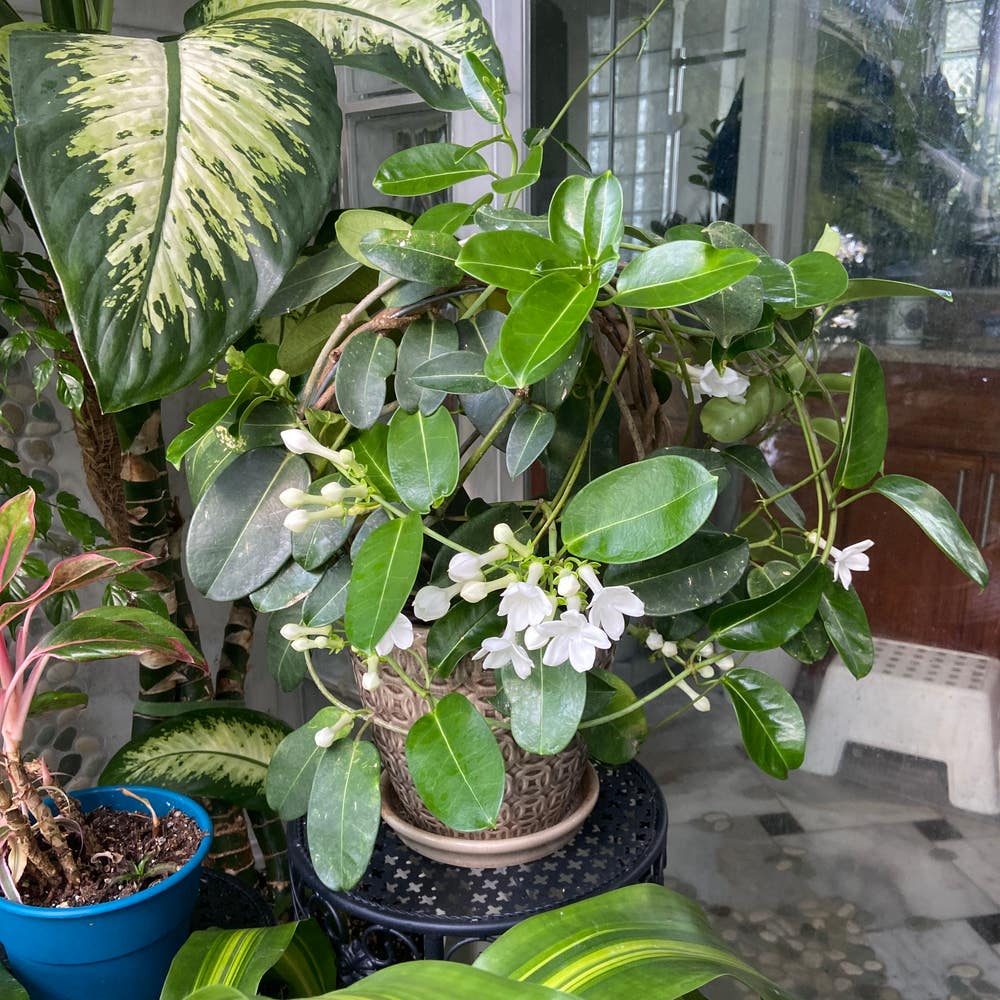
🌼 7 Tips for Growing Madagascar Jasmine Indoors
Stephanotis floribunda
By the Greg Editorial Team
Sep 30, 2024•5 min read
This article was created with the help of AI so we can cover more plants for you. May contain errors. See one? Report it here.
- 🌞 Madagascar Jasmine needs 4-6 hours of bright, indirect sunlight daily for optimal growth.
- 💧 Water when the top 1-2 inches of soil are dry; avoid overwatering signs.
- 🌿 Maintain humidity between 50-70% and temperatures of 18°C to 24°C for best results.
Light Requirements
Ideal Light Conditions for Indoor Growth 🌞
Madagascar Jasmine thrives in bright, indirect sunlight for about 4-6 hours daily. If you notice stunted growth, fewer flowers, or leggy stems, your plant may not be getting enough light.
Role of Grow Lights 💡
In low-light conditions, grow lights become essential for supplementing natural light. LED and fluorescent options are popular choices, each offering unique benefits for indoor gardening.
Choosing the Best Grow Light 🛠️
When selecting a grow light, consider the light spectrum, wattage, and adjustable height. Full-spectrum LED grow lights with a color temperature between 5000K and 6500K are highly recommended for optimal growth.
Understanding light requirements is crucial for nurturing your Madagascar Jasmine. With the right conditions, your plant will flourish and reward you with its beautiful blooms. Next, let’s explore the watering needs to keep your plant healthy and vibrant.
Watering Needs
Frequency and Amount of Watering 🌊
Watering your Madagascar Jasmine is straightforward. The general guideline is to water when the top 1-2 inches of soil feel dry.
Typically, you’ll find yourself watering every 1-2 weeks, but this can vary based on your indoor conditions. Factors like humidity and temperature play a significant role in how quickly the soil dries out.
Signs of Overwatering and Underwatering 🚨
Recognizing the signs of overwatering is crucial for your plant's health. Look out for yellowing leaves, root rot, and mushy stems—these are clear indicators that you might be giving your plant too much water.
On the flip side, underwatering can also cause distress. If you notice wilting leaves, dry soil, or leaf drop, it’s time to reassess your watering routine.
Understanding these signs will help you keep your Madagascar Jasmine thriving. With the right care, you’ll enjoy a lush, vibrant plant that brings beauty to your indoor space.
Next, let’s explore the ideal humidity and temperature conditions for your Madagascar Jasmine to flourish.
Humidity and Temperature
Ideal Humidity Levels 🌧️
Madagascar Jasmine thrives in humidity levels between 50-70%. If you notice brown tips on the leaves or leaf drop, it’s a clear sign that your plant is craving more moisture.
Temperature Range for Optimal Growth 🌡️
The ideal temperature for your Madagascar Jasmine is between 18°C to 24°C (65°F to 75°F). Be cautious of temperatures dipping below 10°C (50°F), as this can stress the plant and hinder its growth.
Humidity Control Methods 💧
To boost humidity, consider using humidifiers, pebble trays, or simply grouping your plants together. For accurate readings, a hygrometer is a handy tool to monitor humidity levels effectively.
Maintaining the right humidity and temperature is crucial for the health of your Madagascar Jasmine. With these tips, you'll create an environment where your plant can flourish beautifully. Next, let’s explore the best soil and fertilization practices to keep your Jasmine thriving.
Soil and Fertilization
Best Soil Type 🌱
For Madagascar Jasmine to thrive indoors, choose a well-draining potting mix enriched with organic matter. This ensures that the roots receive adequate aeration and moisture without becoming waterlogged.
The ideal pH level for the soil should be slightly acidic to neutral, ranging from 6.0 to 7.0. This pH balance helps the plant absorb nutrients effectively, promoting healthy growth.
Fertilization Schedule and Types 🌿
Fertilizing your Madagascar Jasmine is crucial for its growth. Aim to fertilize every 4-6 weeks during the growing season to provide essential nutrients.
When selecting fertilizers, opt for a balanced liquid fertilizer with an NPK ratio of 20-20-20 or consider slow-release granules. Both options will support robust growth and vibrant blooms.
By ensuring the right soil and fertilization practices, you set the stage for a flourishing Madagascar Jasmine. Next, let’s explore common issues and solutions to keep your plant healthy and thriving.
Common Issues and Solutions
🐛 Common Pests and Prevention Methods
Madagascar Jasmine can attract pests like spider mites, aphids, and mealybugs. Regular inspections are key to catching these nuisances early.
To prevent infestations, consider using neem oil or insecticidal soap. These natural solutions can effectively deter pests without harming your plant.
🦠 Diseases Specific to Indoor Jasmine
Indoor Jasmine is susceptible to diseases such as root rot and powdery mildew. Root rot often stems from overwatering, while powdery mildew thrives in high humidity and poor air circulation.
To prevent these issues, ensure proper watering techniques and maintain good airflow around your plant. This simple care can save your Jasmine from serious health problems.
🌱 Troubleshooting Growth Problems
If you notice yellowing leaves or a lack of blooms, your plant may be struggling. These symptoms often indicate issues with light, water, or humidity levels.
Adjusting these factors can lead to a healthier, more vibrant plant. Regularly reassess your care routine to keep your Madagascar Jasmine thriving.
By staying vigilant and proactive, you can tackle these common challenges head-on. This will ensure your indoor Jasmine remains a stunning addition to your home.
Placement and Maintenance
Best Locations in the Home 🌅
For your Madagascar Jasmine to thrive, place it near east or west-facing windows. These spots provide the bright, filtered light it craves while avoiding harsh direct sunlight.
Keep your plant away from drafts. Air conditioning vents and heaters can create uncomfortable conditions that hinder growth.
Tips for Maintaining Appearance ✨
Regularly wipe the leaves to remove dust. This simple act boosts photosynthesis and keeps your plant looking vibrant.
Monitor your plant's growth closely. If you notice leggy stems, it may be time to adjust its light exposure for a fuller appearance.
Pruning and Training Techniques ✂️
Pruning is essential for encouraging bushier growth. Trim back any leggy stems to promote a more compact shape.
Consider using trellises or hanging baskets for support. This not only helps your plant climb but also adds an attractive element to your indoor space.
By following these placement and maintenance tips, your Madagascar Jasmine will flourish, bringing beauty and fragrance to your home. Next, let’s explore the soil and fertilization needs to keep your plant healthy and thriving.
⚠️ Safety First
This content is for general information and may contain errors, omissions, or outdated details. It is not medical, veterinary advice, or an endorsement of therapeutic claims.
Always consult a qualified healthcare professional before using any plant as food, medicine, or supplement.
Never eat any plant (or feed one to pets) without confirming its identity with at least two trusted sources.
If you suspect poisoning, call Poison Control (800) 222-1222, the Pet Poison Helpline (800) 213-6680, or your local emergency service immediately.
Spotted an error? Please report it here.
Transform your indoor space into a fragrant oasis 🌼 by using Greg's tailored care reminders to ensure your Madagascar Jasmine thrives with every tip from this guide!