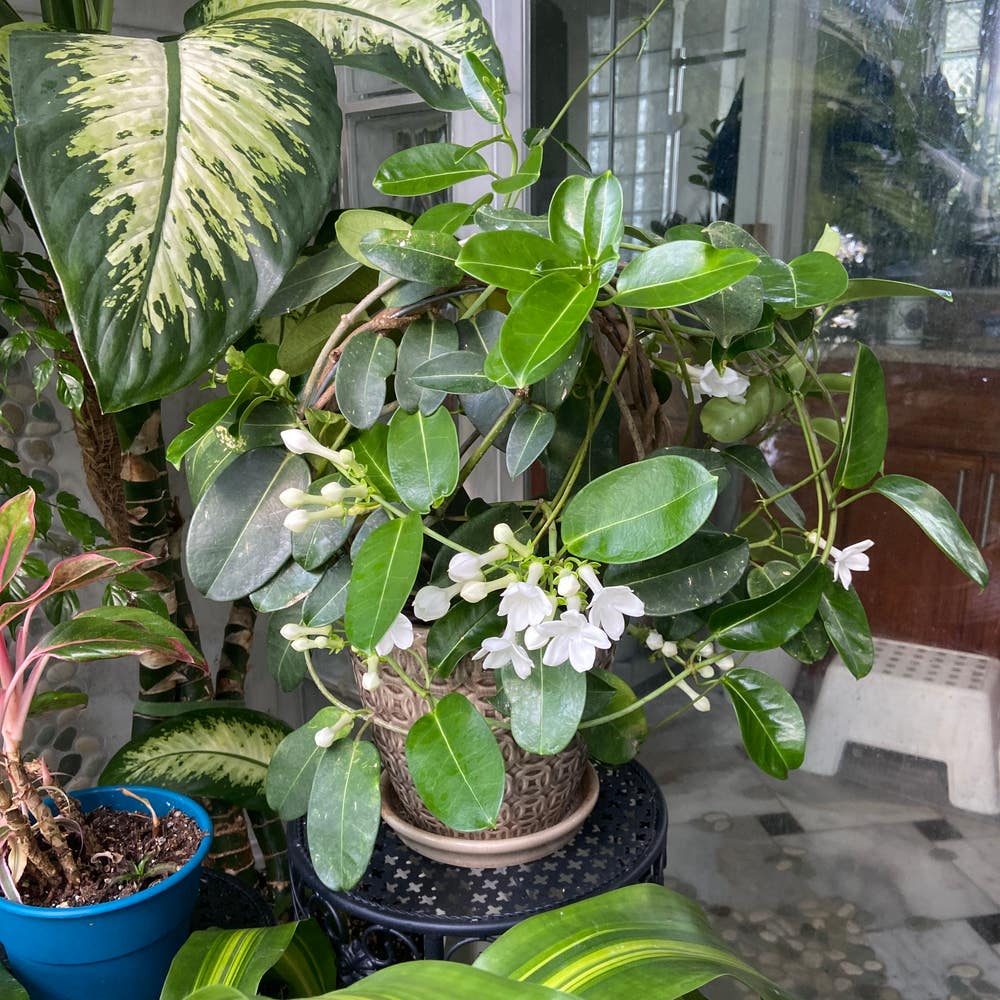
Best Temperature Conditions for Madagascar Jasmine ☀️
Stephanotis floribunda
By the Greg Editorial Team
Sep 30, 2024•4 min read
This article was created with the help of AI so we can cover more plants for you. May contain errors. See one? Report it here.
- 🌡️ Temperature stress causes wilting, leaf drop, and yellowing in Madagascar Jasmine.
- ❄️🔥 Cold and heat stress lead to damage; monitor conditions closely.
- 🌿 Proper acclimation and ventilation prevent shock and promote healthy growth.
Temperature Stress Symptoms
Signs of Temperature Stress 🌡️
Temperature stress can manifest in several ways. Wilting leaves often indicate heat stress, signaling that your Madagascar Jasmine is struggling to cope with high temperatures.
Leaf drop is another common symptom, occurring in both cold and heat stress scenarios. If you notice leaves falling off, it's a clear sign that your plant needs attention.
Yellowing leaves frequently point to nutrient deficiencies caused by stress. This can happen when the plant is unable to absorb nutrients effectively due to unfavorable temperature conditions.
Effects of Cold Stress ❄️
Cold stress can be particularly damaging. Frost damage results in brown, mushy leaves, which can be a heartbreaking sight for any plant lover.
Additionally, stunted growth can occur, leading to reduced vigor and fewer flowers. If your Madagascar Jasmine endures long-term exposure to cold, it may even face the risk of death.
Effects of Heat Stress 🔥
Heat stress presents its own set of challenges. Leaf scorch is a telltale sign, characterized by brown edges and a crispy texture that can ruin the plant's aesthetic.
Moreover, heat stress can lead to reduced flowering, meaning fewer fragrant blooms to enjoy. This condition also increases the plant's susceptibility to pests and diseases, making it crucial to monitor temperature closely.
Understanding these symptoms and effects is vital for maintaining the health of your Madagascar Jasmine. With the right care, you can ensure your plant thrives, regardless of the temperature challenges it faces.
Causes of Temperature Stress
🌡️ Environmental Factors
Temperature stress in Madagascar Jasmine often stems from environmental fluctuations. Sudden temperature drops, particularly during nighttime in spring and fall, can shock the plant.
Heat waves also pose a significant threat, as prolonged exposure to high temperatures can lead to severe stress. Additionally, poor ventilation in indoor settings can trap heat, exacerbating the problem.
❌ Common Mistakes
Many plant enthusiasts unknowingly contribute to temperature stress through common mistakes. Overwatering is a frequent issue, leading to root rot and further stress on the plant.
Inadequate shading during peak sunlight hours can scorch leaves, while neglecting to acclimate plants when moving them indoors or outdoors can shock their systems.
🏠 Indoor vs. Outdoor Conditions
Understanding the differences between indoor and outdoor conditions is crucial. Indoor environments offer control but can easily overheat if not monitored.
Conversely, outdoor conditions provide natural light and air but expose the plant to unpredictable elements. Regular temperature monitoring in both settings is essential to keep your Madagascar Jasmine thriving.
By being aware of these factors, you can better protect your plant from temperature stress and ensure its vibrant growth. Next, let’s explore effective temperature management techniques to maintain optimal conditions for your Madagascar Jasmine.
Temperature Management Techniques
Tips for Maintaining Optimal Temperatures 🌡️
To keep your Madagascar Jasmine thriving, monitoring temperature is essential. Use thermometers to track the environment, ensuring it stays within the ideal range.
Placement is also crucial. Position your plant near windows for natural light, but avoid direct sunlight to prevent overheating.
Use of Greenhouses or Indoor Settings 🏡
Greenhouses offer a fantastic solution for temperature control. They create a stable environment, shielding your plant from extreme weather fluctuations.
If you're growing indoors, consider using grow lights and temperature regulation devices. These tools help maintain a consistent climate, promoting healthy growth.
Seasonal Adjustments 🍂
As seasons change, so should your care routine. In winter, move your Madagascar Jasmine indoors or provide frost protection to shield it from cold snaps.
During summer, utilize shade cloths or misting systems to cool down your plant. Regularly check and adjust conditions based on seasonal changes to ensure your Madagascar Jasmine remains happy and healthy.
With these temperature management techniques, you can create an ideal environment for your Madagascar Jasmine, setting the stage for vibrant blooms and lush foliage. Next, let's explore the causes of temperature stress and how to avoid them.
⚠️ Safety First
This content is for general information and may contain errors, omissions, or outdated details. It is not medical, veterinary advice, or an endorsement of therapeutic claims.
Always consult a qualified healthcare professional before using any plant as food, medicine, or supplement.
Never eat any plant (or feed one to pets) without confirming its identity with at least two trusted sources.
If you suspect poisoning, call Poison Control (800) 222-1222, the Pet Poison Helpline (800) 213-6680, or your local emergency service immediately.
Spotted an error? Please report it here.
Ensure your Madagascar Jasmine flourishes by mastering its temperature needs 🌡️ with Greg's tailored reminders and monitoring tools for optimal growth and stunning blooms!