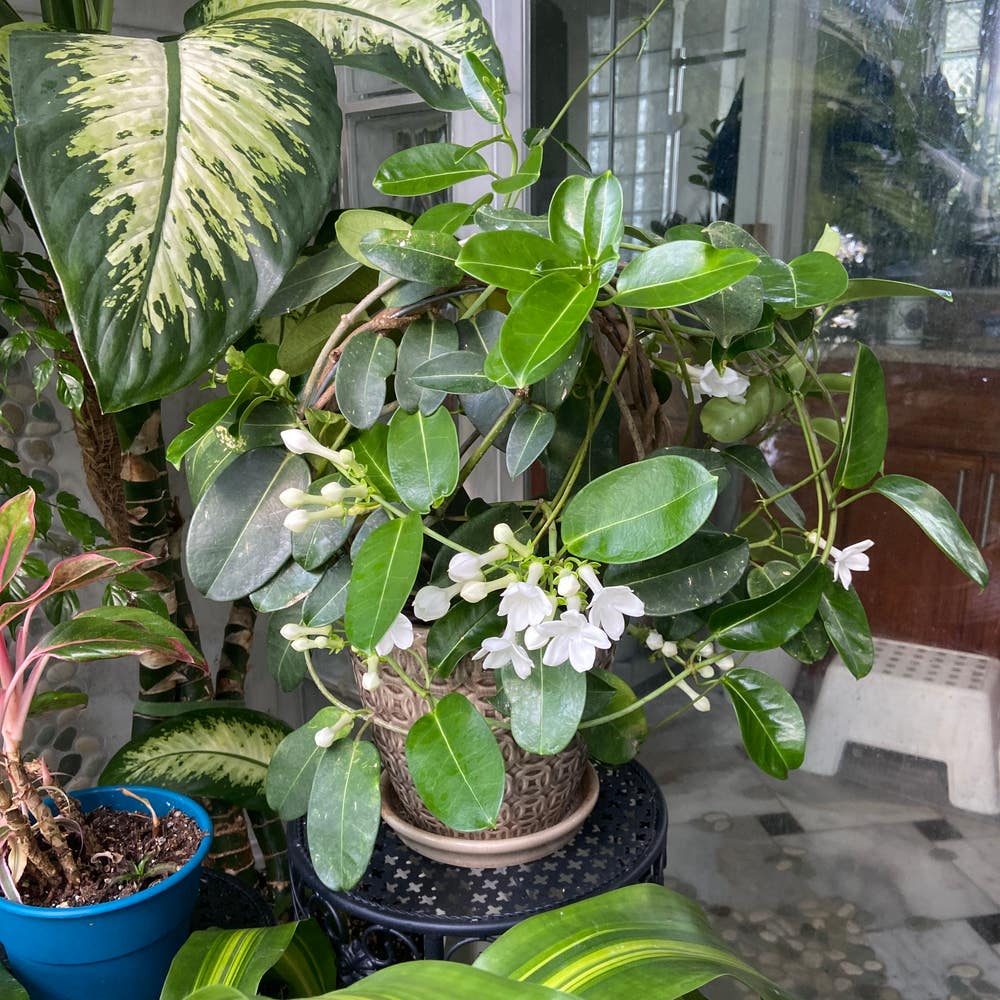
🌸 3 Perfect Plant Partners for Madagascar Jasmine
Stephanotis floribunda
By the Greg Editorial Team
Sep 30, 2024•4 min read
This article was created with the help of AI so we can cover more plants for you. May contain errors. See one? Report it here.
- 🌱 Madagascar Jasmine thrives with companions sharing similar light and watering needs.
- 🌼 Hoya and Sweet Alyssum enhance beauty while attracting pollinators and repelling pests.
- 🌿 Ferns retain moisture and support Madagascar Jasmine's growth, creating a lush garden.
Ideal Companion Plants
Plant 1: Hoya 🌸
Hoya is a stunning climbing plant known for its waxy, fragrant flowers that bloom in delightful clusters. This beauty thrives in bright, indirect light and prefers well-draining soil, making it a perfect match for Madagascar Jasmine.
To keep your Hoya happy, moderate watering is essential; avoid waterlogged conditions to ensure its roots stay healthy. Not only does Hoya attract pollinators, enhancing your garden's ecosystem, but it also shares similar growth habits, creating a harmonious partnership with Madagascar Jasmine.
Plant 2: Sweet Alyssum 🌼
Sweet Alyssum is a charming low-growing flowering plant that delights with its sweet fragrance and small white or purple flowers. It flourishes in well-draining soil and enjoys full sun to partial shade, making it a compatible companion for Madagascar Jasmine.
This plant requires moderate watering, aligning perfectly with the needs of your Jasmine. Beyond its beauty, Sweet Alyssum acts as a natural pest repellent, particularly against aphids, while enhancing garden diversity with its ground cover and vibrant blooms.
Plant 3: Ferns 🍃
Ferns are shade-tolerant plants that bring lush greenery and texture to your garden. They thrive in indirect light and prefer well-draining, moist soil, making them an excellent choice alongside Madagascar Jasmine.
Consistent moisture is key for ferns, but be careful not to let them become waterlogged. These plants help retain soil moisture, benefiting your Jasmine, and they offer a contrasting texture that adds visual appeal to your garden.
By choosing these ideal companion plants, you can create a thriving garden environment that supports Madagascar Jasmine while enhancing its beauty and resilience. Next, let’s explore how these companions can help with pest management.
Pest Management
Companion Plants for Pest Control 🌱
Companion planting is a fantastic strategy for managing pests naturally. Certain plants can repel unwanted insects through their scent or chemical properties, creating a healthier garden environment.
Additionally, some companions attract beneficial insects. These pollinators and predatory insects help control pest populations, ensuring your Madagascar Jasmine thrives.
Specific Pests 🐜
Aphids can be a real nuisance, but Sweet Alyssum comes to the rescue. Its fragrant flowers not only beautify your garden but also deter these pesky pests.
Spider mites are another common issue. Ferns play a crucial role here by maintaining humidity levels, which helps reduce spider mite infestations. Keeping your garden balanced and healthy is all about choosing the right companions.
With these strategies, you can cultivate a thriving ecosystem that supports your Madagascar Jasmine while keeping pests at bay.
Visual Appeal
Enhancing Aesthetics 🌿
Creating layers in your garden is essential for visual interest. Pairing the climbing Madagascar Jasmine with low-growing companions adds depth and dimension to your space.
Color and Texture Combinations 🎨
Hoya’s waxy flowers provide a striking contrast to the delicate blooms of Sweet Alyssum. This combination not only attracts the eye but also enhances the overall beauty of your garden.
Ferns contribute lush greenery, serving as a vibrant backdrop. Their texture complements the other plants, making your garden feel more dynamic and inviting.
By thoughtfully selecting companion plants, you can transform your garden into a stunning visual masterpiece. This harmonious blend not only pleases the eye but also supports the health of your Madagascar Jasmine.
As you explore these aesthetic possibilities, consider how each plant interacts with the others. The right combinations can elevate your garden to new heights, setting the stage for the next section on pest management.
Plants to Avoid
🚫 Incompatible Plants
When planning your garden, it's crucial to know which plants to steer clear of. Heavy feeders like tomatoes and peppers can compete fiercely for nutrients, leaving your Madagascar Jasmine struggling to thrive.
Moisture-loving plants, such as caladiums, also pose a risk. Their high water requirements can lead to root rot, jeopardizing the health of your jasmine.
⚠️ Reasons for Incompatibility
The competition for nutrients is a significant concern. Heavy feeders can deplete the soil, impacting the growth and vitality of your Madagascar Jasmine.
Additionally, some plants attract pests that can harm your jasmine. For instance, those that draw aphids or spider mites can create a challenging environment for your beloved plant.
Understanding these incompatibilities helps you create a thriving garden ecosystem. By avoiding these plants, you ensure your Madagascar Jasmine has the best chance to flourish alongside its ideal companions.
Next, let’s explore how to enhance the visual appeal of your garden with thoughtful plant pairings.
⚠️ Safety First
This content is for general information and may contain errors, omissions, or outdated details. It is not medical, veterinary advice, or an endorsement of therapeutic claims.
Always consult a qualified healthcare professional before using any plant as food, medicine, or supplement.
Never eat any plant (or feed one to pets) without confirming its identity with at least two trusted sources.
If you suspect poisoning, call Poison Control (800) 222-1222, the Pet Poison Helpline (800) 213-6680, or your local emergency service immediately.
Spotted an error? Please report it here.
Elevate your Madagascar Jasmine's health and beauty with perfect companions like Hoya and Sweet Alyssum, and let Greg's tailored reminders 📅 ensure your plants thrive in harmony!