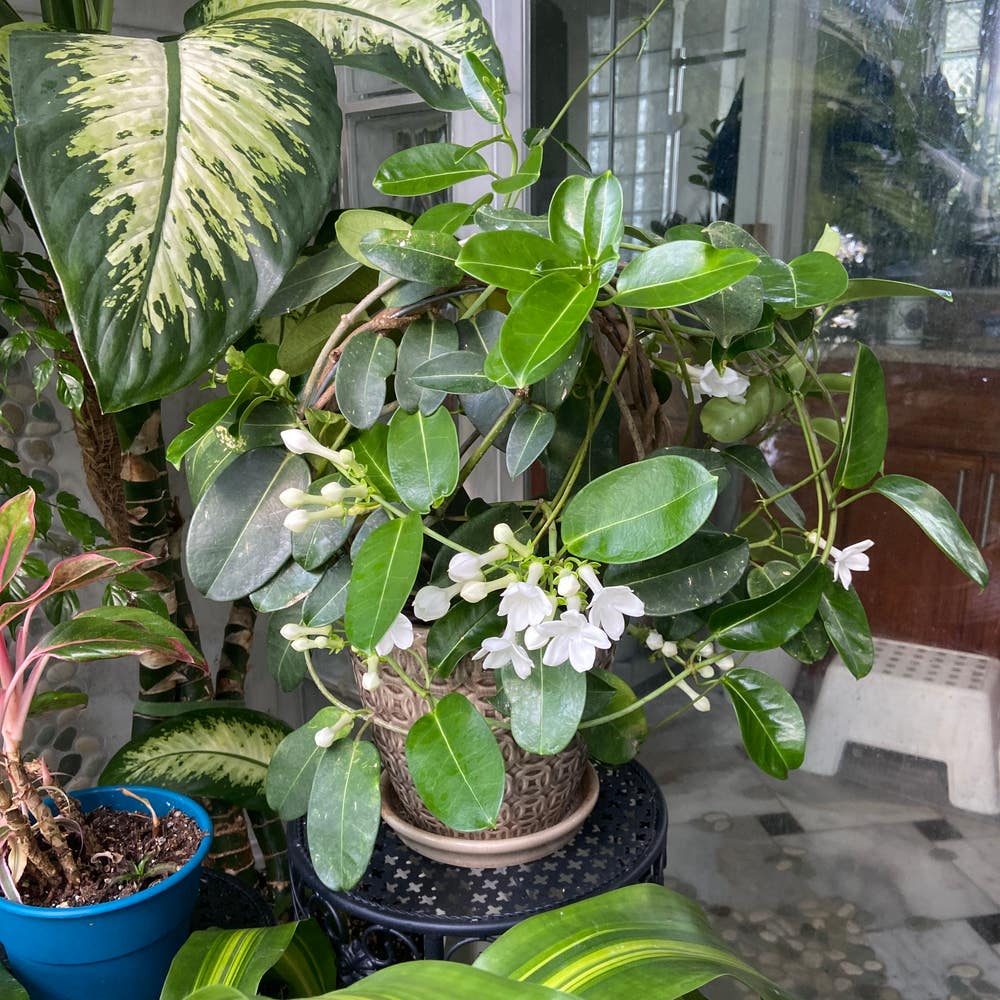
🌸 4 Factors Influencing Madagascar Jasmine Growth
Stephanotis floribunda
By the Greg Editorial Team
Sep 30, 2024•7 min read
This article was created with the help of AI so we can cover more plants for you. May contain errors. See one? Report it here.
- 🌱 Madagascar Jasmine germinates in 2-4 weeks with proper temperature and moisture.
- ☀️ Bright, indirect sunlight is crucial for healthy seedlings; avoid low light.
- 🌼 Flowering starts 2-3 years after planting, requiring warm temperatures and consistent moisture.
Germination Stage
Duration of germination 🌱
The germination period for Madagascar Jasmine typically spans 2 to 4 weeks. This timeframe can vary based on several factors, including temperature, moisture, and the quality of the seeds.
Conditions for successful germination 🌡️
To ensure successful germination, aim for an optimal temperature range of 20°C to 25°C (68°F to 77°F).
Soil Requirements
Use a well-draining, light soil mix to promote healthy growth. Heavy soils can hinder the germination process.
Moisture Levels
Maintaining consistent moisture is crucial, but avoid waterlogging. Too much water can lead to seed rot, while too little can halt germination.
By creating the right conditions, you set the stage for a thriving Madagascar Jasmine plant. Next, we’ll explore the seedling stage and what to expect as your plant begins to grow.
Seedling Stage
Length of seedling stage 🌱
The seedling stage of Madagascar Jasmine lasts about 4 to 8 weeks. This period is crucial as it leads to the emergence of true leaves, marking a significant step in the plant's development.
Key characteristics of seedlings 🌿
Initially, seedlings display cotyledons, which are the first leaves to emerge. Following this, true leaves develop, showcasing the plant's growth potential.
Growth habit
During this stage, the seedlings grow upright, gradually developing their leaf structure. This upright growth is essential for establishing a strong foundation.
Importance of light
Bright, indirect sunlight is vital for healthy seedling growth. Insufficient light can hinder development, so ensuring the right light conditions is key to nurturing these young plants.
As the seedlings mature, they set the stage for the next growth phase. Understanding their needs now will help you cultivate robust Madagascar Jasmine plants in the future.
Vegetative Growth Stage
Duration of vegetative growth 🌱
The vegetative growth stage of Madagascar Jasmine lasts approximately 6-12 months. This duration can vary based on environmental conditions and care practices.
Changes in foliage and structure 🍃
During this stage, you'll notice a significant transformation in the plant's foliage. The leaves transition from small, delicate structures to larger, glossy leaves that are visually striking.
Growth habit 🌿
As the plant matures, its growth habit becomes more pronounced. Expect increased vine length and branching, creating a lush, vibrant appearance.
Support needs 🏗️
With this rapid growth, Madagascar Jasmine may require additional support. Trellising or other forms of support can help manage its expanding structure and encourage healthy growth.
This stage is crucial for setting the foundation for flowering, which will come next. Understanding these changes will help you provide the right care as your plant continues to thrive.
Flowering Stage
Timeframe for flowering 🌸
Madagascar Jasmine typically begins to flower 2-3 years after planting. Once it starts, the flowering period usually lasts 4-6 weeks, offering a beautiful display.
Characteristics of flowers 🌼
The flowers are fragrant, white, and tubular, making them a delightful addition to any garden. They attract pollinators like bees and butterflies, enhancing the ecosystem around them.
Environmental triggers 🌞
For Madagascar Jasmine to bloom successfully, it requires warm temperatures and adequate light. These conditions are crucial for encouraging the plant to produce its stunning flowers.
As the flowering stage unfolds, the plant not only showcases its beauty but also sets the stage for seed production. Understanding this phase is essential for nurturing your Madagascar Jasmine effectively.
Seed Production Stage
Overview of Seed Production 🌱
Seed production in Madagascar Jasmine is a fascinating process that follows successful flowering and pollination. After the flowers have been pollinated, seeds begin to form within pods, marking a crucial step in the plant's life cycle.
Duration and Conditions for Seed Production ⏳
The timeframe for seed production typically spans 4-6 months after flowering. For optimal seed maturation, warm temperatures and consistent moisture are essential, ensuring that the seeds develop properly.
As you nurture your Madagascar Jasmine, keep an eye on these conditions to support healthy seed production. This stage not only signifies the plant's reproductive success but also sets the stage for future growth.
Transitioning from seed production, let’s explore the overall lifespan of Madagascar Jasmine and what influences its longevity.
Overall Lifespan of Madagascar Jasmine
Average lifespan 🌱
Madagascar Jasmine typically enjoys a lifespan of 5 to 10 years when provided with optimal conditions. This longevity allows gardeners to appreciate its beauty and fragrance for several seasons.
Factors affecting longevity 🌍
Several factors can influence the lifespan of this stunning plant. Environmental conditions such as temperature, humidity, and soil quality play a crucial role in its health.
Regular care practices are equally important. Consistent pruning and effective pest management can significantly extend the life of your Madagascar Jasmine.
Signs of maturity and decline 📉
As Madagascar Jasmine matures, it will exhibit clear indicators. Flowering and seed production are prime signs of a healthy, mature plant.
Conversely, signs of decline include yellowing leaves, reduced flowering, and stunted growth. Recognizing these symptoms early can help you take action to rejuvenate your plant.
Understanding the lifespan and care needs of Madagascar Jasmine not only enhances your gardening experience but also prepares you for the next stages of its growth. Let’s explore how long it takes for this beautiful plant to reach full maturity.
Growth Rate and Maturation
🌱 How long until Madagascar Jasmine is fully grown?
Madagascar Jasmine typically reaches full maturity in about 2 to 3 years. This timeframe can vary based on several factors, including environmental conditions, care practices, and the plant's genetics.
📈 Factors influencing growth rate
Light exposure plays a crucial role in growth rate. Full sun encourages faster growth compared to partial shade.
Soil quality is another key factor. Nutrient-rich, well-draining soil supports robust growth.
Watering practices also matter. Consistent moisture is essential, but avoid overwatering to prevent root rot.
🌍 Comparison of growth rates in different environments
In tropical climates, Madagascar Jasmine enjoys faster growth rates due to optimal conditions.
Indoor growth often differs from outdoor growth, primarily due to variations in light and humidity levels.
Understanding these factors can help you create the best environment for your Madagascar Jasmine, ensuring it thrives beautifully.
As you nurture your plant, keep an eye on its growth stages, and adjust care practices accordingly. This attention will lead to a flourishing Jasmine that brings joy and fragrance to your space.
Notable Changes Throughout Life Cycle
🌱 Physical Changes at Each Growth Stage
The life cycle of Madagascar Jasmine is a fascinating journey.
Germination: This stage kicks off with the emergence of the seedling from the soil, marking the beginning of life.
Seedling: As the plant develops, it showcases true leaves and establishes a robust root system, setting the foundation for future growth.
Vegetative: During this phase, you'll notice increased height and larger leaves, signaling that the plant is thriving.
Flowering: Finally, the plant bursts into bloom, producing beautiful flowers and seed pods, completing its reproductive cycle.
🌿 Changes in Care Needs as the Plant Matures
As Madagascar Jasmine grows, its care requirements evolve.
Watering Frequency: You'll need to adjust your watering routine based on the growth stage. Younger plants require more frequent watering, while mature plants can tolerate drier conditions.
Fertilization: Nutrient needs ramp up during the flowering stage. Regular fertilization ensures the plant has the energy to produce those stunning blooms.
Support Requirements: As the plant transitions from ground growth to vertical climbing, it may need trellising or other support structures to thrive.
Understanding these changes not only enhances your gardening skills but also fosters a deeper connection with this beautiful plant. As you nurture it through its life stages, you'll witness the magic of growth and transformation.
⚠️ Safety First
This content is for general information and may contain errors, omissions, or outdated details. It is not medical, veterinary advice, or an endorsement of therapeutic claims.
Always consult a qualified healthcare professional before using any plant as food, medicine, or supplement.
Never eat any plant (or feed one to pets) without confirming its identity with at least two trusted sources.
If you suspect poisoning, call Poison Control (800) 222-1222, the Pet Poison Helpline (800) 213-6680, or your local emergency service immediately.
Spotted an error? Please report it here.
Unlock the secrets to thriving Madagascar Jasmine 🌼 with Greg's tailored care reminders and expert tips, ensuring your plant flourishes and fills your space with its delightful fragrance!