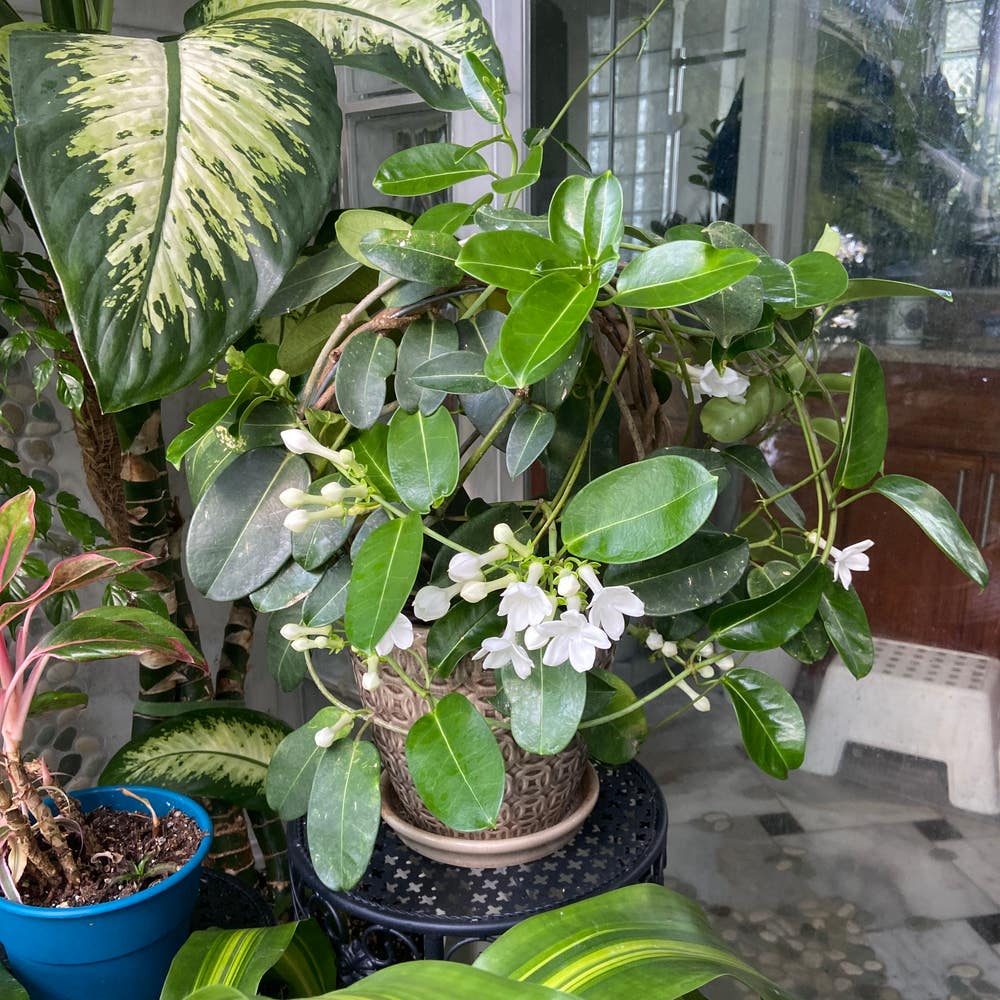
Understanding Brown Spots on Your Madagascar Jasmine Leaves 🐛
Stephanotis floribunda
By the Greg Editorial Team
Sep 30, 2024•6 min read
This article was created with the help of AI so we can cover more plants for you. May contain errors. See one? Report it here.
- 🌱 Brown spots on Madagascar Jasmine arise from fungi, bacteria, pests, or nutrient issues.
- 💧 Overwatering and humidity are key factors; maintain proper drainage and moisture levels.
- 🔍 Regular inspections help catch problems early, ensuring your plant stays healthy and vibrant.
Causes of Brown Spots
🦠 Fungal Infections
Fungal infections are a common culprit behind brown spots on Madagascar Jasmine leaves. Leaf spot disease and powdery mildew are two prevalent types, often manifesting as dark brown or black spots surrounded by yellow halos.
High humidity and poor air circulation create ideal conditions for these fungi to thrive. Keeping your plant in a well-ventilated area can help mitigate these issues.
🦠 Bacterial Infections
Bacterial infections can also lead to unsightly brown spots. These typically present as water-soaked areas that may eventually turn brown.
Overly wet foliage and poor drainage are conditions that favor bacterial growth. Ensuring your plant has adequate drainage can help prevent these infections.
🐛 Pest Infestations
Pests like spider mites, aphids, and mealybugs can wreak havoc on your Madagascar Jasmine. Symptoms include yellowing leaves, webbing, and sticky residue on the foliage.
These pests feed on the plant's sap, weakening it over time. Regular inspections can help catch infestations early.
🥦 Nutrient Deficiencies
Nutrient deficiencies, particularly in nitrogen and potassium, can lead to brown spots. Affected leaves often show yellowing with brown edges or spots.
These deficiencies can significantly impact your plant's growth and flowering. Regular fertilization can help maintain nutrient levels.
🌞 Environmental Stress
💡 Light
Light conditions play a crucial role in plant health. Insufficient light can cause etiolated growth and pale leaves, while excessive light can scorch leaves, resulting in brown spots.
Finding the right balance is key to keeping your Madagascar Jasmine thriving.
💧 Humidity
Madagascar Jasmine prefers humidity levels between 50-70%. Low humidity can lead to brown tips and spots on leaves.
Using a humidifier or pebble tray can help maintain optimal humidity levels.
🌡️ Temperature
The ideal temperature range for Madagascar Jasmine is between 18°C to 24°C (65°F to 75°F). Extreme temperatures can cause wilting and browning of leaves.
Monitoring your plant's environment will help ensure it remains healthy and vibrant.
Understanding these causes is essential for effective diagnosis and treatment. Next, we’ll explore how to diagnose the specific problems affecting your Madagascar Jasmine.
Diagnosing the Problem
🌊 Identifying Symptoms of Overwatering
Overwatering can lead to yellowing leaves, mushy stems, and brown spots. Check the soil; if it feels consistently wet and drainage is poor, you might be giving your Madagascar Jasmine too much love.
💧 Identifying Symptoms of Underwatering
On the flip side, underwatering shows up as wilting and crispy leaf edges, often accompanied by brown spots. If the soil is dry and hard, it’s a clear sign your plant is thirsty.
🐛 Recognizing Pest Damage
Pests can wreak havoc on your plant's health. Conduct a visual inspection, focusing on the undersides of leaves and stems; look for distorted leaves or sticky residue that signals an infestation.
🔍 Differentiating Between Fungal and Bacterial Issues
Understanding the difference between fungal and bacterial problems is crucial. Fungal infections typically present as dark, defined spots with yellow halos, while bacterial issues show up as water-soaked, irregular spots.
By diagnosing these problems early, you can take action to restore your Madagascar Jasmine to its vibrant self. Next, let’s explore effective treatment options to tackle these issues head-on.
Treatment Options
How to Treat Fungal Infections 🌱
Fungal infections can wreak havoc on your Madagascar Jasmine. Start by removing any affected leaves to prevent the spread of the disease.
Next, apply a fungicide according to the instructions on the label. This will help eliminate the fungus and protect your plant.
Finally, improve air circulation around your plant. Good airflow reduces humidity, making it less favorable for fungal growth.
How to Manage Bacterial Infections 🦠
Bacterial infections require a slightly different approach. Begin by removing any infected leaves to minimize further contamination.
Avoid overhead watering, as wet foliage encourages bacterial growth. If the problem persists, consider using a bactericide for more severe cases.
Pest Control Methods 🐛
Pest infestations can be a real nuisance. For organic control, try using neem oil or insecticidal soap, which are effective yet gentle on your plant.
If the infestation is severe, systemic insecticides may be necessary. These options target pests more aggressively, ensuring your plant's health is restored.
Nutrient Supplementation 🌿
Nutrient deficiencies can also lead to brown spots. A balanced NPK fertilizer is your best bet for replenishing essential nutrients.
Apply this fertilizer every 4-6 weeks during the growing season. This regular feeding will support robust growth and vibrant blooms.
By addressing these treatment options, you can effectively combat the issues affecting your Madagascar Jasmine. Next, let’s explore preventive measures to keep your plant thriving.
Preventive Measures
Best Watering Practices 🌊
To keep your Madagascar Jasmine thriving, establish a consistent watering schedule. Allow the top inch of soil to dry out between waterings to prevent root rot.
Watering at the base is crucial. This technique helps avoid wetting the leaves, which can lead to fungal issues.
Soil and Drainage Recommendations 🪴
Choosing the right soil is essential for healthy plants. Use a well-draining potting mix to ensure excess water can escape.
Additionally, opt for containers with drainage holes. This prevents water from pooling at the bottom, safeguarding your plant's roots.
Ideal Humidity and Temperature Conditions 🌡️
Maintaining the right humidity is vital for your Madagascar Jasmine. Aim for levels between 50-70%, and consider using a humidifier or pebble tray to achieve this.
Temperature also plays a significant role. Keep your plant in a stable environment, ideally between 18°C to 24°C (65°F to 75°F), to avoid stress.
Proper Sunlight Exposure ☀️
Your Madagascar Jasmine loves bright, indirect sunlight. Position it near a window where it can soak up light without being scorched.
Avoid direct sunlight, as it can lead to unsightly brown spots on the leaves. Finding that sweet spot of light will keep your plant happy and healthy.
By implementing these preventive measures, you can significantly reduce the risk of brown spots and other issues. Next, let's explore how to monitor and maintain your plant for ongoing health.
Monitoring and Maintenance
Regular Inspection of Leaves 🌿
To keep your Madagascar Jasmine thriving, conduct weekly inspections. Look for color changes, brown spots, or any pests lurking on the leaves.
Seasonal Care Adjustments 🍂
As the seasons change, so should your care routine. Adjust watering and humidity levels accordingly, and keep an eye on indoor temperature fluctuations.
Importance of Cleanliness in Plant Care 🧼
A clean plant is a happy plant. Regularly wipe down leaves to remove dust and pests, ensuring a healthy growing environment that helps prevent disease.
By staying vigilant and proactive, you can maintain the health of your Madagascar Jasmine and enjoy its beauty year-round. Next, let’s explore the best preventive measures to keep your plant in top shape.
⚠️ Safety First
This content is for general information and may contain errors, omissions, or outdated details. It is not medical, veterinary advice, or an endorsement of therapeutic claims.
Always consult a qualified healthcare professional before using any plant as food, medicine, or supplement.
Never eat any plant (or feed one to pets) without confirming its identity with at least two trusted sources.
If you suspect poisoning, call Poison Control (800) 222-1222, the Pet Poison Helpline (800) 213-6680, or your local emergency service immediately.
Spotted an error? Please report it here.
Combat those pesky brown spots on your Madagascar Jasmine leaves and keep it thriving 🌿 with Greg's tailored care reminders and expert tips that take the guesswork out of plant care!