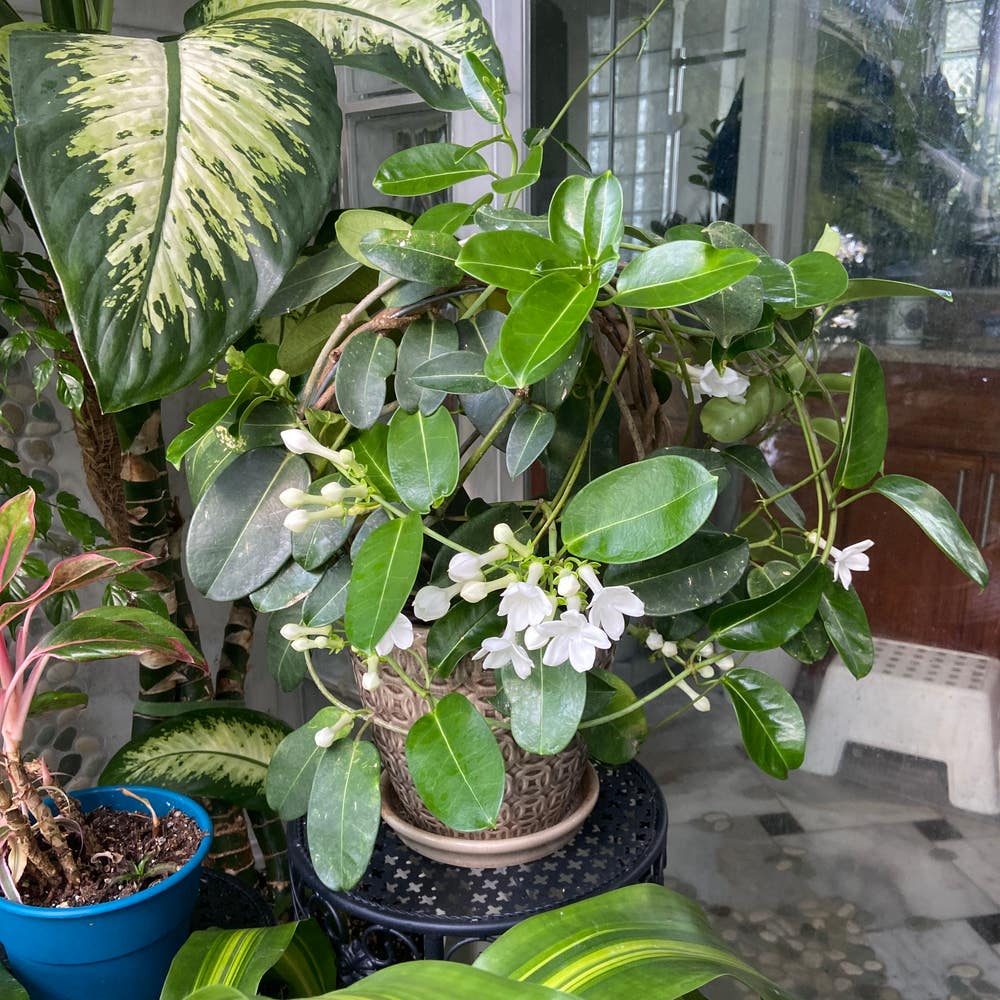
Understanding Why Madagascar Jasmine May Not Flower 🌸
Stephanotis floribunda
By the Greg Editorial Team
Sep 30, 2024•6 min read
This article was created with the help of AI so we can cover more plants for you. May contain errors. See one? Report it here.
- 🌞 Madagascar Jasmine needs 6-8 hours of bright, indirect light to flower effectively.
- 🌡️ Maintain temperatures between 60°F to 75°F for optimal growth and blooming.
- 💧 High humidity (50%+) and well-draining soil are crucial for thriving and flowering.
Common Causes of Non-Flowering
💡 Insufficient Light Conditions
Bright, indirect light is crucial for Madagascar Jasmine to thrive and produce blooms. If your plant is showing signs like leggy growth or yellowing leaves, it may not be getting enough light.
Aim for 6-8 hours of indirect sunlight daily to encourage optimal flowering. Adjusting its location or using grow lights can make a significant difference.
🌪️ Environmental Stress Factors
Temperature fluctuations can hinder flowering, with the ideal range being 60°F to 75°F (15°C to 24°C). Additionally, Madagascar Jasmine thrives in high humidity, ideally 50% or more.
Be mindful of drafts or sudden environmental changes, as these can stress the plant and affect its ability to bloom. Keeping a consistent environment is key to encouraging flowers.
🌱 Soil Conditions
Well-draining soil is essential for healthy root development in Madagascar Jasmine. Poor soil conditions can lead to waterlogged roots and stunted growth, which will ultimately affect flowering.
For best results, use a soil mix of equal parts potting soil, perlite, and peat moss. This combination ensures proper drainage and nutrient availability, setting the stage for vibrant blooms.
Understanding these common causes can help you troubleshoot why your Madagascar Jasmine isn't flowering. With the right light, environment, and soil conditions, you can encourage your plant to thrive and bloom beautifully.
Nutritional Deficiencies and Their Impact
🌸 Essential Nutrients for Flower Development
Madagascar Jasmine thrives on a balanced diet of nitrogen, phosphorus, and potassium (NPK). These key nutrients are essential for vibrant blooms and overall plant health.
Symptoms of nutrient deficiencies can be quite telling. Look for yellowing leaves and poor bud formation as red flags that your plant might be lacking essential nutrients.
To keep your Madagascar Jasmine flourishing, follow a fertilization schedule of every 4-6 weeks during the growing season. This regular feeding will help ensure your plant has the nutrients it needs to produce beautiful flowers.
⚠️ Over-Fertilization Issues
While nutrients are vital, too much of a good thing can be detrimental. Signs of over-fertilization include leaf burn and salt buildup in the soil, which can harm your plant's health.
To combat this, it's crucial to flush the soil with water periodically. This practice helps remove excess nutrients, allowing your Madagascar Jasmine to regain its balance and thrive once more.
By addressing both nutritional deficiencies and over-fertilization, you can create an optimal environment for your Madagascar Jasmine to bloom beautifully. Next, let’s explore effective pruning techniques that can further encourage flowering.
Pruning Techniques to Encourage Blooming
🕰️ Timing and Techniques for Pruning
Pruning Madagascar Jasmine is best done in late winter or early spring, just before new growth starts. This timing ensures the plant can recover quickly and focus its energy on blooming.
To promote a bushier growth habit, remove any dead or damaged stems. Pinching back the tips of the branches can also encourage fuller foliage, setting the stage for more flowers.
✂️ Preventing Bud Drop Through Pruning
Maintaining the shape and health of your Madagascar Jasmine is crucial for preventing bud drop. If you notice flowers falling before they fully open, it’s a sign that your plant may be stressed.
To minimize bud drop, avoid heavy pruning during the blooming season. Instead, focus on light maintenance to keep the plant healthy and thriving, ensuring it can support its blooms effectively.
Pruning is not just about cutting; it's about nurturing your plant's potential. With the right techniques and timing, you can encourage your Madagascar Jasmine to flourish beautifully.
Next, let’s explore how to manage environmental stressors that can impact flowering.
Pest and Disease Issues Related to Flower Development
🐜 Common Pests Affecting Madagascar Jasmine
Aphids
Aphids are tiny pests that can wreak havoc on your Madagascar Jasmine. Look for signs like sticky residue on leaves and curled foliage, which indicate an infestation.
To control aphids, consider using insecticidal soap or neem oil. These treatments are effective and can help restore your plant's health without harsh chemicals.
Spider Mites
Spider mites are another common threat. You might notice fine webbing on your plant or stippled leaves, which are clear symptoms of their presence.
Increasing humidity around your plant can deter spider mites. If the problem persists, miticides can be an effective solution.
🦠 Diseases Impacting Flowering
Root Rot
Root rot is a serious condition that can prevent your Madagascar Jasmine from flowering. Symptoms include wilting and yellowing leaves, signaling that something is wrong below the surface.
This disease often results from overwatering or poor drainage. To prevent root rot, ensure your plant has well-draining soil and adopt proper watering practices.
By keeping an eye on pests and diseases, you can help your Madagascar Jasmine thrive and bloom beautifully. Next, let’s explore solutions to common flowering issues.
Solutions to Flowering Issues
🌞 Adjusting Light Conditions for Optimal Blooming
To encourage Madagascar Jasmine to bloom, start by improving its light exposure. Relocating the plant to a brighter spot or using grow lights can make a significant difference.
Monitoring light levels is also crucial. A light meter can help ensure your plant receives the recommended 6-8 hours of indirect sunlight daily.
🌱 Fertilization Strategies to Promote Flowering
Fertilization plays a key role in flower development. Consider using balanced NPK fertilizers or specialized bloom boosters to provide essential nutrients.
When applying fertilizers, you have options. Foliar feeding delivers nutrients directly to the leaves, while soil application nourishes the roots.
✂️ Effective Pruning Methods to Prevent Bud Drop
Pruning is vital for maintaining plant health and encouraging blooms. Follow this step-by-step guide:
- Assess plant health and growth.
- Remove any dead or damaged stems.
- Pinch back tips to encourage branching.
Timing is essential; avoid heavy pruning during the blooming season to prevent disrupting the flower cycle.
🌧️ Managing Environmental Stressors
Environmental factors can hinder flowering, so maintaining ideal conditions is key. Use pebble trays or humidifiers to keep humidity levels high.
Additionally, monitor temperature closely. Avoid drafts and extreme heat to create a stable environment for your plant.
🐛 Identifying and Treating Pests Affecting Flowers
Regular inspections are your first line of defense against pests. Look for signs of infestation early to prevent damage.
Implement integrated pest management strategies by combining biological and chemical controls. This approach helps keep your Madagascar Jasmine healthy and thriving.
With these solutions, you can enhance your Madagascar Jasmine's chances of blooming beautifully. Next, let's explore the common pests and diseases that can affect flower development.
⚠️ Safety First
This content is for general information and may contain errors, omissions, or outdated details. It is not medical, veterinary advice, or an endorsement of therapeutic claims.
Always consult a qualified healthcare professional before using any plant as food, medicine, or supplement.
Never eat any plant (or feed one to pets) without confirming its identity with at least two trusted sources.
If you suspect poisoning, call Poison Control (800) 222-1222, the Pet Poison Helpline (800) 213-6680, or your local emergency service immediately.
Spotted an error? Please report it here.
Transform your Madagascar Jasmine into a blooming beauty 🌸 with Greg's tailored care reminders and tips to ensure it gets the light, humidity, and nutrients it craves!