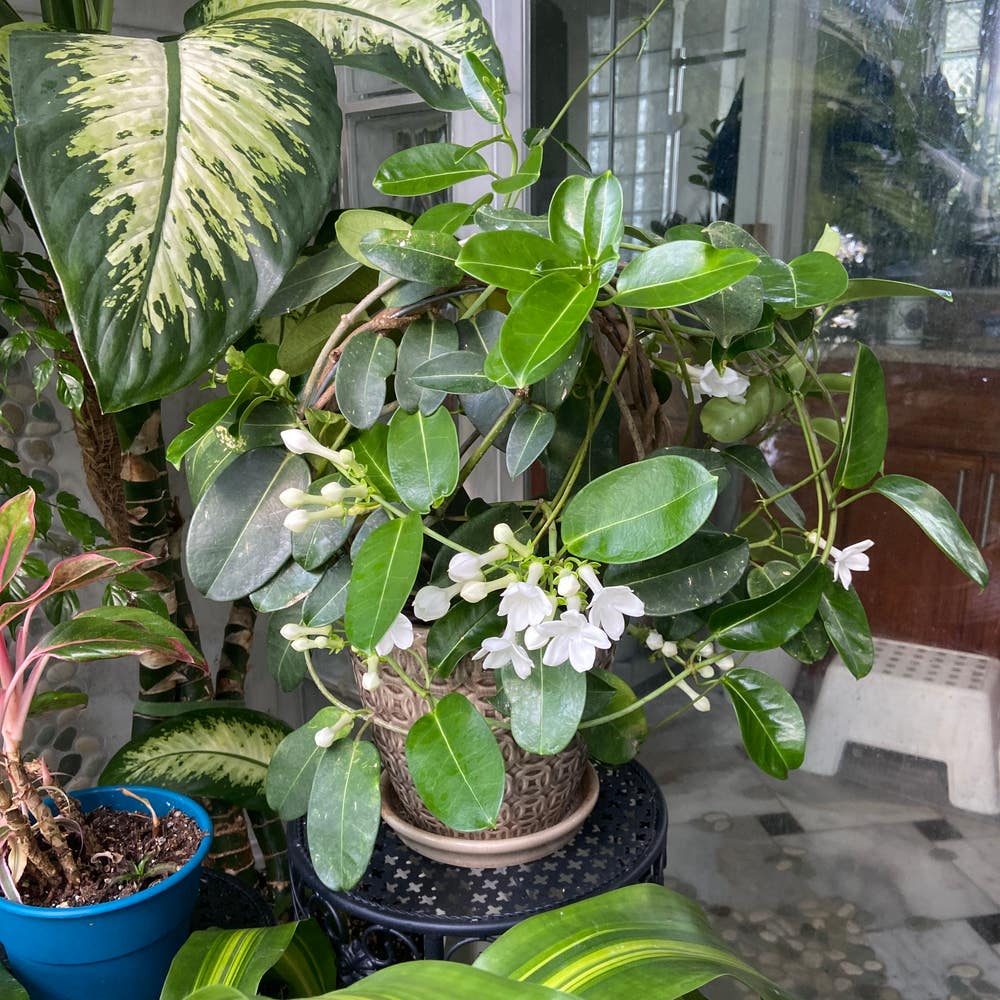
🌸 8 Secrets to Successfully Grow Madagascar Jasmine
Stephanotis floribunda
By the Greg Editorial Team
Sep 30, 2024•7 min read
This article was created with the help of AI so we can cover more plants for you. May contain errors. See one? Report it here.
- 🌞 Madagascar Jasmine thrives in bright, indirect light; avoid direct sunlight for best results.
- 💧 Water deeply when the top inch is dry; prevent yellowing leaves from overwatering.
- ✂️ Prune in late winter for bushier growth and increased blooming potential.
Choosing the Right Location
Light Requirements 🌞
Madagascar Jasmine thrives in bright, indirect light when grown indoors. For outdoor settings, it prefers partial shade to full sun, but be cautious of harsh afternoon rays that can scorch its delicate leaves.
Temperature and Humidity Preferences 🌡️
This plant flourishes in a temperature range of 65°F to 80°F (18°C to 27°C). It also craves high humidity, ideally 50% or more, so consider using a humidifier or placing pebble trays filled with water nearby to create a more favorable environment.
By ensuring the right light and humidity, you'll set the stage for your Madagascar Jasmine to thrive beautifully. Next, let’s explore how to prepare the perfect soil for planting.
Soil Preparation
Ideal Soil Mix 🌱
To ensure your Madagascar Jasmine thrives, start with a well-draining, rich soil. A great mix combines potting soil, perlite, and peat moss in a ratio of 2 parts potting soil, 1 part perlite, and 1 part peat moss.
This blend not only provides essential nutrients but also promotes healthy root development. The perlite enhances drainage, preventing waterlogging, which is crucial for this plant's health.
pH Level Considerations ⚗️
Madagascar Jasmine prefers a slightly acidic to neutral pH level, ideally between 6.0 and 7.0. Maintaining the right pH is vital for nutrient absorption and overall plant vitality.
To check your soil's pH, use a soil pH meter or a test kit. Regular testing helps you adjust the soil conditions, ensuring your plant gets the best possible environment to flourish.
With the right soil mix and pH level, your Madagascar Jasmine will be set for success. Next, let’s explore the best planting techniques to give your plant a strong start.
Planting Techniques
Best Practices for Planting in Containers 🌱
When planting Madagascar Jasmine in containers, start by choosing one with drainage holes. This is crucial to prevent waterlogging, which can harm the roots.
Next, fill the container with your prepared soil mix, ensuring you leave enough space for the root ball. Plant the jasmine at the same depth it was in the nursery pot to promote healthy growth.
After planting, water thoroughly to help settle the soil around the roots. This initial watering is essential for establishing your plant.
Outdoor Planting Tips 🌳
For outdoor planting, first select a location that offers the right light and protection from wind. This will create a stable environment for your Madagascar Jasmine to thrive.
Dig a hole that is twice the size of the root ball to give the roots ample space to spread. Amending the soil with compost will provide additional nutrients, enhancing growth.
Once planted, water well to ensure the roots are hydrated. Adding mulch around the base will help retain moisture and keep the soil temperature consistent.
With these planting techniques, you're setting the stage for a flourishing Madagascar Jasmine. Next, let’s explore how to care for your plant through proper watering and fertilizing.
Watering and Fertilizing
💧 Watering Needs
Watering your Madagascar Jasmine is crucial for its health. Check the top inch of soil; if it feels dry, it’s time to water.
When you do water, ensure you do so deeply. This encourages deep root growth while preventing waterlogging, which can lead to root issues.
🚰 Signs of Overwatering or Underwatering
Recognizing the signs of overwatering is essential. Look for yellowing leaves, wilting, or even root rot as indicators that you might be giving your plant too much water.
On the flip side, underwatering manifests as drooping leaves, dry soil, and leaf drop. Keeping an eye on these signs will help you maintain a healthy plant.
🌱 Fertilizing Schedule
Fertilizing is another key aspect of care. Use a balanced liquid fertilizer, like a 10-10-10 mix, during the growing season to provide essential nutrients.
Plan to fertilize every 4-6 weeks from spring to early fall. This routine will help your Madagascar Jasmine thrive and produce beautiful blooms.
By mastering watering and fertilizing, you're setting the stage for a flourishing plant. Next, let’s dive into the importance of pruning and maintenance to keep your Jasmine in top shape.
Pruning and Maintenance
Importance of Pruning for Growth and Health 🌱
Pruning is essential for Madagascar Jasmine as it encourages bushier growth and increases blooming potential. By removing dead or damaged stems, you promote overall plant health and vitality.
Best Times to Prune 🕰️
The ideal time to prune is late winter to early spring, just before new growth begins. This timing helps the plant recover quickly and thrive in the upcoming growing season.
Techniques for Effective Pruning ✂️
Always use clean, sharp pruning shears to make precise cuts. Aim to cut just above a leaf node; this encourages new growth and keeps your plant looking tidy.
Ongoing Care Routine 🔍
Regularly inspect your Madagascar Jasmine for pests and diseases. Adjust your care routine with the seasons; for instance, reduce watering during the winter months when the plant's growth slows down.
By incorporating these pruning and maintenance practices, you’ll ensure your Madagascar Jasmine remains healthy and vibrant. Next, let’s explore common challenges and solutions to keep your plant thriving.
Common Challenges and Solutions
🐞 Identifying and Managing Pests
Madagascar Jasmine can attract a few pesky pests, primarily aphids and spider mites. To keep them at bay, consider using neem oil or insecticidal soap, both of which are effective and eco-friendly options.
Introducing beneficial insects, like ladybugs, can also help control pest populations naturally. These tiny allies feast on aphids, providing a sustainable solution to your pest problems.
🦠 Addressing Diseases
Root rot is a common issue, often stemming from overwatering. To prevent this, ensure your plant is in well-draining soil that allows excess moisture to escape.
Leaf spot, a fungal disease, can be troublesome as well. Improve air circulation around your plant and avoid overhead watering to minimize the risk of this disease.
🌬️ Environmental Challenges
Low humidity can be a challenge for Madagascar Jasmine, especially in dry climates. Increase humidity levels by misting the leaves or using a humidifier to create a more favorable environment.
Temperature fluctuations can also stress your plant. Protect it from cold drafts and extreme heat to maintain a stable growing condition.
By addressing these common challenges, you can ensure your Madagascar Jasmine thrives and flourishes in your care. Next, let’s explore effective propagation techniques to expand your collection!
Propagation Techniques
🌱 Methods of Propagating
Stem Cuttings
Stem cuttings are a straightforward way to propagate Madagascar Jasmine. Start by selecting healthy stems that are about 4-6 inches long.
Next, remove the lower leaves and dip the cut ends in rooting hormone. This step boosts your chances of successful rooting.
Finally, plant the cuttings in a well-draining medium and keep the soil moist. Consistency is key here; don’t let them dry out!
Layering Techniques
Layering is another effective propagation method, especially for those who want to expand their plant collection without cutting. Choose a flexible stem and make a small cut on it.
Bury the cut section in soil while keeping the tip exposed. This allows the plant to continue receiving nutrients while developing roots.
Water the buried section regularly until you see roots forming. Patience is essential, but the results are worth it!
🌿 Tips for Successful Propagation
To ensure your propagation efforts succeed, maintain high humidity around the cuttings. This can be easily achieved by using a clear plastic bag or dome to create a mini greenhouse effect.
Keeping the environment humid helps the cuttings thrive and encourages root development. With these techniques, you’ll be well on your way to growing new Madagascar Jasmine plants.
As you embark on your propagation journey, remember that each method has its unique charm and benefits. Whether you choose stem cuttings or layering, both techniques can lead to a flourishing garden filled with beautiful blooms.
Next, let’s explore common challenges you might face and how to tackle them effectively.
⚠️ Safety First
This content is for general information and may contain errors, omissions, or outdated details. It is not medical, veterinary advice, or an endorsement of therapeutic claims.
Always consult a qualified healthcare professional before using any plant as food, medicine, or supplement.
Never eat any plant (or feed one to pets) without confirming its identity with at least two trusted sources.
If you suspect poisoning, call Poison Control (800) 222-1222, the Pet Poison Helpline (800) 213-6680, or your local emergency service immediately.
Spotted an error? Please report it here.
Grow your Madagascar Jasmine flourishingly 🌼 with Greg's tailored care reminders and expert tips that keep your plant thriving in any environment!