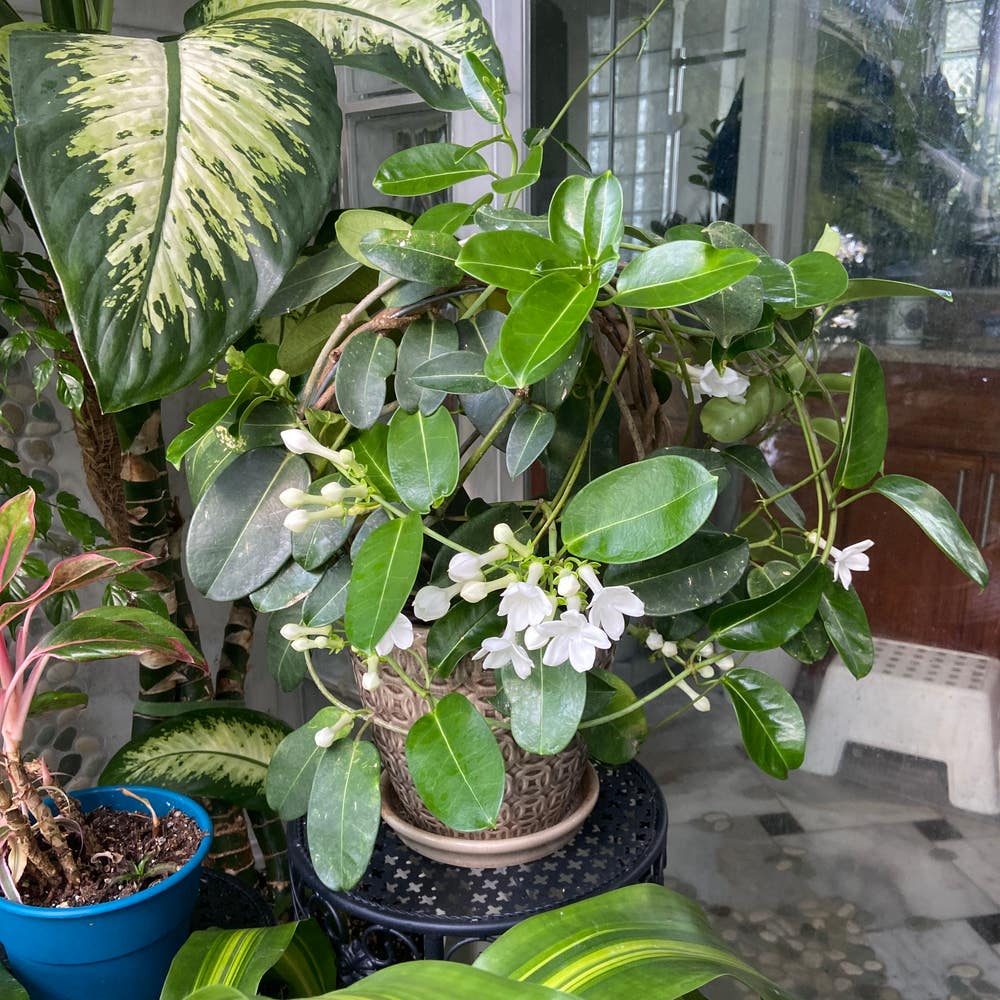
🌸 How Big a Madagascar Jasmine Gets
Stephanotis floribunda
By the Greg Editorial Team
Sep 30, 2024•5 min read
This article was created with the help of AI so we can cover more plants for you. May contain errors. See one? Report it here.
- 🌱 Madagascar Jasmine grows 3-6 feet tall and spreads 2-4 feet wide.
- 🌞 Optimal conditions allow it to reach full size in just 2-3 years.
- ✂️ Regular pruning maintains size and encourages bushier growth for a healthier plant.
Mature Height and Spread
Typical Dimensions 🌱
Madagascar Jasmine typically reaches a mature height of 3 to 6 feet. Its spread ranges from 2 to 4 feet, making it a versatile choice for various garden settings.
Growth Forms 🌿
This plant can grow in two distinct forms. As a vine, it can climb structures, potentially increasing its height and creating a stunning vertical display. Alternatively, when grown as a shrub, it maintains a more compact form, keeping its height and spread lower, perfect for smaller spaces.
Understanding these growth characteristics can help you choose the right form for your garden. Whether you want a climbing beauty or a bushy companion, Madagascar Jasmine offers options to suit your needs.
Next, let’s explore how growth rate and time to maturity can impact your gardening plans.
Growth Rate and Time to Maturity
🌱 Factors Influencing Growth Rate
Madagascar Jasmine thrives under optimal conditions. Warm temperatures, ample sunlight, and proper watering can significantly speed up its growth.
In ideal circumstances, this plant can reach its full size in just 2 to 3 years. Imagine watching your garden flourish as this beauty climbs and spreads!
⏳ Time to Maturity
Understanding the timeline for Madagascar Jasmine's growth can help you plan your garden effectively. Here’s a quick breakdown of its growth over the years:
- 1 Year: Expect a height of 1 to 2 feet.
- 2 Years: It can grow to about 2 to 4 feet.
- 3 Years: Finally, it reaches its mature height of 3 to 6 feet.
This progression showcases the plant's potential, making it a rewarding choice for any garden enthusiast. With the right care, you'll witness its transformation into a stunning addition to your outdoor space.
As we explore the next section, we'll delve into how various growing conditions can impact the size and health of your Madagascar Jasmine.
Size Variability Based on Growing Conditions
🌱 Impact of Soil Quality and Type
Soil quality plays a crucial role in the growth of Madagascar Jasmine. Well-draining, nutrient-rich soil promotes optimal growth, allowing the plant to thrive and reach its full potential.
In contrast, poor soil quality can stunt growth and reduce mature dimensions. If the soil lacks essential nutrients, you might notice your plant struggling to flourish.
☀️ Light Requirements
Light is another key factor influencing size variability. Madagascar Jasmine thrives in full sun exposure, ideally receiving 6 to 8 hours of sunlight daily, which encourages maximum height and spread.
On the flip side, insufficient light can lead to leggy growth and reduced size. If your plant isn't getting enough sun, it may stretch awkwardly, compromising its overall appearance.
💧 Watering Practices
Watering practices significantly affect growth as well. Consistent moisture is essential for healthy development; however, overwatering can lead to root rot and stunted growth.
Conversely, underwatering can also limit growth and flowering size. Striking the right balance is vital for keeping your Madagascar Jasmine vibrant and robust.
🌿 Fertilization Impact on Growth
Regular fertilization during the growing season can enhance both growth rate and size. Using balanced NPK fertilizers is recommended, as they provide the essential nutrients that flowering plants need.
Applying fertilizer at the right times can make a noticeable difference in your plant's health and size. A little extra care can go a long way in achieving a lush, thriving Madagascar Jasmine.
With these factors in mind, you can create the ideal environment for your Madagascar Jasmine to flourish. Next, let’s explore the fascinating world of dwarf and giant varieties of this beautiful plant.
Dwarf and Giant Varieties
Dwarf Varieties 🌱
Dwarf Madagascar Jasmine features compact growth, typically reaching heights of 1 to 3 feet. This makes them perfect for container gardening, allowing you to enjoy their beauty even in small spaces or on patios.
Giant Varieties 🌳
On the other hand, giant varieties can exceed standard dimensions, soaring to heights of 6 to 10 feet. When considering outdoor growth, keep in mind that these plants require ample space and support for climbing, making them a striking addition to any garden.
Understanding the differences between dwarf and giant varieties can help you choose the right fit for your gardening needs. Whether you're limited on space or looking to create a dramatic vertical display, Madagascar Jasmine has something to offer.
Next, let’s explore effective pruning techniques to maintain the size and shape of your Madagascar Jasmine.
Pruning Techniques for Size Control
Importance of Pruning 🌱
Pruning is essential for Madagascar Jasmine as it encourages bushier growth and helps maintain desired dimensions. Regular pruning not only shapes the plant but also enhances its overall health.
Recommended Pruning Techniques ✂️
Timing: The best time to prune is in early spring, just before new growth begins. This timing ensures the plant can recover quickly and thrive.
Techniques:
- Pinching Back Tips: This method encourages branching and results in denser foliage. It’s a simple yet effective way to promote a fuller appearance.
- Thinning Out Older Stems: This technique promotes airflow and reduces overcrowding. It’s crucial for preventing diseases and ensuring the plant remains vibrant.
Frequency: Aim to prune annually to maintain size and shape. Regular attention keeps your Madagascar Jasmine looking its best.
By incorporating these pruning techniques, you can effectively control the size of your Madagascar Jasmine while enhancing its beauty. This proactive approach not only fosters a healthier plant but also allows you to enjoy its stunning blooms year after year.
As you consider these techniques, remember that the right care will lead to a flourishing plant, setting the stage for the next topic: exploring the size variability based on growing conditions.
⚠️ Safety First
This content is for general information and may contain errors, omissions, or outdated details. It is not medical, veterinary advice, or an endorsement of therapeutic claims.
Always consult a qualified healthcare professional before using any plant as food, medicine, or supplement.
Never eat any plant (or feed one to pets) without confirming its identity with at least two trusted sources.
If you suspect poisoning, call Poison Control (800) 222-1222, the Pet Poison Helpline (800) 213-6680, or your local emergency service immediately.
Spotted an error? Please report it here.
Watch your Madagascar Jasmine grow into a stunning centerpiece 🌼 with Greg's personalized care tips that ensure it gets the right water and sunlight for thriving success!