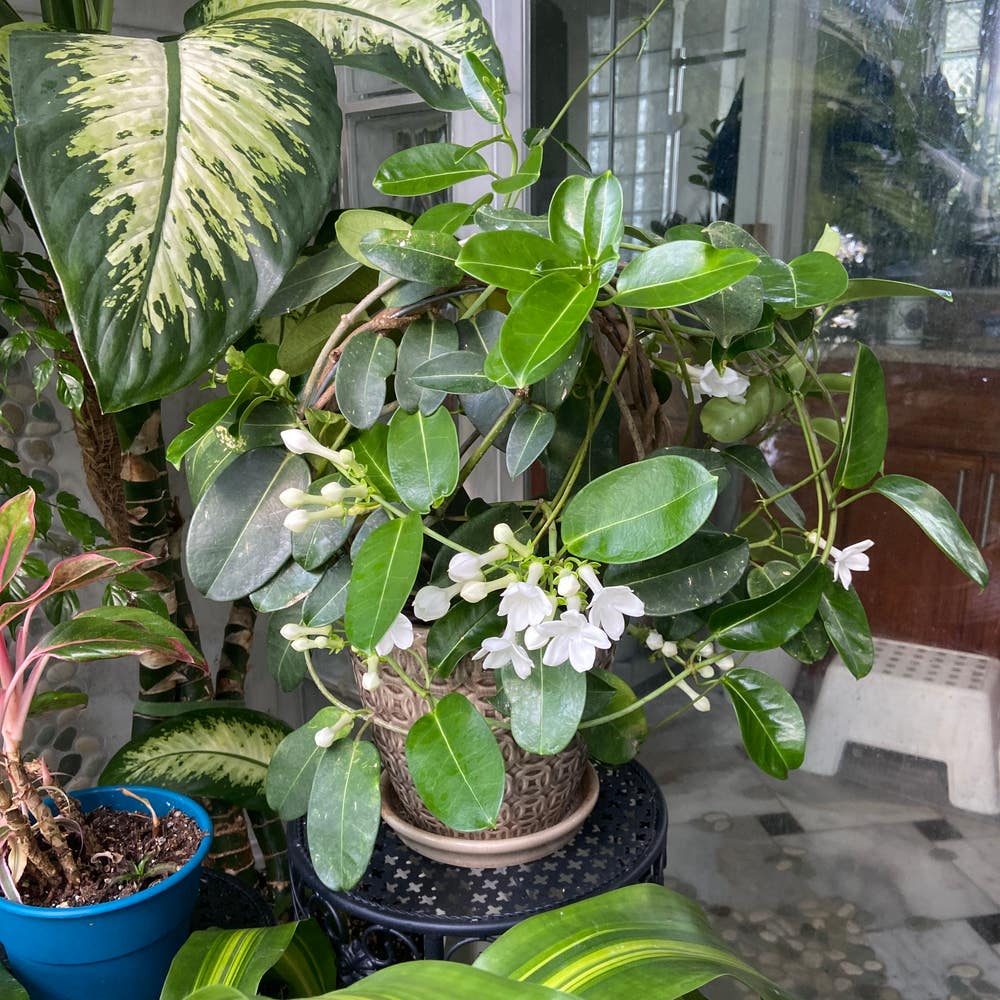
🌸 5 Steps to a Healthy Outdoor Madagascar Jasmine
Stephanotis floribunda
By the Greg Editorial Team
Sep 30, 2024•7 min read
This article was created with the help of AI so we can cover more plants for you. May contain errors. See one? Report it here.
- ☀️ Madagascar Jasmine needs 6-8 hours of sunlight for optimal growth and flowering.
- 💧 Water every 1-2 weeks; adjust for temperature to prevent yellowing leaves and wilting.
- 🌱 Use well-draining soil with pH 6.0-7.0 for healthy Madagascar Jasmine growth.
Sunlight Requirements
Ideal Sunlight Exposure 🌞
Madagascar Jasmine thrives in full sun to partial shade, requiring 6-8 hours of sunlight daily. This exposure is crucial as it promotes healthy growth and abundant flowering, making your plant a stunning addition to any garden.
Signs of Insufficient Light 🚨
If your Madagascar Jasmine is experiencing sparse flowering, it may not be getting enough light. Additionally, leggy growth, where stems stretch towards light sources, is a clear indicator that your plant is craving more sun.
Ensuring your plant receives the right amount of sunlight is essential for its overall health and vibrancy. With the right conditions, you’ll enjoy a flourishing display of blooms that can brighten any space.
As we move on, let’s explore the watering needs of this beautiful plant to keep it thriving.
Watering Needs
General Watering Guidelines 🌊
To keep your Madagascar Jasmine thriving, aim for consistent moisture. The soil should be evenly moist but never waterlogged, as this can lead to root issues.
Watering frequency typically falls between every 1 to 2 weeks. Adjust this based on rainfall and temperature; hotter days may require more frequent checks.
Signs of Overwatering and Underwatering 🚨
Recognizing the signs of overwatering is crucial. If you notice yellowing leaves or root rot, it’s a clear indicator that your plant is getting too much water.
On the flip side, underwatering can be just as detrimental. Watch for wilting leaves and dry soil, which signal that your plant is thirsty and needs immediate attention.
By mastering these watering needs, you set the stage for a healthy, flourishing Madagascar Jasmine. Next, let’s explore the ideal soil preferences to further enhance its growth.
Soil Preferences
Ideal Soil Composition 🌱
For your Madagascar Jasmine to thrive, it needs well-draining soil. A mix of potting soil, peat moss, and perlite creates the perfect environment for healthy root development.
The pH level is also crucial. Aim for a slightly acidic to neutral range of 6.0 to 7.0 to ensure optimal nutrient availability.
Soil Preparation Tips 🛠️
Before planting, it's wise to test your soil's pH. A soil test kit can provide accurate readings, helping you understand what adjustments are necessary.
If your soil needs improvement, consider amending it with organic matter. This addition enhances drainage and boosts fertility, setting your plant up for success.
With the right soil conditions, your Madagascar Jasmine will flourish, paving the way for vibrant blooms and lush growth. Next, let’s explore how to keep your plant hydrated with proper watering techniques.
Fertilization Tips
Fertilization Schedule 🌱
To keep your Madagascar Jasmine thriving, fertilize every 4-6 weeks during the growing season, which spans spring and summer. A balanced, water-soluble fertilizer, like a 10-10-10 NPK, works wonders for promoting healthy growth.
Signs of Nutrient Deficiency ⚠️
Watch for yellowing leaves; this often signals nitrogen deficiency. If your plant struggles to bloom, it might be lacking phosphorus, so keep an eye on those flowers!
Understanding these fertilization tips will help ensure your Madagascar Jasmine flourishes. Next, let’s explore the best soil preferences for this beautiful plant.
Planting Options
Container Planting: Benefits and Drawbacks 🌱
Container planting offers some fantastic advantages. First, the mobility factor is a game changer; you can easily relocate your Madagascar Jasmine based on sunlight and weather conditions.
Additionally, containers provide a controlled environment. This means you have better oversight of soil quality and drainage, which is crucial for healthy growth.
However, there are some drawbacks to consider. Limited root space can be an issue, as it may require more frequent watering and fertilization to keep your plant thriving.
In-Ground Planting: Benefits and Drawbacks 🌍
In-ground planting has its own set of benefits. One major advantage is natural growth; your plant has more space for roots to expand, promoting a robust structure.
Moreover, in-ground plants typically require less maintenance. They generally need less frequent watering, allowing you to enjoy your garden with minimal fuss.
On the flip side, in-ground planting comes with challenges. You have less control over soil quality and drainage, which can vary significantly depending on your location.
Choosing between container and in-ground planting ultimately depends on your specific needs and environment. Each option has its unique perks and challenges, so weigh them carefully to ensure your Madagascar Jasmine flourishes.
Protection Strategies
🌩️ Weather Protection Techniques
Protecting your Madagascar Jasmine from extreme weather is essential for its health. In colder months, use frost cloths or blankets to shield your plants from frost damage.
During the hot summer, consider using shade cloth to prevent sunburn and heat stress. This simple step can make a significant difference in your plant's vitality.
🐞 Common Outdoor Pests and Control Methods
Outdoor pests can be a real nuisance for your Madagascar Jasmine. Keep an eye out for aphids, which often cause curled leaves; treating them with insecticidal soap can effectively manage their population.
Spider mites are another common threat. Look for webbing on the leaves; increasing humidity around the plant and using miticides can help control these pests.
🦠 Disease Prevention Strategies
Preventing diseases is crucial for maintaining a healthy plant. To combat fungal diseases, ensure good air circulation around your Madagascar Jasmine and avoid overhead watering.
Root rot is another concern, but you can prevent it by using well-draining soil and following proper watering techniques. This proactive approach will keep your plant thriving.
With these protection strategies in place, your Madagascar Jasmine will be better equipped to face the elements and pests. Next, let’s explore the seasonal care needed to keep your plant flourishing throughout the year.
Seasonal Care
Spring Care: Planting and Fertilization 🌱
Spring is the perfect time to plant your Madagascar Jasmine, ideally after the last frost date. This timing ensures that your plant can establish itself in warmer soil, promoting healthy growth.
Fertilization is key during this season. Applying a balanced fertilizer will give your plant the nutrients it needs to thrive as it enters its growing phase.
Summer Care: Watering and Pest Management ☀️
As temperatures rise, so does the need for consistent watering. Monitor the soil moisture closely, ensuring it remains evenly moist but not waterlogged.
Regular pest inspections are crucial during summer. Check for common pests like aphids and spider mites, and treat them promptly to keep your plant healthy.
Fall Care: Preparing for Winter 🍂
As fall approaches, it's time to prepare your Madagascar Jasmine for dormancy. Start by pruning any dead or damaged growth, which helps the plant conserve energy.
Mulching is another essential step. Applying mulch around the base will protect the roots from cold temperatures and help retain soil moisture.
Winter Care: Protecting from Cold ❄️
In winter, consider relocating container plants indoors to shield them from harsh conditions. This move can significantly improve their chances of survival.
For in-ground plants, insulation is vital. Use mulch or protective coverings to safeguard the roots against freezing temperatures.
Transitioning through the seasons with care ensures your Madagascar Jasmine remains vibrant and healthy year-round. Next, let’s explore how climate zone considerations can impact your plant care strategies.
Climate Zone Considerations
Best Zones for Growth 🌱
Madagascar Jasmine thrives best in USDA zones 10-11. These zones provide the warm temperatures and humidity that this plant loves.
For those in cooler zones, consider container planting. This allows you to move the plant to sunnier spots or indoors during colder months.
Adjusting Care Based on Climate ☀️
In hot climates, keep an eye on your Madagascar Jasmine's watering needs. Increased temperatures mean you may need to water more frequently and provide shade during peak sun hours.
Conversely, if you live in cooler climates, focus on winter protection. This might include bringing container plants indoors or using mulch to insulate in-ground plants from the cold.
With the right adjustments, your Madagascar Jasmine can flourish no matter where you are!
⚠️ Safety First
This content is for general information and may contain errors, omissions, or outdated details. It is not medical, veterinary advice, or an endorsement of therapeutic claims.
Always consult a qualified healthcare professional before using any plant as food, medicine, or supplement.
Never eat any plant (or feed one to pets) without confirming its identity with at least two trusted sources.
If you suspect poisoning, call Poison Control (800) 222-1222, the Pet Poison Helpline (800) 213-6680, or your local emergency service immediately.
Spotted an error? Please report it here.
Keep your Madagascar Jasmine blooming beautifully 🌼 with Greg's tailored watering reminders and expert care tips that ensure your plant thrives all year long!