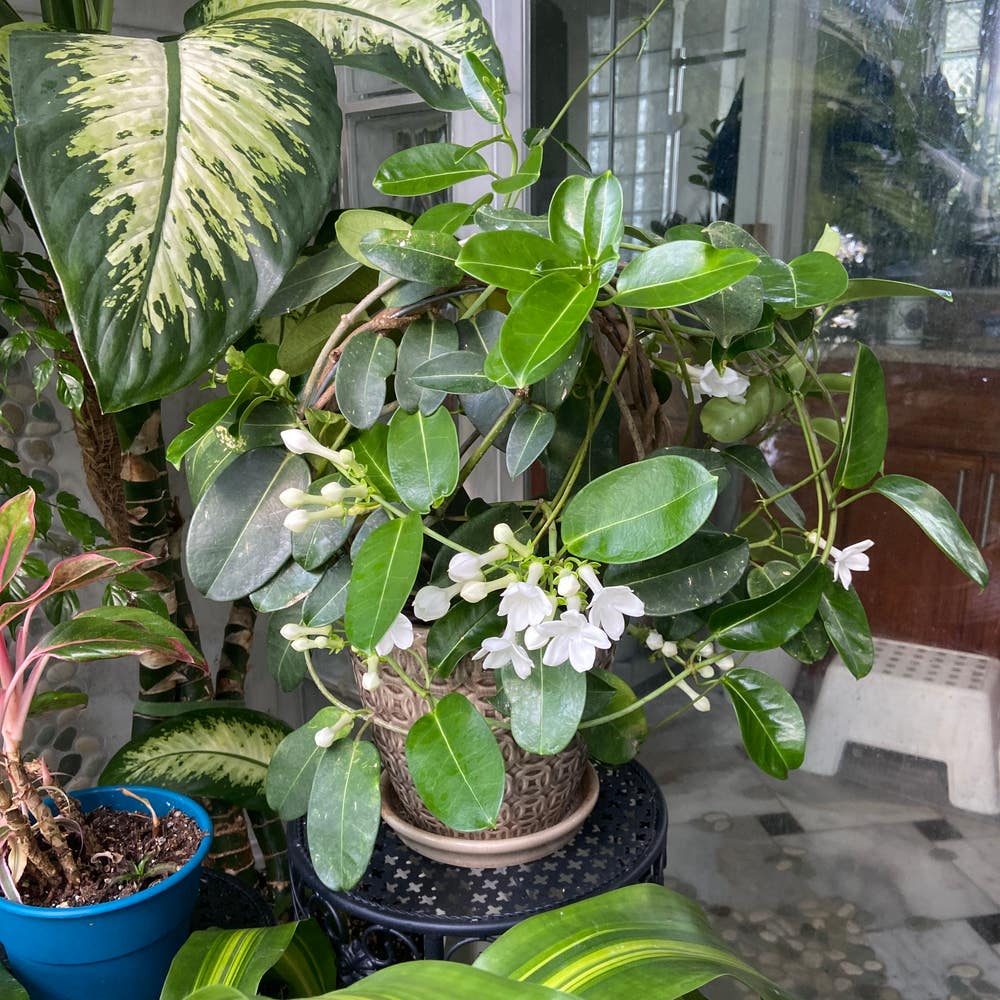
🌸 Madagascar Jasmine: Where to Plant
Stephanotis floribunda
By the Greg Editorial Team
Sep 30, 2024•6 min read
This article was created with the help of AI so we can cover more plants for you. May contain errors. See one? Report it here.
- ☀️ Madagascar Jasmine needs 6-8 hours of sunlight for optimal growth and flowering.
- 🌱 Well-draining, fertile soil with pH 6.0-7.0 is essential for thriving plants.
- 🌬️ Wind protection and proper spacing enhance growth and prevent root rot.
Ideal Planting Locations
☀️ Sunlight Exposure Requirements
Madagascar Jasmine thrives in full sun, requiring 6-8 hours of direct sunlight daily. While it can tolerate partial shade, inadequate sunlight often results in stunted growth and fewer flowers.
To maximize sun exposure, position your plants near south-facing walls or fences. Avoid shaded areas created by larger plants or structures to ensure your jasmine gets the light it craves.
🌱 Soil Type Preferences
For optimal growth, Madagascar Jasmine prefers well-draining, fertile soil with a slightly acidic to neutral pH (6.0 to 7.0). Incorporating organic matter, such as compost or well-rotted manure, can significantly enhance soil quality.
If your soil is heavy or compacted, consider adding perlite or sand to improve drainage. Watch for signs of poor soil conditions, like water pooling around roots or yellowing leaves, which indicate nutrient deficiencies.
🏡 Proximity to Structures and Other Plants
When planting Madagascar Jasmine, consider placing it near trellises or fences for climbing support. It's best to space your plants 3-4 feet away from others to allow for healthy growth.
Strategic placement not only enhances airflow but also reduces the risk of disease. Additionally, positioning your jasmine near flowering plants can attract beneficial pollinators, boosting your garden's overall health.
With the right sunlight, soil, and spacing, your Madagascar Jasmine will flourish beautifully. Next, let’s explore how to assess the best spot for planting in your garden.
Assessing the Best Spot
🌿 Evaluating Garden Layout
Mapping out your garden is essential for successful Madagascar Jasmine growth. Start by identifying sunny and shaded zones, as this will guide your planting decisions.
Consider the heights and spread of existing plants. This will help you avoid overcrowding and ensure that your jasmine gets the sunlight it craves.
Accessibility is also crucial. Make sure you can easily reach your plants for watering and pruning, as this will keep your jasmine healthy and thriving.
🌡️ Identifying Microclimates
Understanding microclimates can significantly impact your planting success. These are areas within your garden that have varying temperatures and moisture levels.
For instance, south-facing walls often retain heat, while sheltered corners may hold moisture longer. Observing temperature differences throughout the day can help you identify these unique spots.
Take note of moisture retention in specific areas. This will guide you in placing your Madagascar Jasmine where it can flourish.
🌬️ Considering Wind Protection
Wind protection is vital for the delicate vines and flowers of Madagascar Jasmine. Strong winds can cause damage, so strategic placement is key.
Consider planting near walls or hedges to shield your jasmine from harsh gusts. Using windbreaks like fences or taller plants can also provide the necessary protection.
By assessing these factors, you'll create an ideal environment for your Madagascar Jasmine to thrive. Next, let’s dive into drainage considerations to ensure your plant's roots stay healthy and happy.
Drainage Considerations
💧 Importance of Drainage
Proper drainage is crucial for the health of Madagascar Jasmine. Poor drainage can lead to root rot and other fungal diseases, which can stunt growth and cause yellowing leaves.
Ideal drainage conditions allow the soil to retain some moisture while effectively draining excess water. This balance is essential for thriving plants.
🌱 How to Improve Drainage in Planting Areas
To enhance drainage, consider using raised beds or mounds to elevate the root zone. This technique helps prevent water from pooling around the roots.
Incorporating organic matter, such as compost, can significantly improve soil structure and drainage. It enriches the soil while promoting better moisture retention.
To assess drainage effectiveness, conduct a simple percolation test. Dig a hole, fill it with water, and observe how quickly the water drains. This will give you insight into your soil's drainage capabilities.
Understanding and improving drainage will set your Madagascar Jasmine up for success. With the right conditions, your plants will flourish, leading to a vibrant and healthy garden.
Next, we’ll explore the differences between indoor and outdoor planting to ensure your Madagascar Jasmine thrives in its chosen environment.
Indoor vs. Outdoor Planting
Best Practices for Indoor Planting 🌱
Creating the perfect indoor environment for Madagascar Jasmine is essential. Aim for bright, indirect light near windows to mimic its natural habitat.
Maintaining humidity is also crucial. Consider using a humidity tray to keep the air moist, which helps the plant thrive.
When it comes to containers, choose pots with drainage holes. This prevents waterlogging, ensuring your plant's roots stay healthy.
Outdoor Location Selection Tips ☀️
For outdoor planting, select areas that receive full sun and have good airflow. This is vital for the plant's growth and flowering.
Avoid frost-prone spots, especially in colder climates. Timing is key; plant in spring after the last frost to give your Madagascar Jasmine the best start.
With these tips, you can create an ideal environment for your Madagascar Jasmine, whether indoors or outdoors. Next, let’s explore the shade and sun requirements for optimal growth.
Shade and Sun Requirements
Shade Tolerance 🌳
Madagascar Jasmine can tolerate partial shade but thrives best in full sun. If your plant is in too much shade, you might notice sparse foliage and fewer flowers.
Optimal Sun Exposure for Growth ☀️
For optimal growth, position your Madagascar Jasmine where it can soak up morning sun and enjoy some afternoon shade. Don’t hesitate to rotate pots or adjust planting locations as needed to maximize sun exposure.
Understanding these light requirements is crucial for your plant's health. Next, let’s explore companion planting to enhance your garden's ecosystem.
Companion Planting
🌱 Suitable Companion Plants
Madagascar Jasmine thrives alongside certain companions that enhance its growth and health. Consider planting it with pollinator-friendly options like lavender and bee balm, which attract beneficial insects.
Additionally, herbs such as basil and marigolds can deter pests, creating a natural defense system for your garden. This strategic pairing not only supports Madagascar Jasmine but also enriches the overall ecosystem.
🌼 Benefits of Companion Planting
Companion planting offers mutual benefits that can significantly boost your garden's productivity. For instance, the presence of flowering plants nearby can lead to improved pollination rates, ensuring your Madagascar Jasmine blooms beautifully.
Moreover, when plants are spaced appropriately, they reduce competition for nutrients and water. This harmonious arrangement fosters a thriving environment, allowing each plant to flourish without the stress of overcrowding.
By thoughtfully selecting companions, you can cultivate a vibrant garden that supports both Madagascar Jasmine and its neighbors. This approach not only enhances biodiversity but also contributes to a healthier, more resilient garden ecosystem.
As you plan your garden layout, keep these companion planting strategies in mind to maximize the potential of your Madagascar Jasmine and create a flourishing outdoor space.
⚠️ Safety First
This content is for general information and may contain errors, omissions, or outdated details. It is not medical, veterinary advice, or an endorsement of therapeutic claims.
Always consult a qualified healthcare professional before using any plant as food, medicine, or supplement.
Never eat any plant (or feed one to pets) without confirming its identity with at least two trusted sources.
If you suspect poisoning, call Poison Control (800) 222-1222, the Pet Poison Helpline (800) 213-6680, or your local emergency service immediately.
Spotted an error? Please report it here.
Plant your Madagascar Jasmine in full sun ☀️ and let Greg provide tailored care reminders to help you achieve stunning blooms all season long!