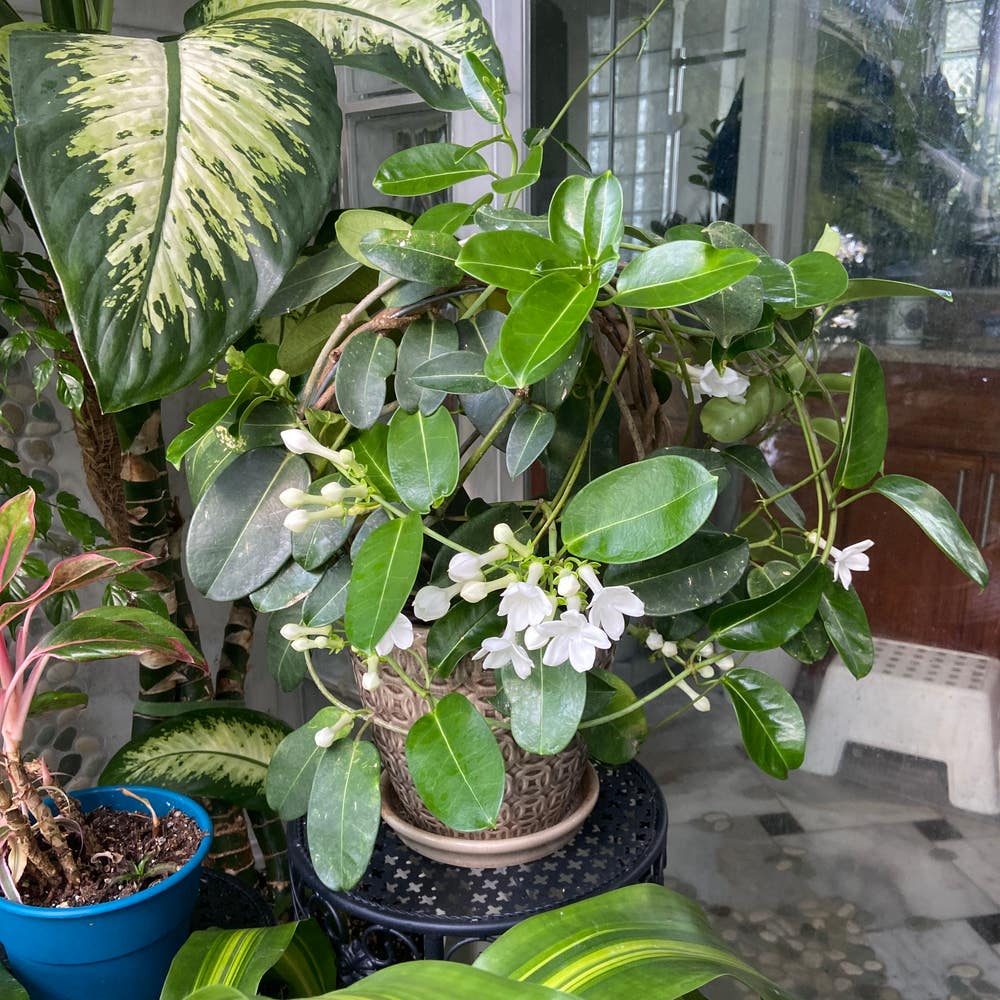
What Should I Do When Stephanotis Leaves Turn Yellow?
Stephanotis floribunda
By the Greg Editorial Team
Jun 18, 2024•3 min read
This article was created with the help of AI so we can cover more plants for you. May contain errors. See one? Report it here.
- 🌼 Over/underwatering causes yellow leaves; check soil moisture to adjust watering.
- 🌱 Nutrient balance is key; use balanced fertilizer to prevent yellowing.
- ☀️ Bright, indirect light is best; avoid direct sun to keep leaves green.
Pinpointing the Culprit Behind Yellow Leaves
💧 Signs of Overwatering
Yellow leaves can be a distress signal from your Stephanotis, hinting at soggy conditions below the surface. Overwatering leads to waterlogged roots, which can't deliver nutrients or oxygen effectively.
Adjust your watering to when the top inch of soil feels dry. Think of the soil like a sponge—it should be moist, not dripping.
🏜️ Signs of Underwatering
Conversely, leaves that droop or feel crispy are crying out for hydration. Dry soil is a clear indicator that your plant is thirsty.
To rehydrate, water deeply but don't flood—strike a balance. Ensure excess water drains to avoid root rot.
🍽️ Nutrient Deficiency Clues
Yellowing leaves can also point to a nutrient deficiency. Nitrogen scarcity, for instance, starts with yellowing at the lower leaves and moves upward.
Choose a balanced fertilizer and follow the instructions carefully to avoid overfeeding, which can be just as harmful.
🌞 Light Exposure: Too Much or Too Little?
Lighting issues can stress your Stephanotis, leading to yellow leaves. Too much light can scorch, while too little can weaken the plant.
Find that sweet spot where your plant receives bright, indirect light to thrive without the risk of sunburn or shade-induced languor.

First Aid for Yellowing Leaves
💧 Adjusting Your Watering Technique
Watering is more art than science. To revive your yellowing Stephanotis, check the soil before you water—stick your finger in. If the top inch is dry, it’s thirsty; if it’s damp, hold off on the H2O. Remember, the goal is moist, not a swamp.
🌿 Feeding Your Stephanotis Right
Fertilizers are like a plant's multivitamin, but balance is key. A balanced fertilizer is your best bet—look for equal parts of nitrogen, phosphorus, and potassium. And don't overdo it; too much love can be just as bad as neglect.
🌞 Light Management Strategies
Your Stephanotis craves that Goldilocks zone of light—not too much, not too little. If your plant's leaves are singing the blues, or rather, yellows, move it to a spot with bright, indirect sunlight. No direct sunbathing, please—it's not a beachgoer.

Pruning and Ongoing Maintenance
🍂 When to Snip Yellow Leaves
Pruning isn't just about keeping your Stephanotis aesthetically pleasing—it's about health. When you spot yellow leaves, it's time for action. Snip them right above a leaf node, which can encourage new growth. Use sterilized shears to avoid spreading any diseases. It's a bit like playing plant surgeon—precision matters.
🧼 Keeping Your Stephanotis Clean and Stress-Free
Routine checks are the unsung heroes of plant care. Like a regular spa day for your Stephanotis, these checks help you catch issues before they turn into full-blown problems. Cleanliness is next to godliness here—wipe down leaves to prevent dust accumulation and pest infestations. And remember, your plant is not trying to give you a hard time; it's having a hard time. Be the detective in your plant's life, and you'll keep those yellow leaves at bay.

Keeping Yellow Leaves at Bay: Prevention Tips
🔄 Consistency in Care
Establishing a routine is like setting up a safety net for your Stephanotis. It's not just about ticking off a to-do list; it's about creating a rhythm that your plant can dance to. Watering, feeding, and pruning should happen with the regularity of your favorite TV show—miss an episode, and you're out of the loop.
👀 Vigilant Monitoring
Regular plant check-ups are the equivalent of a personal trainer for your Stephanotis. Keep your eyes peeled for the first signs of distress, be it a yellow leaf or a droopy stem. It's about being proactive, not reactive. Spot a problem? Get on it faster than you'd chase after the ice cream truck.
⚠️ Safety First
This content is for general information and may contain errors, omissions, or outdated details. It is not medical, veterinary advice, or an endorsement of therapeutic claims.
Always consult a qualified healthcare professional before using any plant as food, medicine, or supplement.
Never eat any plant (or feed one to pets) without confirming its identity with at least two trusted sources.
If you suspect poisoning, call Poison Control (800) 222-1222, the Pet Poison Helpline (800) 213-6680, or your local emergency service immediately.
Spotted an error? Please report it here.
Revive your Stephanotis by eliminating yellow leaves 🍃 with Greg's custom care plans, ensuring just-right watering and feeding for vibrant health!