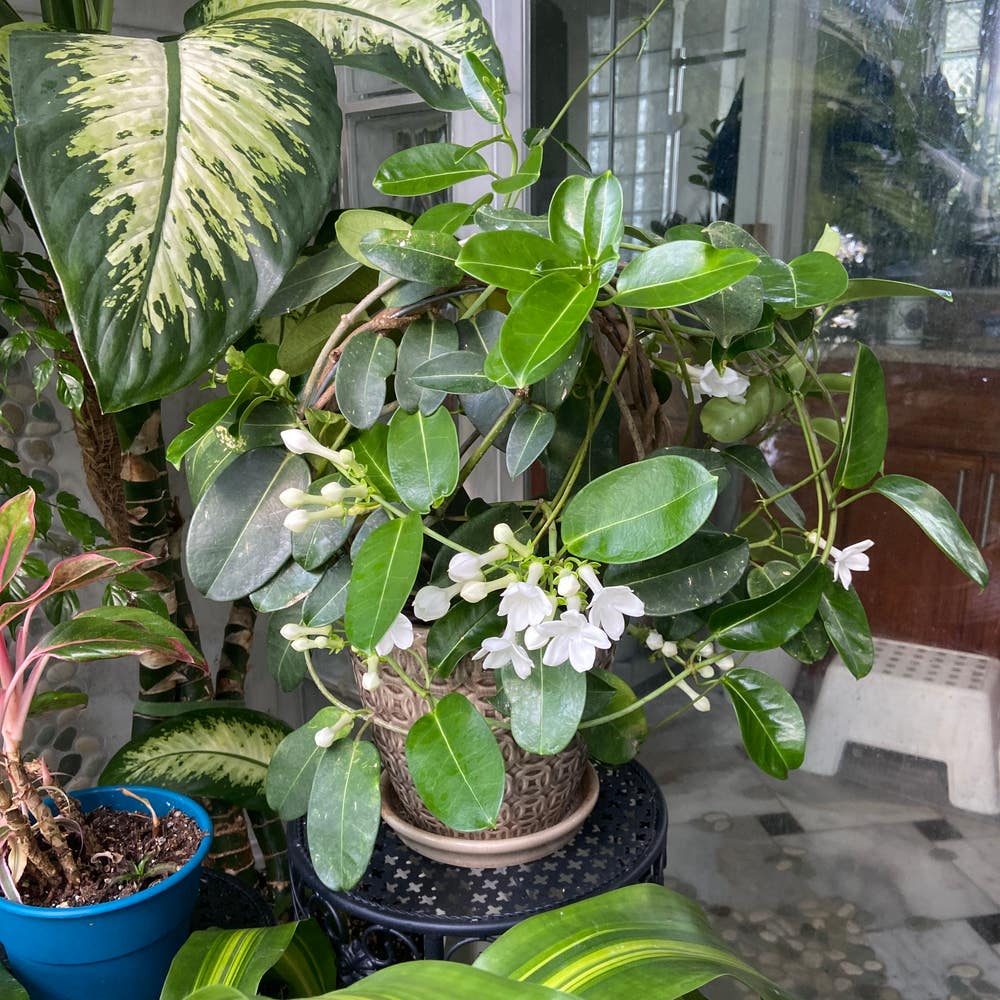
Why Are My Stephanotis Leaves Dropping?
Stephanotis floribunda
By the Greg Editorial Team
Jun 18, 2024•4 min read
This article was created with the help of AI so we can cover more plants for you. May contain errors. See one? Report it here.
- Environmental stressors cause Stephanotis leaf drop; stabilize light, temp, and humidity.
- Pests and diseases threaten leaves; use soapy water, neem oil, and remove affected areas.
- Consistent care is key: water when dry, maintain 21°C-23°C, and provide indirect sunlight.
Pinpointing the Culprits Behind the Leaf Drop
🌿 Environmental Stressors
Stephanotis thrives in stable conditions, but when light, temperature, and humidity fluctuate, leaves may take a hit.
Consistency is key; aim for a temperature around 21°C-23°C and avoid sudden changes.
🐛 Pesky Pests
Spider mites, aphids, and mealybugs are the usual suspects when Stephanotis leaves begin to bail.
Regular inspections and wiping with soapy water or neem oil can keep these pests at bay.
🦠 Disease Dilemmas
Fungal foes like powdery mildew and root rot can cause Stephanotis leaves to drop off in despair.
Good airflow and drainage are your best defense, along with removing any affected areas promptly.
👣 Cultural Missteps
Overwatering, poor soil, and incorrect feeding can all lead to leaf loss.
Adjust your care routine by watering only when the soil is dry to the touch and feeding with a high-potassium liquid feed fortnightly from April to October.

Crafting the Cure: Remedies and Adjustments
💧 Water Wisdom
Watering your Stephanotis is less about sticking to a schedule and more about responding to its needs. Check the top inch of soil; if it's dry, it's time to water. Remember, room-temperature water is your plant's best friend, and drainage holes are non-negotiable to prevent root rot.
🌞 Light and Temperature Tweaks
Stephanotis thrives in consistent temperatures—think 21°C-23°C. In the winter, a cooler spot with a minimum of 13°C will do. Light is crucial, too. Ensure your plant gets its daily dose of bright, indirect sunlight without the scorch of midday rays. If your lighting is as inadequate as a flashlight during a blackout, consider a grow light.
💦 Humidity Hacks
Humidity for Stephanotis is like a secret handshake—it needs to be just right. Mist the leaves to emulate a tropical breeze, or use a pebble tray to create a personal humid zone. For a more hands-off approach, a humidifier can keep the air consistently moist. Remember, too much humidity can be as unwelcome as a rainstorm at a picnic, so balance is key.

Proactive Plant Parenting: Preventative Measures
🌱 Establishing a Routine for Optimal Stephanotis Health
To keep your Stephanotis in top shape, consistency is key. Like a well-oiled machine, your plant thrives on routine. Water when the top inch of soil feels dry, but don't let it sit in a puddle. Think of it as giving your plant a steady job with a predictable paycheck—it'll reward you with growth and health.
🚨 Early Detection and Intervention Strategies
Keep your eyes peeled for trouble signs like yellowing leaves or stunted growth. It's like playing detective in your own living room. If you spot an issue, act fast—your plant's life may depend on it. Adjust care, quarantine if necessary, and treat any problems before they turn into a plant crisis.
📊 Monitoring and Assessment
Grab a notebook and channel your inner scientist. Track your Stephanotis' progress and jot down any changes in care or environment. This log becomes your plant's biography, helping you pinpoint what makes it flourish. If it's thriving, pat yourself on the back. If not, tweak your approach and watch it bounce back.
✂️ Pruning and Maintenance
Snip off any dead or dying leaves like you're editing a rough draft—keep only the good stuff. This not only keeps your plant looking sharp but also redirects energy to the healthier parts. Remember, pruning is less about giving your plant a new style and more about keeping it focused on growth.
🌿 Optimal Environmental Conditions
Craft a microclimate that would make your Stephanotis sing if it could. Bright, indirect light and stable temperatures are the VIP passes to a happy plant life. Avoid placing it in a drafty corridor or next to a heat source—unless you want to stress it out like a commuter in a traffic jam.
🔄 Consistent Care Routine
Mimic the Madagascar vibes where Stephanotis originates. Regular watering without waterlogging, and a chance for the soil to dry out slightly between waterings, is like a mini tropical vacation for your plant. It's not about coddling—it's about giving your plant a sense of home.
🚸 Preventative Measures for Households with Children
If you've got curious kids, teach them early: plants are friends, not food. Make it a game to look but not touch, and keep your Stephanotis out of reach if necessary. It's about setting boundaries—both for the kids and the plants.

⚠️ Safety First
This content is for general information and may contain errors, omissions, or outdated details. It is not medical, veterinary advice, or an endorsement of therapeutic claims.
Always consult a qualified healthcare professional before using any plant as food, medicine, or supplement.
Never eat any plant (or feed one to pets) without confirming its identity with at least two trusted sources.
If you suspect poisoning, call Poison Control (800) 222-1222, the Pet Poison Helpline (800) 213-6680, or your local emergency service immediately.
Spotted an error? Please report it here.
Ensure your Stephanotis thrives in the perfect conditions by letting Greg monitor 🌡️ and remind you about the ideal light, temperature, and watering schedule!