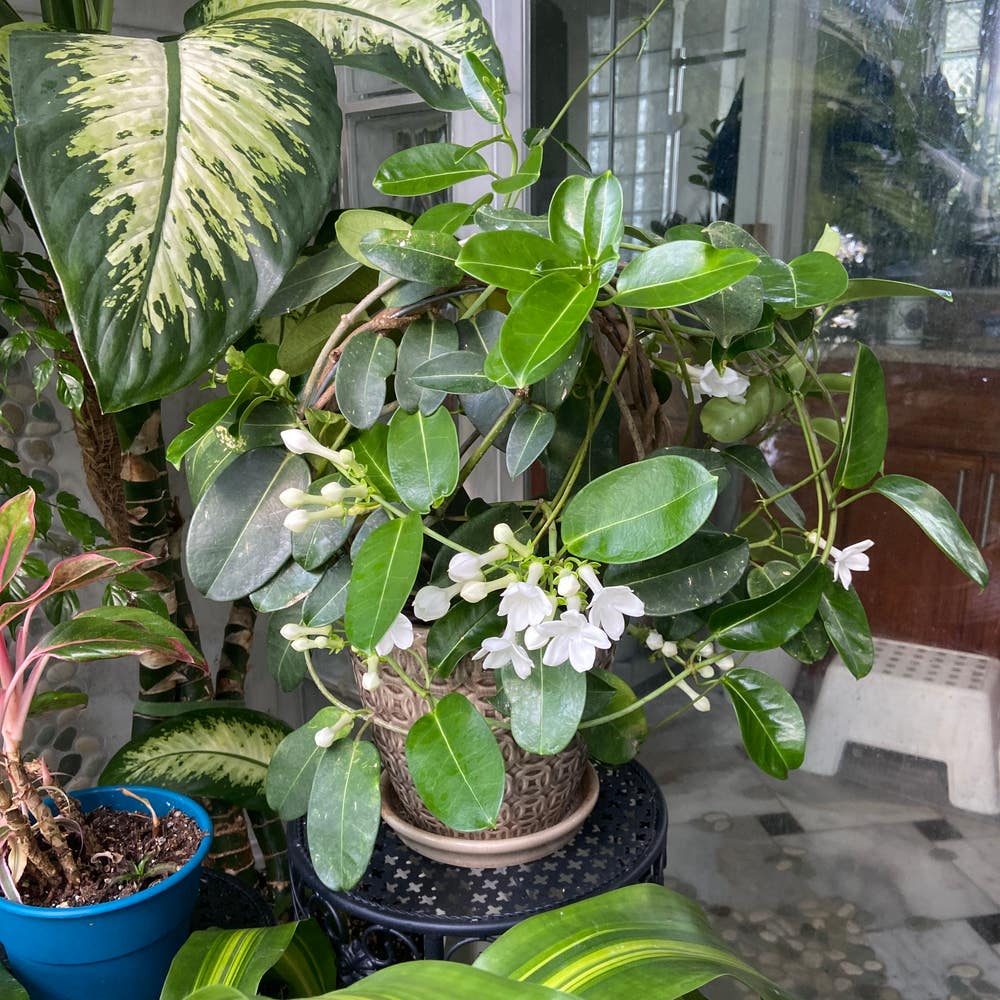
Best Soil for Stephanotis
Stephanotis floribunda
By the Greg Editorial Team
Jun 18, 2024•4 min read
This article was created with the help of AI so we can cover more plants for you. May contain errors. See one? Report it here.
- 🌱 Mold and bad smells signal soil health issues; adjust water and airflow.
- Choose soil with organic matter and good drainage; mind the pH level.
- DIY soil mix: peat moss, perlite, compost in equal parts for happy Stephanotis.
Spotting and Fixing Unhappy Stephanotis Soil
🚫 Signs Your Stephanotis Soil is Down in the Dumps
Moldy surface: What it looks like and why it's bad news
- A fuzzy or slimy layer atop the soil screams trouble. It's a moldy mess, and it's not doing your Stephanotis any favors.
Bad smells and what they signal
- Catch a whiff of something foul? That's the stench of decay, and it's a red flag for soil health.
Water woes: Too much moisture and its effects
- Leaves going limp or yellow? That's your Stephanotis crying out against soggy shoes. Overwatering can lead to a host of issues, including root rot.
🆘 Soil SOS: Rescuing Your Plant's Foundation
Mold management: Adjusting water and airflow
- If mold has moved in, cut back on the H2O and crank up the airflow. It's like telling unwanted guests the party's over.
Breaking up the clumps: Dealing with compaction
- Soil feeling tighter than a packed elevator? Loosen it up with a fork. Your plant's roots need room to tango.
Drying out: Solutions for waterlogged soil
- When the soil's more waterlogged than a sunken ship, it's time to dry out. Consider repotting with a mix that's big on drainage, like adding perlite or sand to the party.

Picking the Perfect Soil Mix from the Store
🌱 What to Look for on the Bag
When hunting for commercial soil for your Stephanotis, think of it as a fine dining experience for your plant. The bag should list organic matter like compost or worm castings, which are like a Michelin-starred meal for your green buddy. Drainage is also crucial; you want a mix that lets roots breathe and water flow freely.
Soil pH is another deal-breaker. Stephanotis prefers a slightly acidic to neutral pH. If the bag's silent on pH, it's a no-go.
🛍 Store-Bought vs. Stephanotis Special: Tailoring Your Choice
Sometimes, the store-bought mix hits the jackpot. Look for premium mixes or orchid bark blends, which can be pure gold with their chunky goodness. Cactus mixes can work too, but might need a boost of organic matter.
If you're feeling adventurous or the store options are just not cutting it, get creative. Add peat moss for acidity, perlite, or sand for that drainage magic. It's like being a DJ for your plant's soil, mixing until you've got the perfect beat.

Crafting the Ultimate DIY Stephanotis Soil
🌱 Mixing It Up: Ingredients for a Happy Plant
Peat moss is the backbone of your Stephanotis soil mix, crucial for moisture retention and pH balance. The right soil texture is pivotal; perlite and sand are your go-to for preventing waterlogging, ensuring the roots can breathe. Compost is the unsung hero, infusing your mix with a nutrient-rich profile that's like a feast for your plant's roots.
🌿 Stirring the Pot: Blending Your Soil to Perfection
When blending your DIY mix, aim for a 1:1:1 ratio of peat moss, perlite, and compost for a balanced concoction. Thorough mixing is key; uneven spots can lead to inconsistent growth. Think of it as a soil symphony—each component must harmonize perfectly to support your Stephanotis's lush, fragrant blooms.

Keeping the Good Soil Vibes Going
💪 Routine Check-ups: Keeping an Eye on Soil Health
Regular vigilance is key in maintaining the health of your Stephanotis soil. During your plant care routine, keep an eye out for compaction, which can suffocate roots, and ensure the soil maintains a crumbly, breathable structure. Moisture levels should be just right – not too wet, not too dry. If the soil feels like a wrung-out sponge, it's time to adjust your watering habits.
✨ Refresh to Impress: When to Revitalize Your Soil
Soil doesn't stay perfect forever. Signs of fatigue like slow drainage, a crusty surface, or a general lack of oomph are your cues for a soil refresh. Revitalization can be as simple as mixing in some new organic matter or as thorough as a complete soil change. If roots peek out or the plant seems lethargic, don't hesitate to give it a new lease on life with fresh, nutrient-rich soil.
⚠️ Safety First
This content is for general information and may contain errors, omissions, or outdated details. It is not medical, veterinary advice, or an endorsement of therapeutic claims.
Always consult a qualified healthcare professional before using any plant as food, medicine, or supplement.
Never eat any plant (or feed one to pets) without confirming its identity with at least two trusted sources.
If you suspect poisoning, call Poison Control (800) 222-1222, the Pet Poison Helpline (800) 213-6680, or your local emergency service immediately.
Spotted an error? Please report it here.
Revitalize your Stephanotis with the perfect soil mix and prevent root rot 🌱 by using Greg's personalized care reminders for soil check-ups and maintenance.