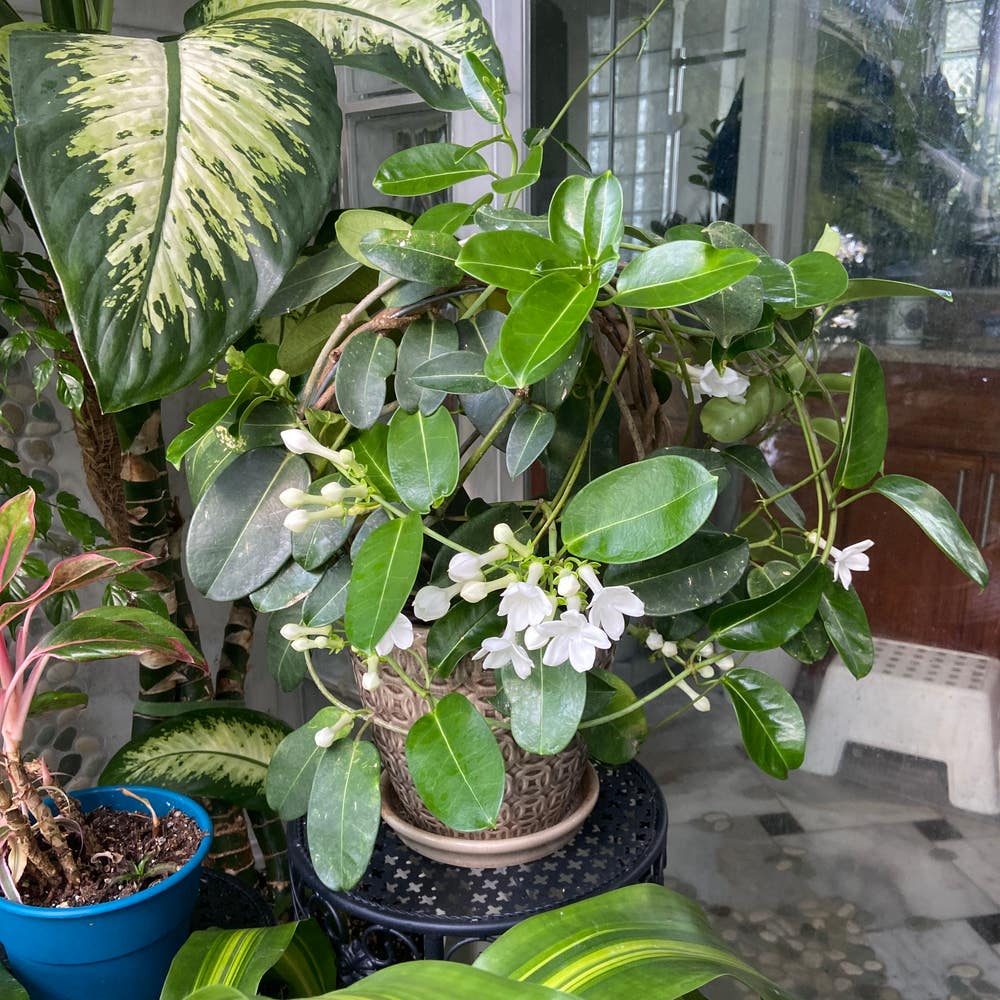
How to Prune Stephanotis
Stephanotis floribunda
By the Greg Editorial Team
Jun 18, 2024•4 min read
This article was created with the help of AI so we can cover more plants for you. May contain errors. See one? Report it here.
- Post-flowering and early spring are prime times for Stephanotis pruning.
- Use sharp, clean tools for precise cuts and plant health.
- Prune for shape and bushiness, especially in container-grown Stephanotis.
Best Times to Snip and Shape
🌸 Post-Flowering Period
Timing is everything when it comes to pruning Stephanotis. Post-flowering is ideal because it prevents accidentally cutting off new buds. This is when you can shape your plant's future without sacrificing its blooming potential.
To gauge the plant's readiness, look for the last blooms to fade. That's your cue to grab the shears. It's a bit like catching the last train home – miss it, and you'll regret it.
🌱 Early Spring Awakening
Spring ushers in a period of vigorous growth, making it a prime time for pruning. It's like giving your Stephanotis a pep talk right before the big race.
Signs that it's time to prune include new leaves and a general uptick in plant vigor. Think of it as the plant stretching its limbs after a long winter nap, ready to get back into shape.

Pruning Essentials: Tools and Techniques
🛠️ Choosing Your Pruning Partners
Selecting the right tools is not just about making your life easier—it's about making sure your Stephanotis thrives. Go for sharp pruning shears for those precise cuts; they're the bread and butter of your toolkit. For the thicker branches, a pair of loppers will give you the leverage you need without turning pruning into a workout session.
Keep your tools clean and sharp; a dull blade is a one-way ticket to Crushed Stem City. And let's not forget, a quick swipe with disinfectant keeps the nasty pathogens at bay. It's like hygiene for your garden—non-negotiable.
🌱 The Pruning Process Step-by-Step
First off, identify the targets: look for dead, damaged, or overgrown stems. These are the parts of your Stephanotis crying out for a trim. Remember, you're the stylist here, and your plant is trusting you not to botch its 'do.
When you're ready to cut, think of it as a strategic game. Angle your shears for clean, diagonal cuts that heal faster than a teenager's ego. And please, for the love of greenery, don't hack more than a quarter of the plant away. It's a prune, not a shearing contest. Keep it balanced, keep it beautiful, and your Stephanotis will keep on giving.

Encouraging Stephanotis to Flourish
🌸 Boosting Flower Power
Pruning isn't just about keeping your Stephanotis in check; it's a secret handshake with your plant that says, "Hey, it's showtime." To amp up the flower volume, you'll want to zero in on those lateral branches. Snipping back the overzealous stems tells your plant to spread out and get busy blooming.
Remember, it's all about the node—that little bump on the stem where new life springs forth. Slice just above it at a 45-degree angle with your sterilized shears. This isn't just a random angle; it's the sweet spot that encourages healing and new growth. And while you're at it, toss any yellowing leaves to the curb to keep things tidy and disease-free.
🌿 Lateral Growth for a Lush Vine
If you're after a Stephanotis that's more jungle than twig, strategic cuts are your best friend. Pruning influences not just flowers but the bushiness of your vine. It's like a pep talk that encourages your plant to get full and fabulous.
Make those cuts count. Aim for a fuller appearance by trimming back the main stems, which prompts the plant to branch out sideways. Think of it as directing traffic; you're telling the growth where to go. And don't be timid—being bold with your cuts can lead to a lush, leafy display that's a feast for the eyes.

Special Tips for Potted Stephanotis Pruning
🌱 Space Management in Containers
When pruning Stephanotis in containers, the goal is to balance the vine's vigor with the pot's limited space.
🌿 Adjusting Your Pruning Approach for Limited Space
Potted Stephanotis requires a delicate touch. Trim roots if they're circling or if you're transferring to a new pot. Be mindful not to overdo it; the plant's health is paramount.
🌳 Balancing Growth and Container Size
Prune for proportion. A Stephanotis vine can grow quite large, so regular pruning helps maintain a size that's compatible with its container. Aim for a harmonious relationship between the vine's size and the pot's capacity.
Remember, sharp and clean tools are non-negotiable for precise cuts. After pruning, reassess the plant's form, making small adjustments as needed for a polished appearance.
Avoid stressing the plant with drastic changes. Instead, stage significant size reductions over time, especially for a vine that's outgrown its space.
Lastly, consider repotting every 1 or 2 years to refresh the soil and provide room for growth, but only after the blooming cycle to minimize stress.
⚠️ Safety First
This content is for general information and may contain errors, omissions, or outdated details. It is not medical, veterinary advice, or an endorsement of therapeutic claims.
Always consult a qualified healthcare professional before using any plant as food, medicine, or supplement.
Never eat any plant (or feed one to pets) without confirming its identity with at least two trusted sources.
If you suspect poisoning, call Poison Control (800) 222-1222, the Pet Poison Helpline (800) 213-6680, or your local emergency service immediately.
Spotted an error? Please report it here.
Ensure your Stephanotis is pruned to perfection 🌿 with Greg's timely reminders for the ideal post-flowering and early spring schedule, leading to a lush, bloom-rich vine.