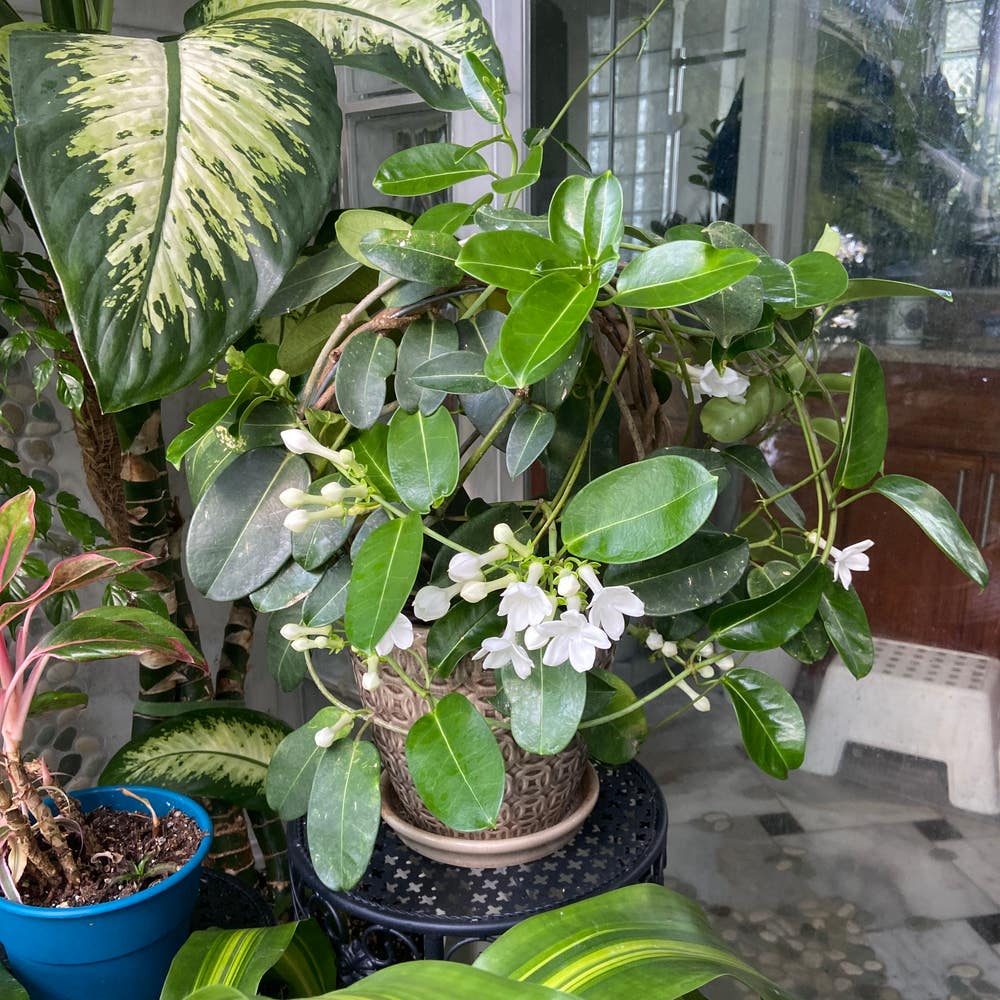
Stephanotis - Ultimate Guide to Fertilizing
Stephanotis floribunda
By the Greg Editorial Team
Jun 18, 2024•2 min read
This article was created with the help of AI so we can cover more plants for you. May contain errors. See one? Report it here.
- Phosphorus is key for Stephanotis blooms; look for higher middle NPK number.
- Fertilize monthly during growth, less in dormancy; dilute to prevent burn.
- Spot over-fertilization by yellow leaves, white crust; flush soil to recover.
Picking the Right Fertilizer for Blooming Stephanotis
💐 Balanced Liquid Fertilizers and Blooming
Phosphorus is the secret sauce for Stephanotis flowers. This nutrient is a bloom booster, so target fertilizers with a higher middle number in the NPK ratio. But don't ignore nitrogen and potassium; they're the support crew, fostering overall plant health and vigor.
🌿 The Micronutrient Magic
Stephanotis thrives on a cocktail of micronutrients. Think of them as the plant's multivitamins. Organic fertilizers offer a slow-release buffet of these essentials, enhancing soil health. Meanwhile, synthetic options are the fast track to nutrient nirvana, but with a greater risk of overindulgence. Choose wisely to avoid a nutrient hangover.

Timing and Techniques for Fertilizing Stephanotis
⏰ When to Bring on the Nutrients
Timing is critical when it comes to fertilizing Stephanotis. The growing season is your green light for nutrient application. This typically means spring through summer, when the plant is actively growing and gearing up for blooming. As autumn approaches and the plant enters its dormant period, it's time to ease off the fertilizer pedal.
💧 Fertilizer Application How-Tos
Mixing the right dilution of fertilizer prevents the dreaded nutrient burn. Start with a half-strength solution of a balanced liquid fertilizer, and only consider increasing the concentration if your plant responds well. As for frequency, a monthly treat during the growing season should suffice for a flourishing Stephanotis. However, remember that less is more during the cooler, less active months.

Recognizing and Fixing Over-Fertilization
🚨 Spotting Trouble
Overzealous with the plant food? Yellow leaves or a white crust on the soil are tattletales of over-fertilization. Stephanotis may show its displeasure with brown leaf tips, wilting, or halted growth. If your plant's roots look like they've had a rough night out, consider it a cry for help.
🛠️ The Recovery Plan
First, halt all fertilizing; your green buddy needs a break. Remove any visible fertilizer. It's like hitting the undo button on that extra slice of cake—necessary but a tad regretful. Next, give the soil a thorough flushing. Think of it as a detox spa for your plant's roots. If the situation's dire, like a plant version of a hangover, consider a soil transplant or at least replace the top layer. Hold off on the nutrient cocktails for a month, and let your Stephanotis recover from its indulgence.

⚠️ Safety First
This content is for general information and may contain errors, omissions, or outdated details. It is not medical, veterinary advice, or an endorsement of therapeutic claims.
Always consult a qualified healthcare professional before using any plant as food, medicine, or supplement.
Never eat any plant (or feed one to pets) without confirming its identity with at least two trusted sources.
If you suspect poisoning, call Poison Control (800) 222-1222, the Pet Poison Helpline (800) 213-6680, or your local emergency service immediately.
Spotted an error? Please report it here.
Ensure your Stephanotis flourishes 🌼 with Greg's tailored fertilizing reminders, helping you avoid over-fertilization and achieve perfect blooms every season!