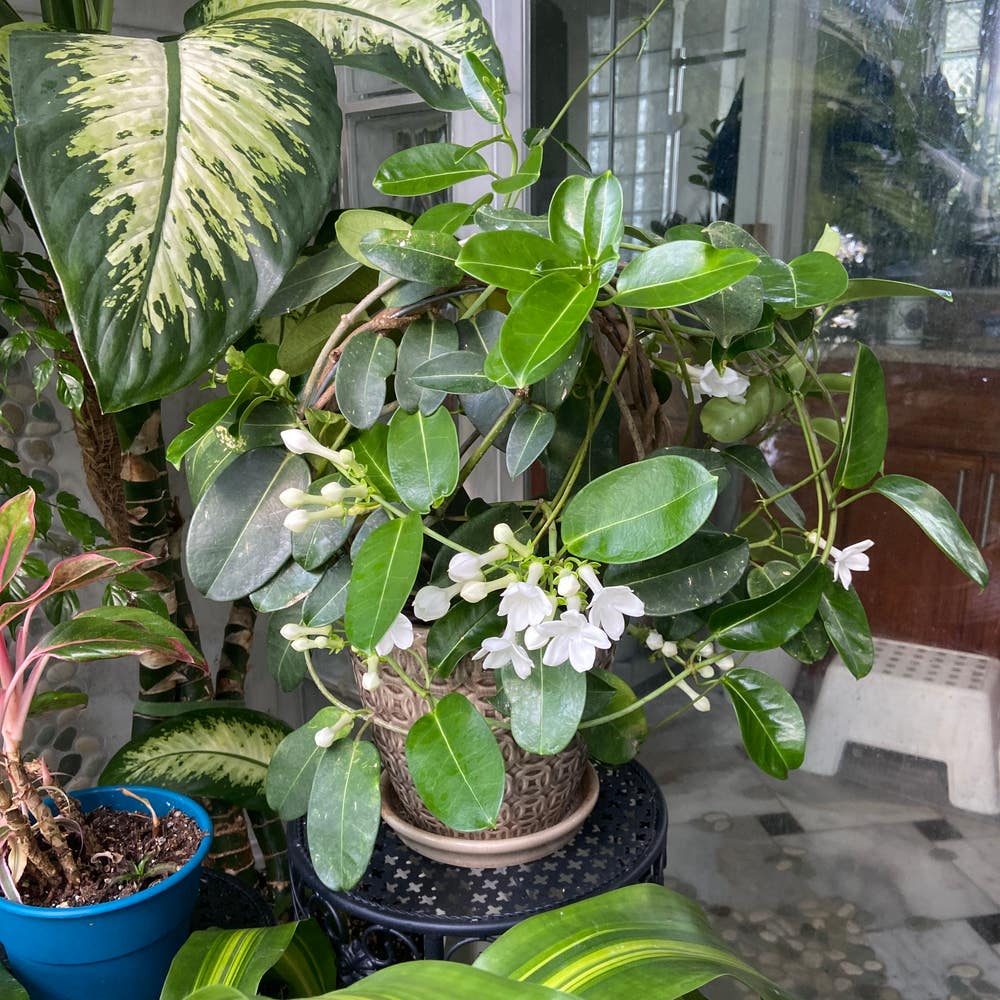
Your Stephanotis's Light Needs
Stephanotis floribunda
By the Greg Editorial Team
Jun 18, 2024•4 min read
This article was created with the help of AI so we can cover more plants for you. May contain errors. See one? Report it here.
- 🌿 Bright, indirect light indoors is ideal for Stephanotis.
- 🌤️ Morning sun, dappled afternoon shade outdoors helps Stephanotis thrive.
- 💡 Use grow lights if natural light is insufficient for flowering.
Maximizing Indoor Sunshine for Stephanotis
🌞 Finding the Sweet Spot: Bright, Indirect Light Indoors
Stephanotis thrives in bright, indirect light. To pinpoint the prime indoor spot, observe the quality of shadows in your space. Look for light-colored, blurry shadows—this is your cue. Avoid placing your Stephanotis in direct sunlight; it's like a vampire at a beach party—just doesn't mix well.
Signs of excessive sun include leaves that look sunburnt or faded, while insufficient light will have your Stephanotis stretching out like it's doing yoga, seeking more light. Keep an eye out for these signals and adjust the plant's position accordingly.
💡 When the Sun Isn't Enough: Using Grow Lights
No sunny windowsill? No sweat. Grow lights are the next best thing. Full-spectrum bulbs are the MVPs here, offering a buffet of light wavelengths. Position these lights a few inches above the plant to mimic the sun's embrace without overwhelming it.
Setting up a grow light system? Think of it as a plant disco—too intense and it's a no-go. Aim for a 12 to 14-hour light cycle to keep your Stephanotis's rhythm in check. Remember, it's about quality, not a 24/7 light party.

Cultivating Stephanotis Under the Open Sky
⛅️ The Ideal Outdoor Light Conditions for Stephanotis
Stephanotis vines crave a balance of sunlight and shade. They bask in the morning's gentle rays, which kick-start photosynthesis without overwhelming them. As the day heats up, they prefer the comfort of dappled shade to avoid the harsh midday sun.
Seasonal shifts in light intensity mean you'll need to play musical chairs with your plant's location. Summer demands more shade, while spring and fall can handle more direct exposure. It's all about reading the room—or the garden, in this case.
🛡️ Protecting Your Vine from the Elements
Harsh sunlight is the nemesis of Stephanotis. To shield your vine, consider a strategic placement under a tree or behind a sheer curtain. This setup filters the light, much like sunglasses for your plant.
As the year unfolds, your Stephanotis will need you to be its weatherman. Adaptability is key; be ready to move it or provide extra cover during those scorching summer days. Think of it as a game of dodgeball, but with sunlight instead of rubber balls.

The Flowering Factor: Light's Role in Stephanotis Blooms
🌸 Encouraging Stephanotis Flowers with Proper Light
Light duration and intensity are the secret sauce for Stephanotis blooms. They're like the plant's personal trainer, dictating when it's time to bulk up with flowers. To get those coveted blossoms, you'll need to play with the amount of light your vine receives.
- Long days can coax Stephanotis into flowering mode. Think of it as giving the plant a longer stage time for its performance.
- Short days might work for some plants, but Stephanotis is not on that guest list. It prefers a good, long chat with the sun.
Adjusting light conditions is like tuning an instrument; it needs to be just right. If your Stephanotis is basking in too much light, it might get sunburned. Too little, and it's like it's stuck in a cave—no blooms in sight.
- Morning or late afternoon sunlight is the sweet spot. It's the plant's happy hour, offering the best light for growth without the risk of a sunburn.
- Bright, indirect light is the mantra here. Direct sunlight is a no-go—it's like putting your plant in the spotlight for a solo it didn't rehearse for.
Remember, it's a balancing act. Keep an eye on your Stephanotis, and be ready to shuffle it around to find that light nirvana. Too much light, you'll have a crispy vine on your hands. Too little, and you'll be the proud owner of a lush, green, but stubbornly non-flowering, stick.

⚠️ Safety First
This content is for general information and may contain errors, omissions, or outdated details. It is not medical, veterinary advice, or an endorsement of therapeutic claims.
Always consult a qualified healthcare professional before using any plant as food, medicine, or supplement.
Never eat any plant (or feed one to pets) without confirming its identity with at least two trusted sources.
If you suspect poisoning, call Poison Control (800) 222-1222, the Pet Poison Helpline (800) 213-6680, or your local emergency service immediately.
Spotted an error? Please report it here.
Let Greg guide you to the ideal bright spot 🌿 for your Stephanotis, ensuring it gets just the right amount of indirect light without the risk of sunburn.