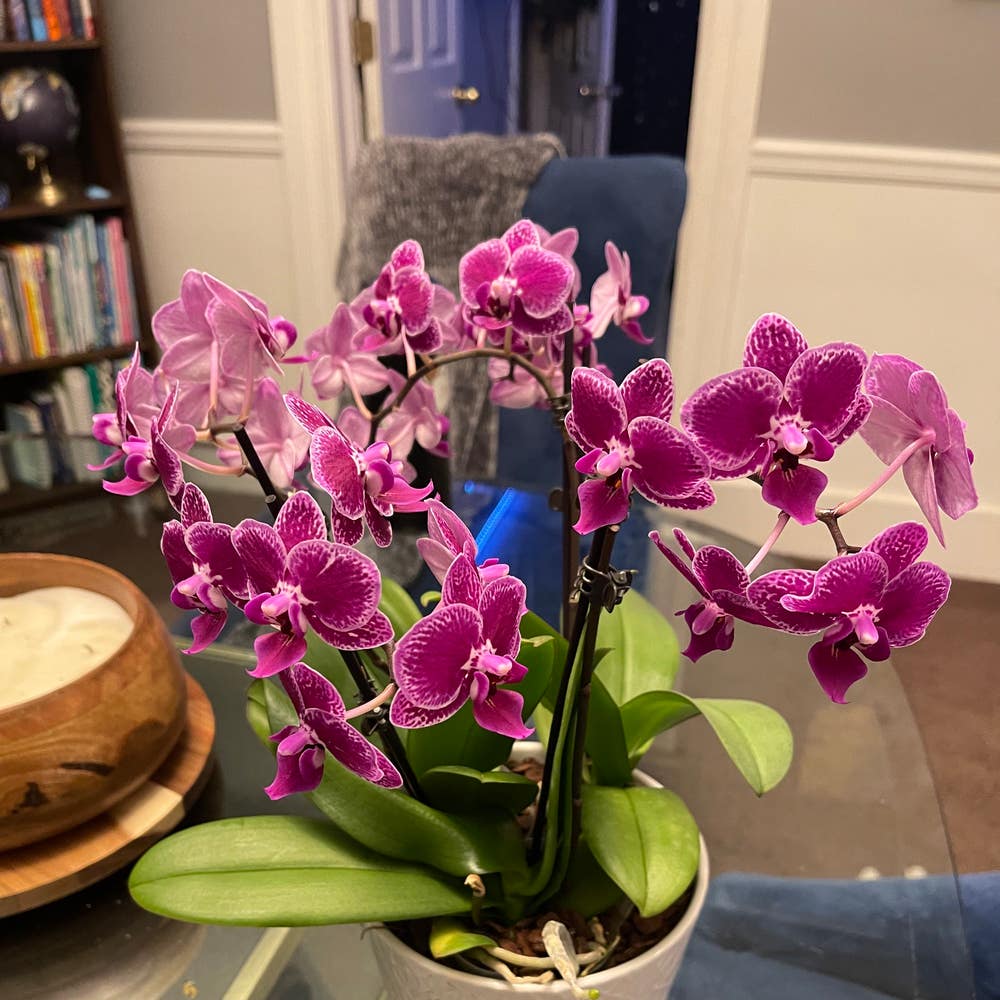
Common Moon Orchid Problems
Phalaenopsis amabilis
By the Greg Editorial Team
Jun 15, 2024•4 min read
This article was created with the help of AI so we can cover more plants for you. May contain errors. See one? Report it here.
- Over-watering causes root rot, but can be fixed with well-draining media.
- 🌞 Too much light scorches leaves; find a spot with filtered sunlight.
- Consistent temperature and humidity mimic Moon Orchids' tropical habitat.
Water Woes: Striking the Right Balance for Moon Orchids
🌊 Over-watering and Root Rot
Soggy soil and limp leaves are the hallmarks of an over-watered Moon Orchid. This is your plant's way of saying it's had more than its fill.
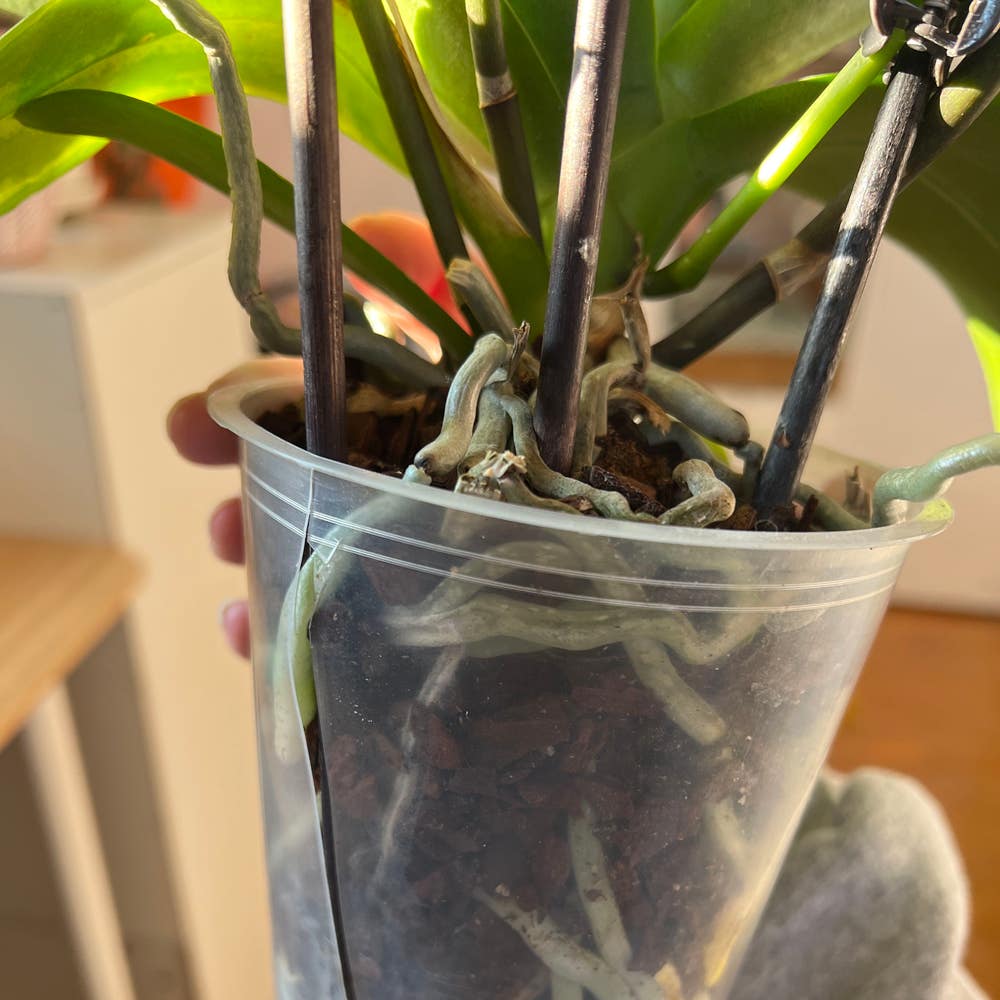
To rescue your waterlogged friend, it's time for a drying out operation. Remove the plant from its pot, trim any rotted roots, and repot in fresh, well-draining media. Remember, your orchid's not a fish; it doesn't need to swim.
🚱 Under-watering: When Thirst Strikes
Crinkly, dry leaves and a parched potting mix scream dehydration. Your Moon Orchid is thirstier than a marathon runner at the finish line.
Quench that thirst with a thorough watering, allowing excess to drain. But don't turn your orchid's home into a swamp; aim for moist, not drenched. Keep the hydration consistent, like a well-timed beat, to avoid the extremes.

Light and Temperature: The Moon Orchid Tango
🌞 Too Much Sun, Not Enough Fun: Leaf Scorching
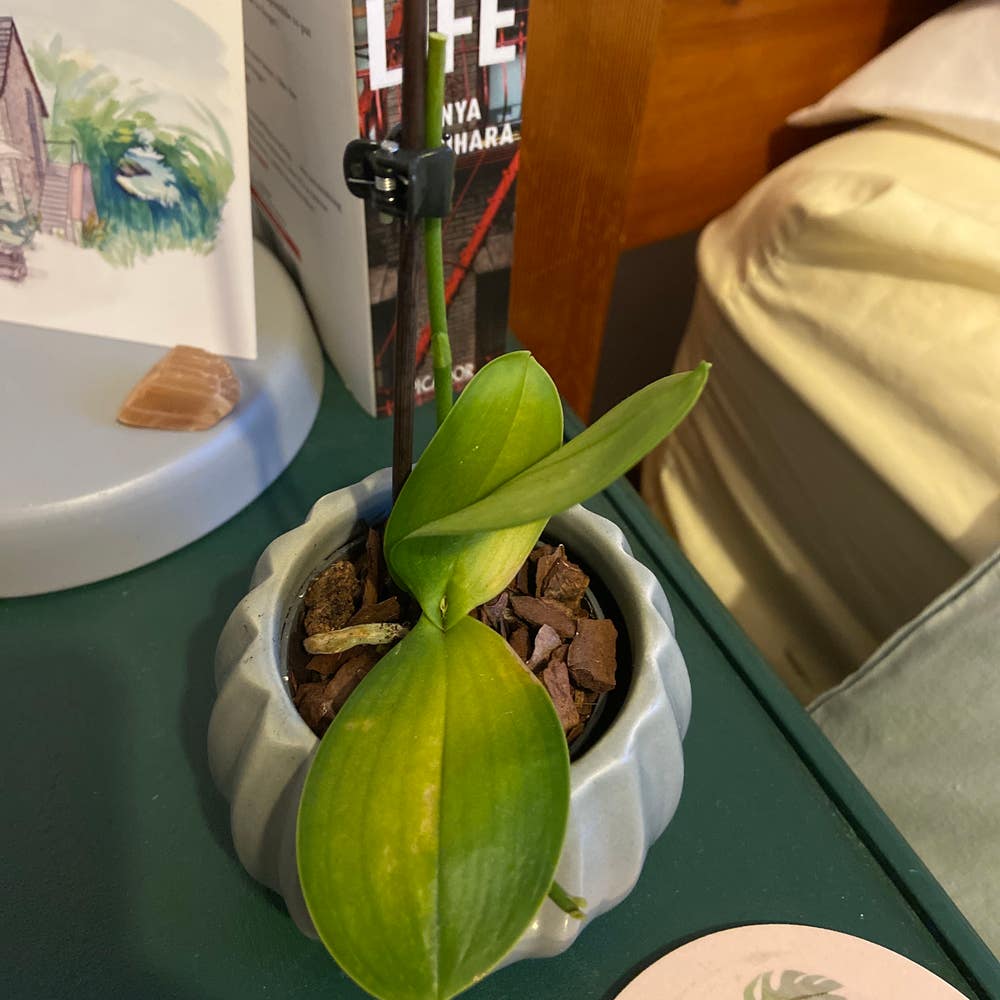
Recognizing a sunburnt Orchid is straightforward: look for leaves with a new hobby in tie-dye—yellow patches or, in severe cases, crispy brown edges. These are the plant's way of saying, "I've had enough!"
Shifting Shades
To prevent leaf scorch, relocate your Moon Orchid to a spot with filtered sunlight. Think sheer curtains or a few feet away from a window. It's about basking without baking.
❄️ Chilly Woes: When Temperatures Drop
When your Orchid's leaves start to look like they've been left out in the cold, showing discoloration or a lack of activity, it's time to warm things up.
Keeping it Cozy
Maintaining temperature consistency is crucial. Mimic the Moon Orchid's native tropical habitat with stable warmth, avoiding the chill that leads to unhappy, dormant plants.

Pests and Pathogens: Uninvited Guests
🐜 Pests: The Tiny Terrors
Moon Orchids may fall victim to tiny freeloaders like spider mites and mealybugs. These pests are like uninvited guests at a party, and they don't plan on leaving quietly.
🔍 Spotting the Invasion
Check for webbing, spots, or the critters themselves. A magnifying glass can be your best friend in this detective work.
🛡️ The Counterattack
When it comes to pest control, safety is paramount. Opt for non-toxic methods when possible, such as insecticidal soaps or neem oil. Remember, not all insects are foes—some, like parasitic wasps, are allies in this battle.
Mold and Fungus: The Stealthy Spoilers
Mold and fungus can sneak up on your Moon Orchids, causing unsightly spots and wilts.
🍄 Fungal Flags
Be on the lookout for discoloration or powdery spots on leaves—these are the red flags of fungal infestations.
💨 Clearing the Air
Improve air circulation and consider a fungicide if necessary. However, prevention is key—maintain cleanliness and avoid overwatering to keep these stealthy spoilers at bay.
The Finer Details: Ensuring Moon Orchid Bliss
💡 Light Levels: A Balancing Act
Moon Orchids are like Goldilocks when it comes to light—not too much, not too little. Weak stems and a bloomless existence are cries for help from a light-starved plant. Conversely, leaf burn is the plant's protest against too much direct sunlight.
To perfect the light dance, gradually introduce your Moon Orchid to brighter spots, avoiding the harsh midday sun. Think of it as a slow-motion waltz towards the ideal light—bright but indirect, like a sunny spot shielded by a sheer curtain.
🌡️ Temperature and Humidity: Creating a Tropical Haven
Replicating a Moon Orchid's natural habitat is like throwing a tropical-themed party—it's all about the ambiance. Aim for temperatures around 65-75°F (18-24°C) during the day, with a slight dip at night.
Humidity is the invisible guest at this shindig, critical for your orchid's comfort. Droopy leaves signal a plea for higher humidity, so consider a humidifier or a pebble tray to keep the air moist. Remember, consistency is the secret sauce; abrupt changes in temperature or humidity are as welcome as a downpour at a barbecue.
⚠️ Safety First
This content is for general information and may contain errors, omissions, or outdated details. It is not medical, veterinary advice, or an endorsement of therapeutic claims.
Always consult a qualified healthcare professional before using any plant as food, medicine, or supplement.
Never eat any plant (or feed one to pets) without confirming its identity with at least two trusted sources.
If you suspect poisoning, call Poison Control (800) 222-1222, the Pet Poison Helpline (800) 213-6680, or your local emergency service immediately.
Spotted an error? Please report it here.
Ensure your Moon Orchid thrives 🌙 with Greg's personalized care reminders, helping you perfect the delicate balance of watering, light, and humidity, while keeping an eye out for any pesky intruders.