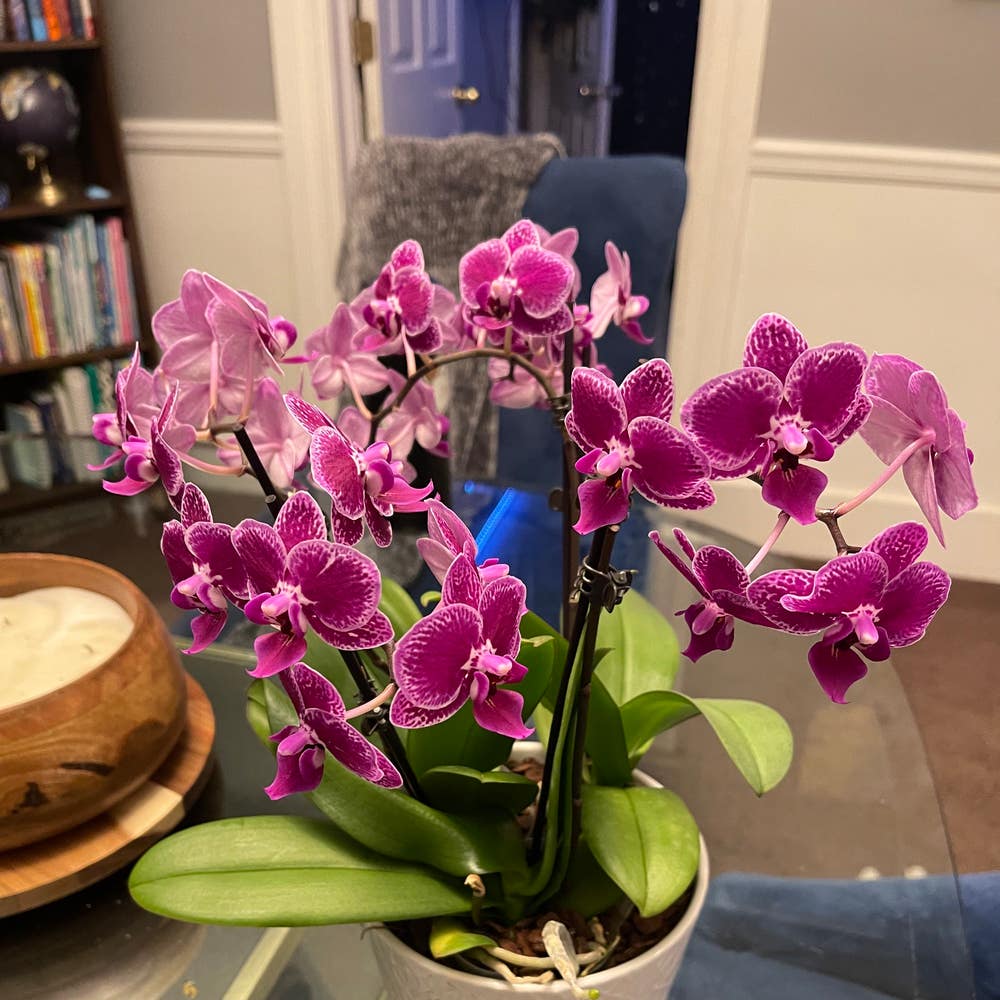
🌜 Why Are My Moon Orchid Leaves Mushy?
Phalaenopsis amabilis
By the Greg Editorial Team
Jun 18, 2024•4 min read
This article was created with the help of AI so we can cover more plants for you. May contain errors. See one? Report it here.
- 🌱 Mushy leaves signal trouble, often due to overwatering or root rot.
- ✂️ Immediate pruning and root check necessary; consider repotting with well-draining soil.
- 💧 Master watering and environment to prevent future mushiness and maintain health.
Spotting Trouble: Signs Your Moon Orchid Has Mushy Leaves
🚨 Visual Symptoms
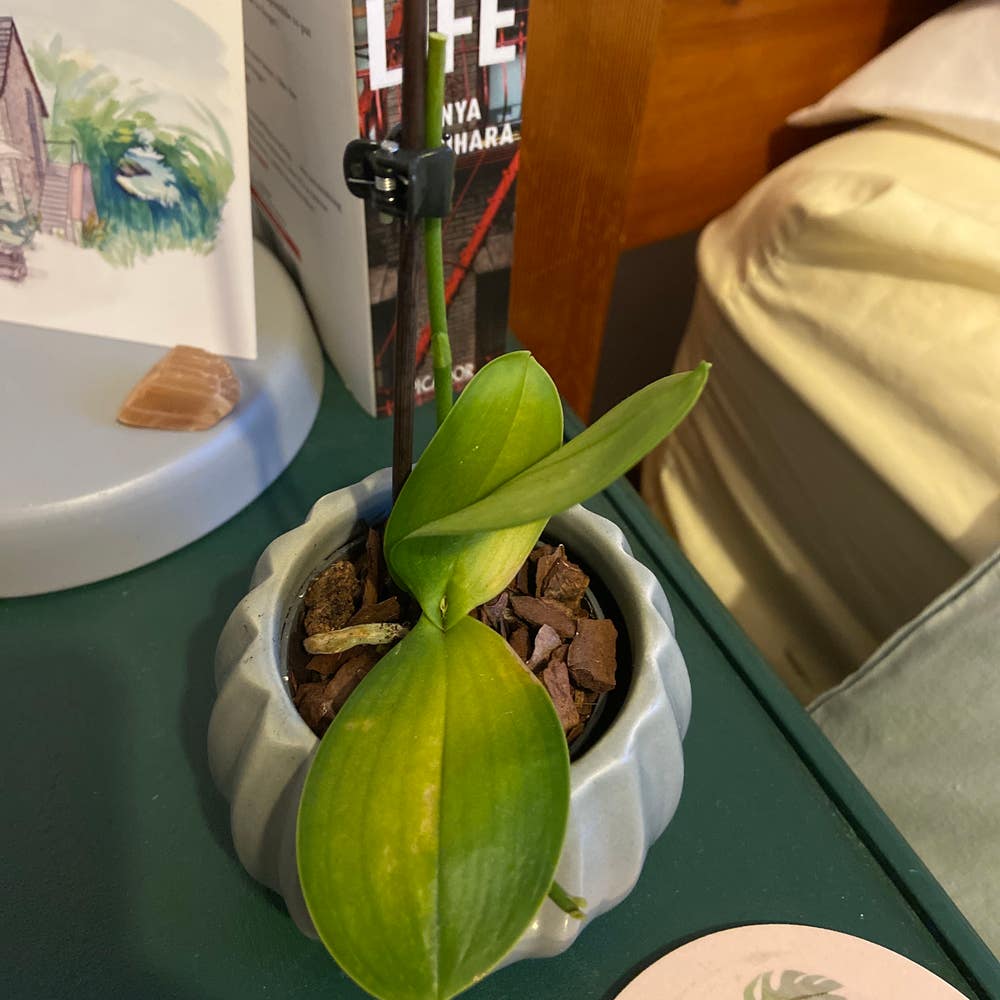
Mushy leaves on your Moon Orchid are like a neon sign flashing "Help me!" Discoloration often tags along, turning leaves a sad shade of yellow or brown. If your orchid's leaves have the texture of overcooked pasta, it's time to sit up and pay attention. They might even get a bit translucent, signaling a waterlogged crisis.
🕵️♂️ Root Check-Up
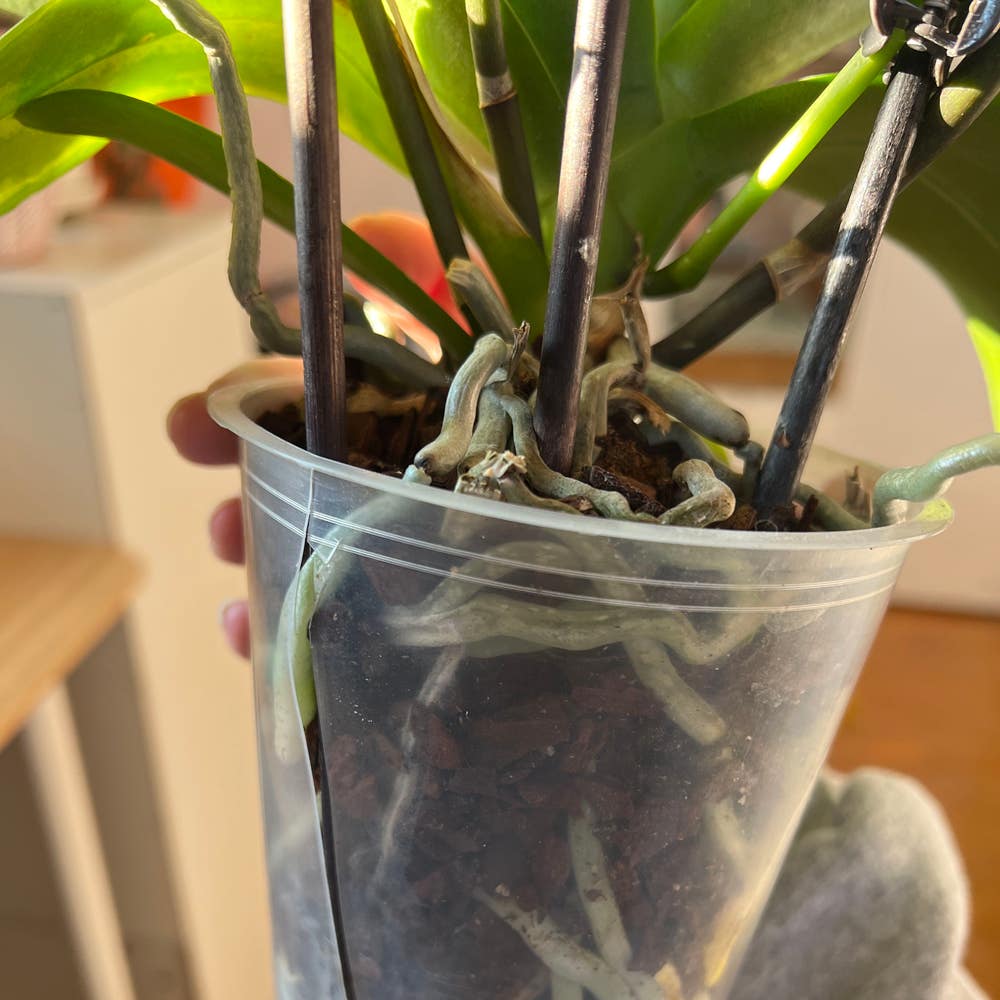
Roots tell the true tale of your orchid's woes. Healthy roots strut their stuff in shades of silvery-green or white, firm and confident. If they're sporting a mushy texture and a brownish hue, you've got a case of root rot on your hands. And if there's a stench that reminds you of last week's forgotten leftovers, action is overdue.
💧 Watering Woes
Overwatering is the usual suspect when it comes to mushy leaves. It's a delicate dance between too much and too little. If the roots look like they've been through a flood, it's time to dial back on the H2O. Conversely, roots that resemble a desert landscape hint that your watering can has been gathering dust for too long.

First Aid for Mushy Leaves
🌧️ Immediate Steps
When mushiness strikes your Moon Orchid, it's all hands on deck. Prune the soggy offenders immediately with sterilized scissors—think of it as a necessary amputation to save the rest. After the trim, keep your tools clean; a swipe of rubbing alcohol keeps the bad juju away.
💧 Adjusting Your Watering Technique
Watering is more art than science. If your Moon Orchid's leaves have gone mushy, it's time to rethink your approach. Let the top inch of soil dry out before you water again. This isn't a guessing game—get your fingers dirty and check. And when you do water, go all in, then let it dry. Think of it as a desert downpour followed by sunshine.
🌱 The Repotting Rescue
If your Moon Orchid's roots are more brown than a well-done steak, it's time to repot. Choose a pot that's snug but not suffocating, and a well-draining mix that's more breathable than your favorite cotton tee. After the move, patience is key. Water sparingly, and wait for signs of recovery like a gardener waits for spring.

Battling Root Rot and Fungal Foes
🌱 Root Rot Reversal
Root rot is the silent killer of Moon Orchids. It's a stealthy issue that can leave your plant's roots as mushy as overcooked noodles. To tackle this, inspect the roots for black or brown mushiness. If they're compromised, it's time for some serious plant surgery. Trim the affected roots with sterilized scissors, ensuring you cut away all the rot. After the operation, let the roots air out before replanting in fresh, well-draining soil.
🍄 Fungal Infection: Finding and Fixing
Fungal infections are like uninvited guests at a party—they show up unannounced and wreak havoc. If you spot any unusual leaf spots or decay, it's time to act. Isolate the plant to stop the fungal fiesta from spreading. Remove the affected leaves with clean, sharp shears. For a solid defense, consider a fungicide—either a homemade baking soda solution or a copper-based product. Apply it as directed; overdoing it can harm more than help. Remember, prevention is key. Keep the air moving around your plants and avoid wetting the leaves to discourage future fungal gatecrashers.

Keeping Mushiness at Bay: Prevention Strategies
💧 Mastering the Art of Watering
Watering your Moon Orchid isn't about sticking to a strict schedule; it's about adaptability. Check the top inch of soil—day-old sponge feel means go for it; anything damper means hold off. Use room-temp water to avoid shocking those delicate roots. And remember, the goal is moist, not soggy, like a wrung-out sponge.
🌱 Potting and Soil Secrets
Choosing the right pot and soil mix is like picking a tailored suit—it should fit just right. Go for pots with drainage holes, non-negotiable. Mix in perlite with your potting soil to ensure it's well-draining. Refresh the soil annually to keep your orchid's feet happy without the need for extra fertilizer.
🌍 Environmental Control
Your Moon Orchid doesn't need a sauna, just a consistent humidity level. A pebble tray or a humidifier can help maintain that misty embrace it loves. But don't forget about air circulation—keep it flowing to ward off any potential fungal party crashers. And if you're dealing with high summer heat, increase watering frequency and consider some shade to keep things cool.
⚠️ Safety First
This content is for general information and may contain errors, omissions, or outdated details. It is not medical, veterinary advice, or an endorsement of therapeutic claims.
Always consult a qualified healthcare professional before using any plant as food, medicine, or supplement.
Never eat any plant (or feed one to pets) without confirming its identity with at least two trusted sources.
If you suspect poisoning, call Poison Control (800) 222-1222, the Pet Poison Helpline (800) 213-6680, or your local emergency service immediately.
Spotted an error? Please report it here.
Keep your Moon Orchid thriving and mush-free 🌱 with Greg's custom watering schedules and a community of experts to guide you through any leafy predicaments.