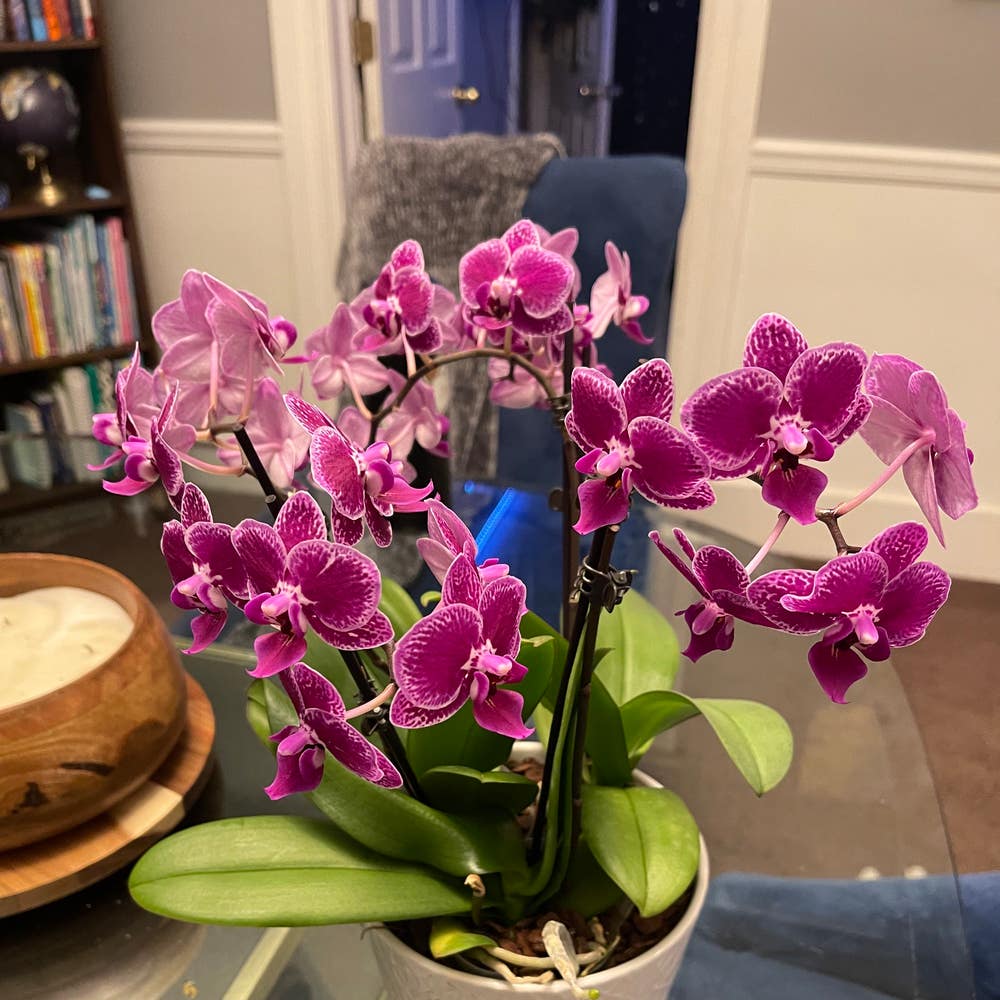
🌜 Why Are My Moon Orchid Leaves Droopy?
Phalaenopsis amabilis
By the Greg Editorial Team
Jun 15, 2024•4 min read
This article was created with the help of AI so we can cover more plants for you. May contain errors. See one? Report it here.
- Light and humidity balance is crucial for Moon Orchid leaf health.
- Over/underwatering and poor drainage lead to droopy leaves; check soil moisture.
- Consistent care and regular root checks prevent and fix droopiness.
Spotting the Culprits Behind Droopy Leaves
💡 Light, Temperature, and Humidity Woes
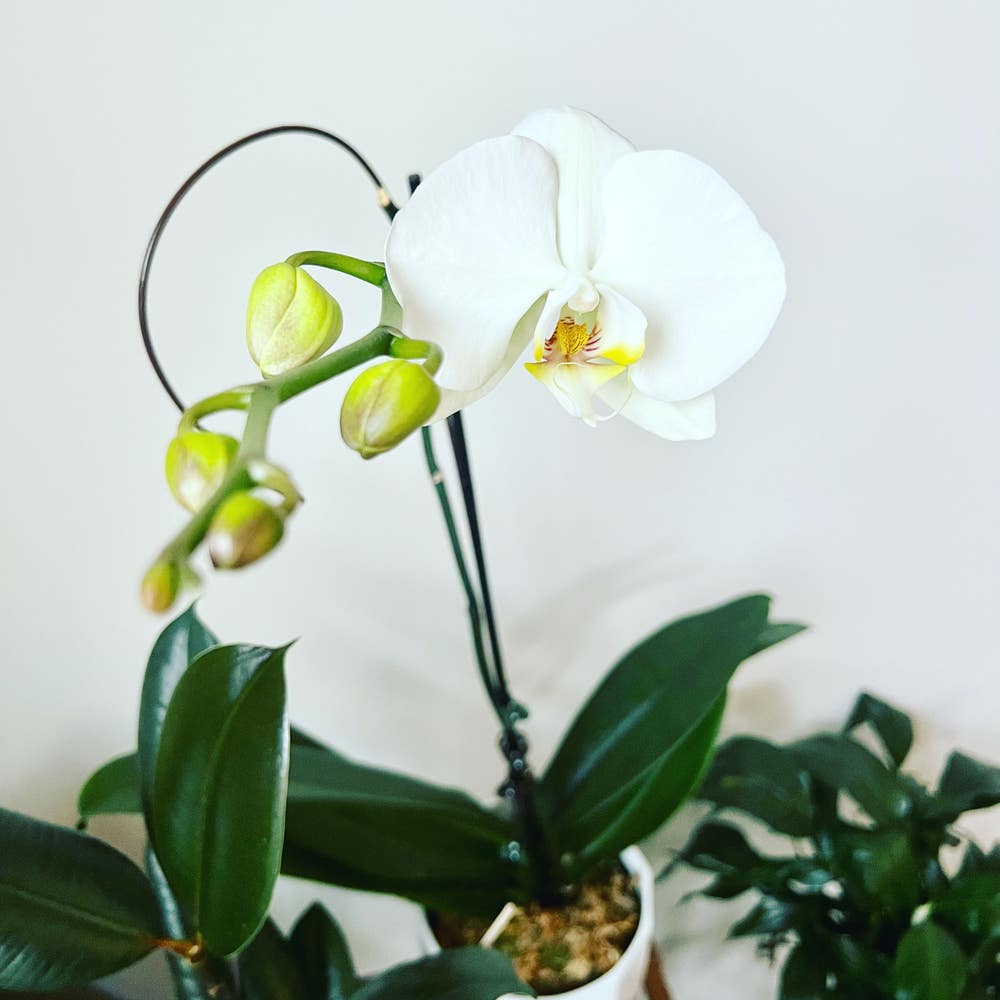
Moon Orchid leaves can throw a real fit when their light isn't just right. Too little, and they'll droop in despair; too much, and they'll scorch and slump. Keep them in a sweet spot of indirect, bright light, and watch for that healthy gleam.
Temperature swings are like bad mood swings for your Orchid. They can leave leaves limp, so avoid placing your plant near vents or drafts. Aim for a consistent temperature, and your Orchid's leaves will thank you.
When it comes to humidity, think Goldilocks: not too dry, not too moist. Between 40 to 70 percent is the happy range. If you see droplets on the leaves or they start to look more like raisins than foliage, it's time to adjust.
🚰 Watering Mishaps
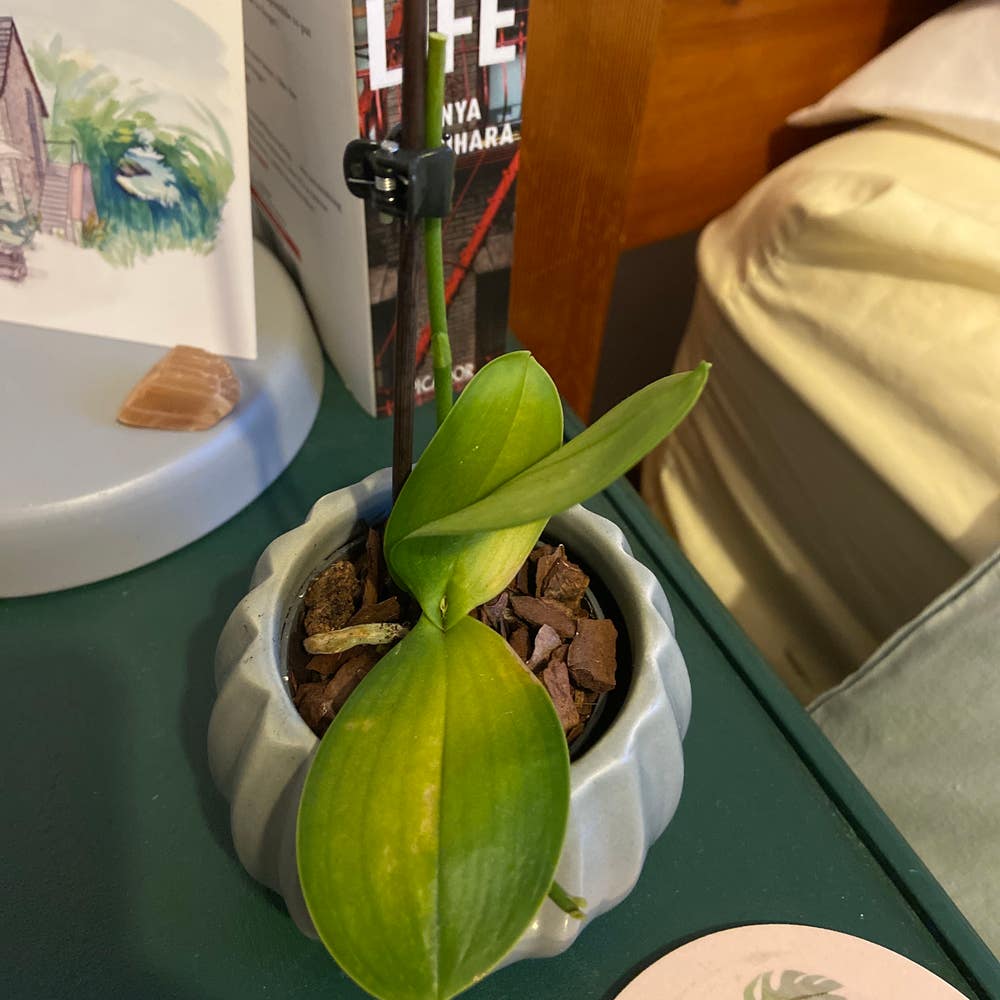
Overwatering your Moon Orchid is like giving it too much love—it can't handle it. Leaves will droop under the weight of soggy soil. Underwatering, on the other hand, is like forgetting your plant's birthday—leaves will wilt in neglect.
To strike the perfect balance, check the soil's moisture with your finger. If it's dry an inch down, it's time to water. Remember, your Orchid's roots should never take a bath; they prefer a quick shower.
🌱 Root Health and Potting Pitfalls
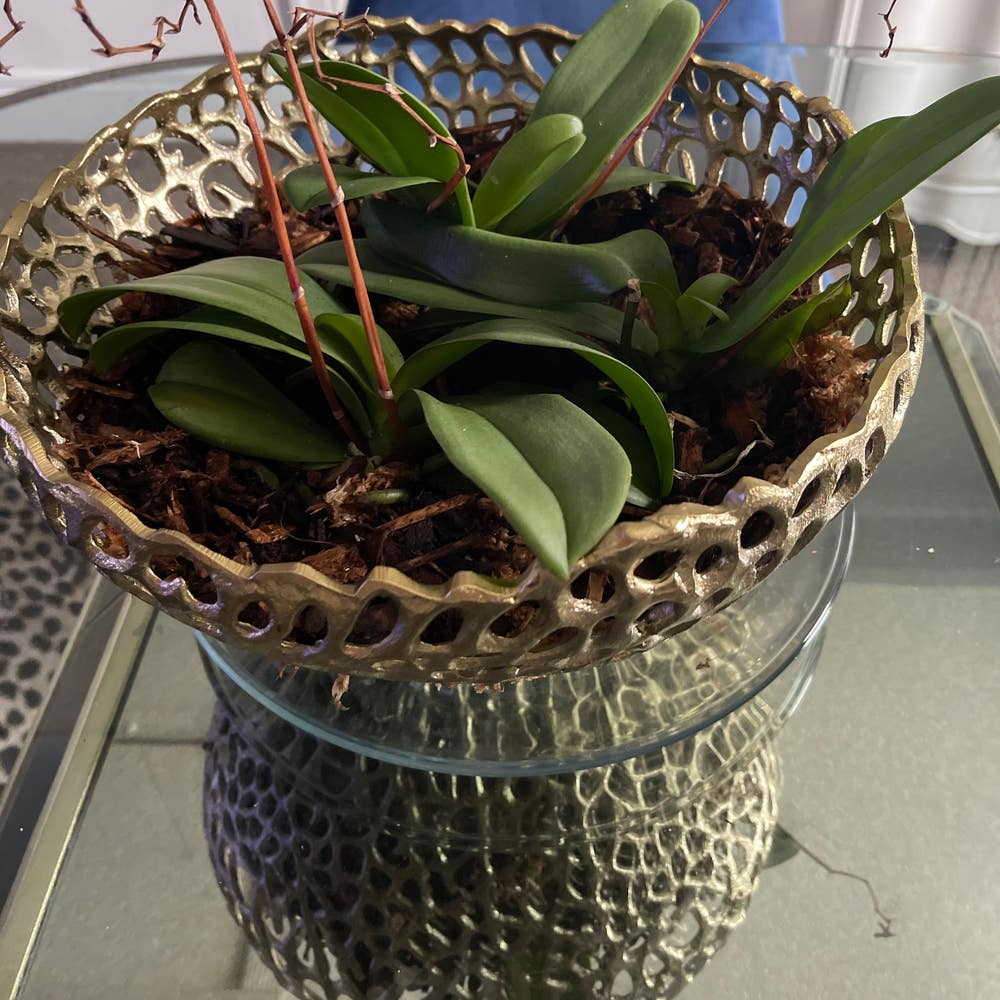
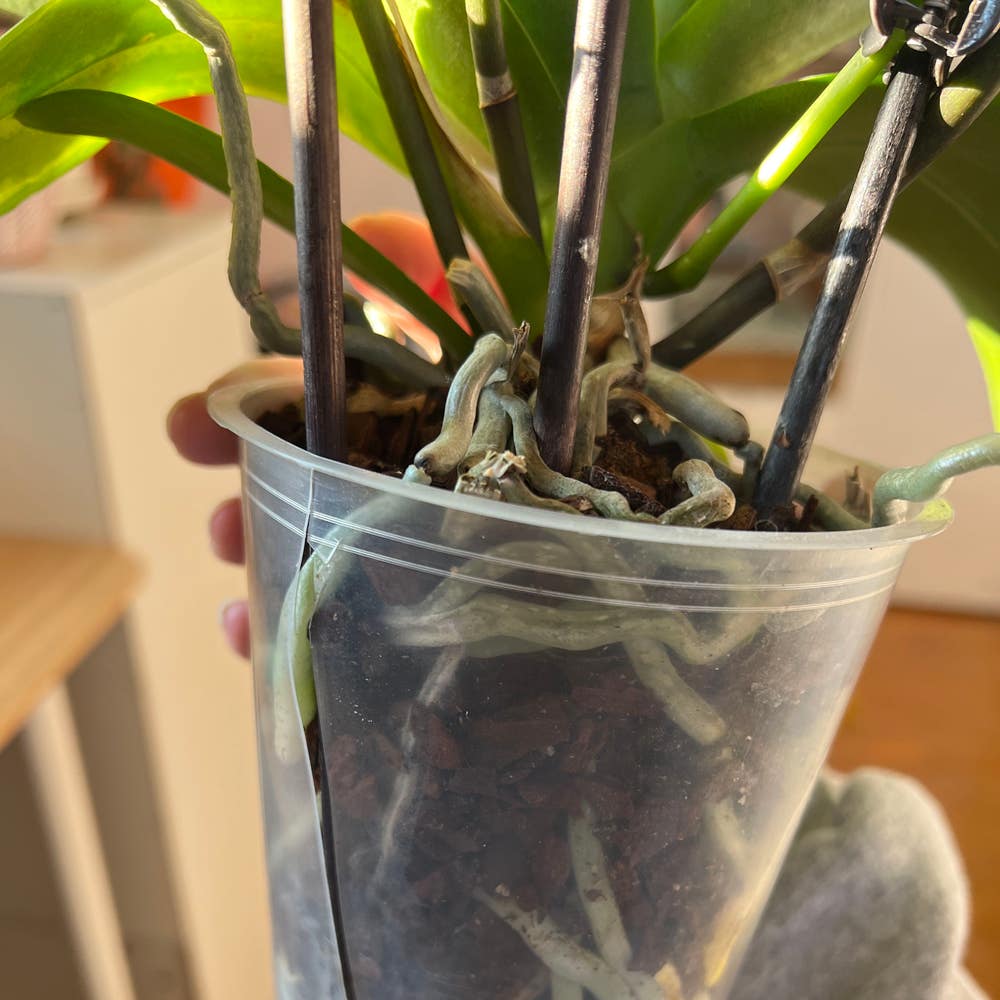
Cramped roots are a big no-no. They'll make your Orchid's leaves sag faster than a deflated balloon. Ensure your pot has enough room for roots to spread out and breathe.
Poor drainage is another party pooper. Waterlogged roots are a one-way ticket to droopy-leaf town. Make sure your pot has drainage holes, and use a well-draining potting mix to keep those roots happy and healthy.
Root distress signs include a mushy feel or a foul smell. If you spot these, it's time for some Orchid first aid—stat. Repotting might just be the CPR your plant needs.
Fixing the Flop: Remedies for Droopy Leaves
💡 Fine-Tuning the Environment
Adjusting light can be a game-changer for your Moon Orchid. Too much sun leaves leaves crispy; too little, and they'll sag like a deflated balloon. Find that Goldilocks zone of bright, indirect light and watch your plant perk up.
Temperature swings are the silent leaf droopers. Keep the thermometer steady to avoid a limp leaf situation. Humidity is the secret sauce—aim for that sweet 40-50% range. It's like setting the mood for a romantic dinner, but for your orchid.
🚰 Watering Wisdom
Get your watering rhythm down to a science. Consistency is your new mantra. Use room-temp water—orchids are no fans of a cold shower. And please, let the pot drain; nobody likes wet feet, especially not your orchid.
Moisture meters are cool, but your finger is the OG tool. Poke the soil; if it's dry, it's time to water. If it's wet, back off, tiger. Overwatering? Time to let the soil breathe and consider a repot if you've gone overboard.
🌱 Rejuvenating Roots and Repotting
Roots cramped like a packed elevator? Time to give your orchid some legroom. Repotting is like moving to a bigger apartment—it's stressful but worth it. Choose a pot that's the next size up, not a mansion.
The right soil mix is like a good diet—essential for health. Mix in some perlite for that airy, well-draining vibe. Fertilizer? Go easy. It's like seasoning food; a little goes a long way.
Keeping Leaves Perky: Prevention Strategies
💪 Consistency is Key
In the world of Moon Orchids, stability reigns supreme. Fluctuating conditions are like kryptonite to these beauties, leading to the dreaded droop. To keep your orchid's leaves perky, maintain a steady environment—consistent temperature, light, and humidity are non-negotiable.
🌱 Proactive Potting and Root Checks
Regular root inspections are as crucial as dentist check-ups—skipping them invites trouble. Aim to repot your Moon Orchid every couple of years to prevent the roots from feeling claustrophobic. Early signs of potting issues, like a snug pot or compacted soil, are your cue to act before your orchid's leaves throw in the towel.
⚠️ Safety First
This content is for general information and may contain errors, omissions, or outdated details. It is not medical, veterinary advice, or an endorsement of therapeutic claims.
Always consult a qualified healthcare professional before using any plant as food, medicine, or supplement.
Never eat any plant (or feed one to pets) without confirming its identity with at least two trusted sources.
If you suspect poisoning, call Poison Control (800) 222-1222, the Pet Poison Helpline (800) 213-6680, or your local emergency service immediately.
Spotted an error? Please report it here.
Ensure your Moon Orchid leaves stay upright and vibrant 🌿 with Greg's personalized care reminders that tackle light, watering, and humidity, keeping droopiness at bay.