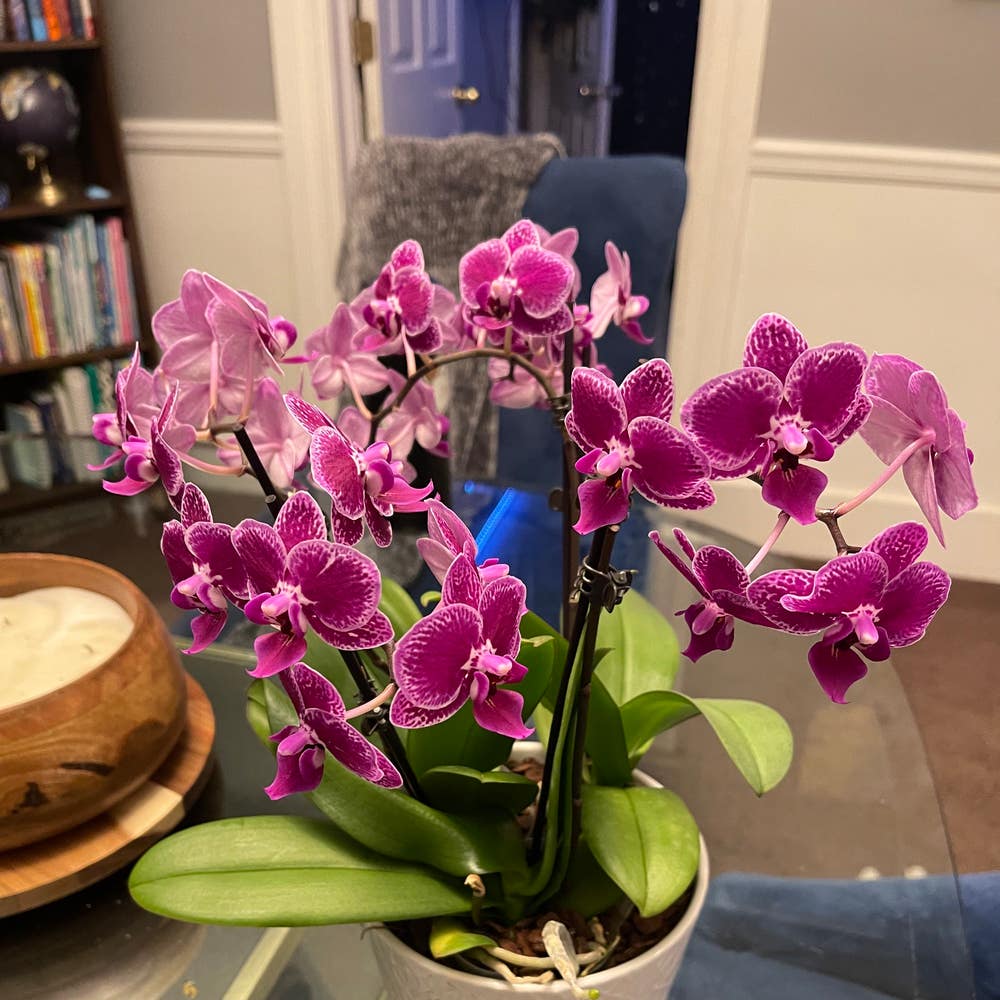
🌜 Why Is My Moon Orchid Dropping Leaves?
Phalaenopsis amabilis
By the Greg Editorial Team
Jun 18, 2024•4 min read
This article was created with the help of AI so we can cover more plants for you. May contain errors. See one? Report it here.
- 🌧️ Overwatering causes root rot: Trim rotted roots and repot.
- 💡 Bright indirect light needed: Use LED grow lights if necessary.
- 🌡️🌿 Maintain 40-60% humidity: Group plants or use a pebble tray.
When Overwatering Takes a Toll
🌧️ Spotting the Signs of Root Rot
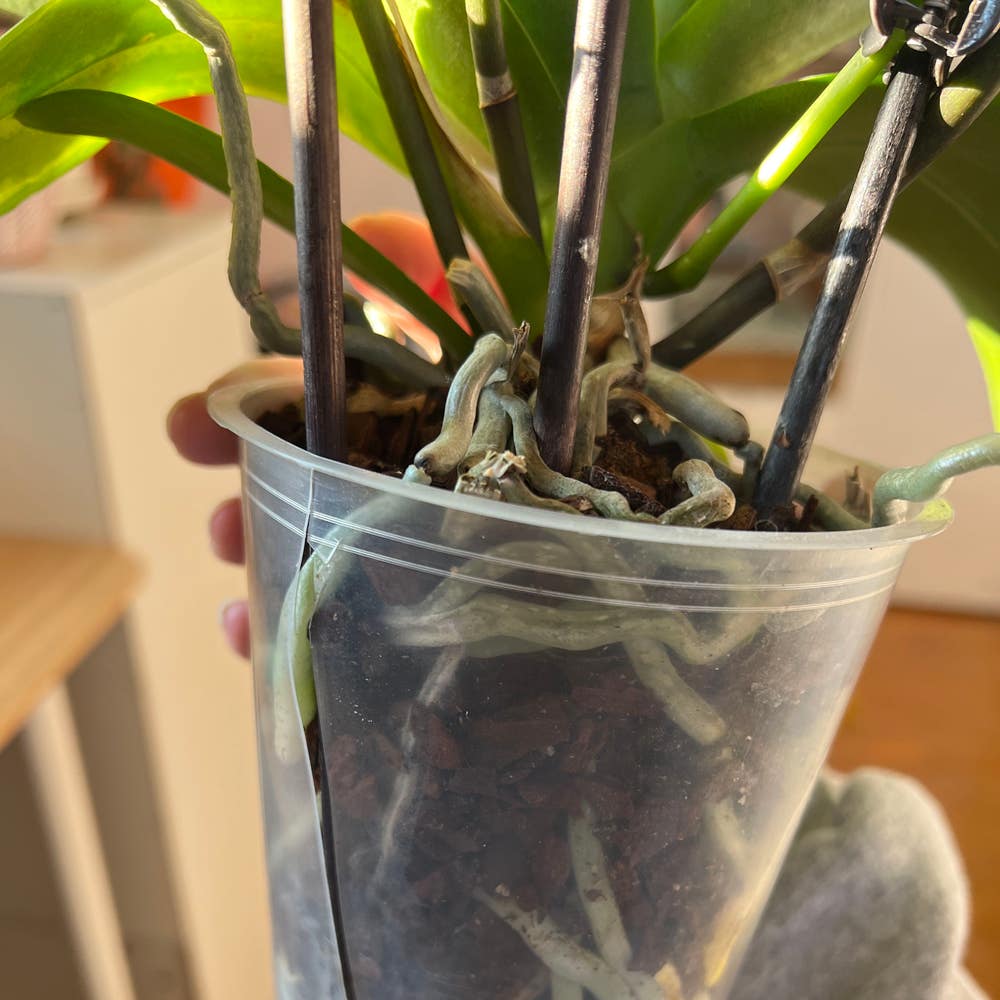
Overwatering your Moon Orchid can lead to the silent killer known as root rot. This condition is a fungal or bacterial feast on the roots, triggered by excess moisture. Yellowing leaves, a stunted growth, or a lack of blooms could all be cries for help. Dark, mushy roots and a foul, rotting smell when you inspect the potting medium are the telltale signs you've gone overboard with the H2O.
Turning the Tide on Water Woes
To rescue your waterlogged Moon Orchid, prompt action is key. First, gently remove the orchid from its pot to assess the damage. If you're greeted by soggy, smelly medium and dark, squishy roots, it's time to get your hands dirty. Trim away the rotted roots with sterile shears, and repot in fresh, well-draining medium. Going forward, water only when the medium is nearly dry, and never let your orchid sit in water. Remember, your orchid's pot should have drainage holes to avoid future overwatering mishaps.

Light: Finding the Sweet Spot
🌟 The Low Light Pitfall
Moon Orchids, like any diva, demand their spotlight. Too little light, and you'll notice your orchid's leaves dropping like flies. It's not being dramatic; it's a survival cry. The leaves are the solar panels of the plant, and without enough light, they can't produce the energy needed to stay lush and firm.
Let There Be (The Right Amount of) Light
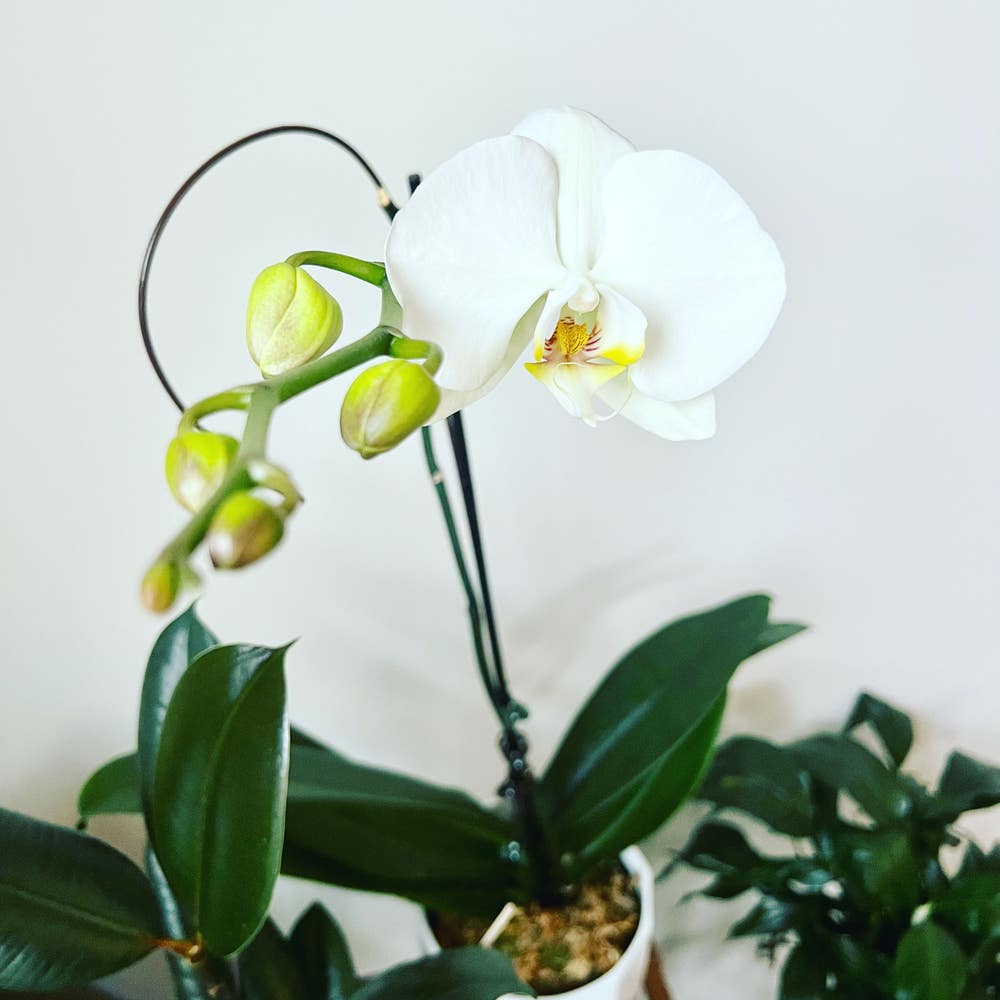
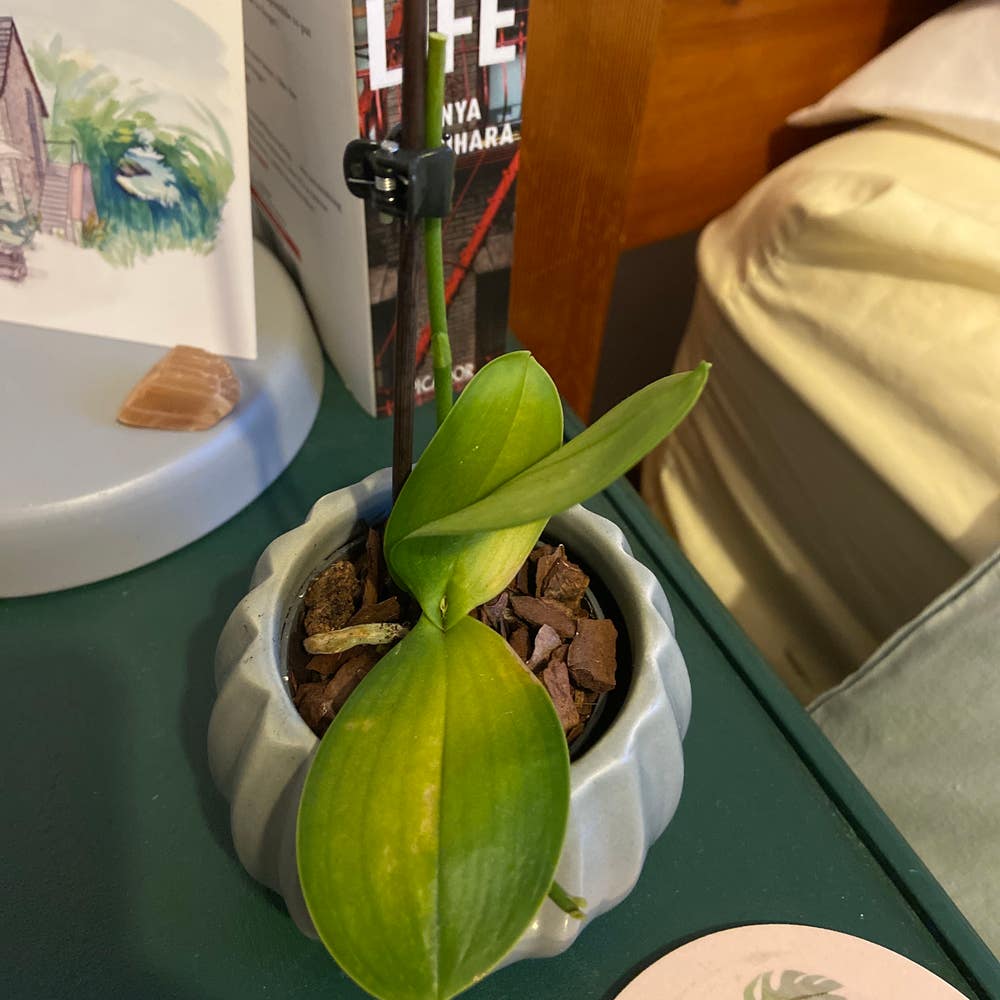
To prevent your Moon Orchid from becoming a leaf-dropping tragedy, bright indirect light is your go-to. Think of it as the plant's favorite coffee shop: enough light to read a book, but no direct sun to cause a glare. If you're working with indoor lighting, LED grow lights can be your orchid's best friend, offering consistent "sunlight" without the risk of sunburn. Remember, your orchid's leaves should have a healthy green-apple color, maybe with a slight blush, but never the dull green of envy. If you're seeing vibrant growth, you've hit the jackpot on lighting.

Balancing the Temperature and Humidity Act
🌡️ Too Hot, Too Cold, Just Right
Moon Orchids are temperature-sensitive divas; they demand a climate that's not too hot, not too cold, but just right. Temperature stress shows up as a dramatic leaf drop—it's the orchid's way of throwing a tantrum. If the leaves look more limp than a bad handshake, it's time to reassess your room's climate.
💧 Humidity: The Invisible Necessity
Creating a humidity oasis for your Moon Orchid isn't about turning your living space into a tropical rainforest. Aim for a humidity level of 40-60%, where the air is moist enough to keep the leaves from crisping up like overcooked bacon but not so damp that you're inviting a mold rave. Use a hygrometer to monitor levels; it's like a thermometer for water vapor, and just as crucial.
To boost humidity, group your plants together—think of it as a plant party where everyone brings their own moisture. Alternatively, a pebble tray with water beneath the pot can up the humidity without the need for a swimsuit. Remember, air circulation is also key; it's the invisible dance partner that keeps humidity in check, preventing the air from becoming stagnant and moldy. Keep the air moving with a fan, but avoid placing your orchid in the path of harsh drafts.
In the end, it's about keeping your orchid in that sweet spot where it's neither shivering nor sweating. Adjust your care with the seasons and keep an eye on that hygrometer—your Moon Orchid will thank you by not dropping leaves like it's going out of style.

The Unseen Invaders: Pests
🐜 Identifying Common Culprits
Pests are stealthy saboteurs, often going unnoticed until your Moon Orchid starts to show distress. Aphids, spider mites, scale insects, and mealybugs top the list of usual suspects. These tiny terrors siphon nutrients, leaving leaves weakened or discolored. A sticky residue, known as honeydew, is a dead giveaway of their presence.
🛡️ Winning the Battle Against Bugs
Vigilance is your first line of defense; inspect your orchid regularly, especially the undersides of leaves where pests love to hide. If you spot invaders, it's time to launch a counterattack. Insecticidal soaps or neem oil are your allies here, effective yet gentle on your plant. For a more tactical approach, consider introducing natural predators like ladybugs or predatory mites into the mix. Remember, the key is to act quickly and decisively, because when it comes to pests, an ounce of prevention truly is worth a pound of cure.
⚠️ Safety First
This content is for general information and may contain errors, omissions, or outdated details. It is not medical, veterinary advice, or an endorsement of therapeutic claims.
Always consult a qualified healthcare professional before using any plant as food, medicine, or supplement.
Never eat any plant (or feed one to pets) without confirming its identity with at least two trusted sources.
If you suspect poisoning, call Poison Control (800) 222-1222, the Pet Poison Helpline (800) 213-6680, or your local emergency service immediately.
Spotted an error? Please report it here.
Prevent your Moon Orchid from shedding its beauty by letting Greg track 🌿 the perfect balance of water, light, and humidity for you.