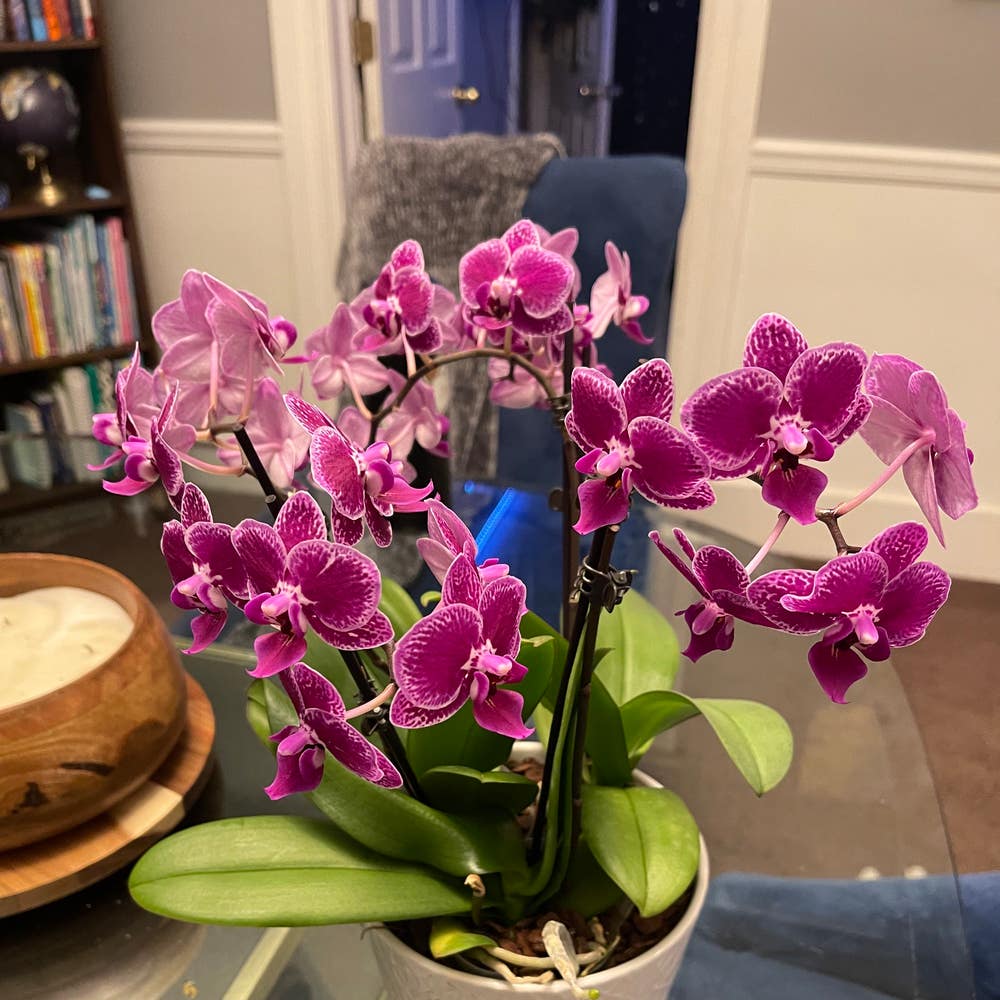
Why Are There Brown Spots on My Moon Orchid Leaves?
Phalaenopsis amabilis
By the Greg Editorial Team
Jun 15, 2024•5 min read
This article was created with the help of AI so we can cover more plants for you. May contain errors. See one? Report it here.
- Fungal/bacterial infections and pests cause brown spots on Moon Orchid leaves.
- Environmental stress like excess sunlight and poor air circulation contribute too.
- Proper care and maintenance prevent and alleviate brown spots.
Causes of Brown Spots on Moon Orchid Leaves
🍄 Fungal and Bacterial Infections
Leaf spot and botrytis are the fungal party crashers no Moon Orchid asked for. They show up uninvited, bringing brown spots as their plus-one. Bacterial leaf blight? That's another unpleasantry, often leaving a foul-smelling souvenir. These infections start off as the life of the party with a small, wet lesion, but soon turn the whole leaf into a brown, mushy mess.
Fungal Crown Rot is the ultimate buzzkill. It sneaks in with a subtle discoloration and, if ignored, can take down an orchid in a week. It thrives in the trio of doom: overwatering, poor air circulation, and low temperatures. Bacterial Soft Spot, or Erwinia, is equally devastating, rapidly turning leaves into a slimy disaster.
🌿 Environmental Stress and Pest Infestations
Sunburn, overwatering, and stagnant air are like the terrible trio for Moon Orchids, leading to those dreaded brown spots. Spider mites and other pests are also eager to join in, sucking the life out of leaves and leaving behind their mark.
Excessive sunlight can literally leave a burn, while improper watering is like that friend who doesn't know when to leave, causing all sorts of issues like root rot. And let's not forget about poor air circulation; it's like a crowded party where no one can breathe, and diseases spread faster than gossip.
Remember, it's not just about spotting these issues; it's about acting fast. Like a ninja gardener, swoop in with your curative fungicide and show those pathogens who's boss. But hey, always read the label – safety first! And keep an eye out for pests, because they're sneaky little critters that love to chow down on your orchid's leaves.
Alleviating and Preventing Brown Spots
💧 Proper Care and Maintenance
Soil moisture is a balancing act; too much or too little can spell disaster. Aim for a happy medium, letting the top inch dry out before watering again. Humidity is your orchid's best friend—think tropical vibes without the beach. Boost it with a pebble tray or humidifier, but don't let things get swampy. Air circulation is key; a gentle breeze can ward off a whole host of fungal foes, so consider a fan or open window, but avoid drafts.
Regular inspections are like health check-ups for your plant. Spot a suspicious spot? Quarantine like it's 2020. For pests and fungi, think natural first. Neem oil and insecticidal soap are your go-to guys, but always read the label—your plant's life depends on it.
☀️ Light and Positioning
Light is like a double-edged sword; your orchid craves it but can be scorched by it. Indirect sunlight is the sweet spot. If your leaves are getting a tan, it's time to relocate. Keep your orchid's leaves clean and shiny, but don't let them stay wet for long—water is a playground for pathogens.
Sterilize your tools like a surgeon; disease spreads faster than gossip in a small town. And if a leaf looks more spotted than a Dalmatian, it's time to snip it. Be ruthless; better to lose a leaf than the whole plant.
🌱 Fertilization for Healthy Growth
Fertilizer is the secret sauce for growth, but too much can burn your orchid like a bad curry. Balanced fertilizers are your best bet; look for a 20-20-20 mix used sparingly. Overfeeding is the fast track to nutrient overload and sad, brown spots.
Remember, your Moon Orchid isn't just a plant; it's a living, breathing thing that needs your attention and care. Treat it right, and it'll be spot-free and show-ready in no time.
Propagation of Moon Orchids
🌱 Division Method
Division is a straightforward method for propagating Moon Orchids. When you notice multiple pseudobulbs, it's time to divide. Carefully separate the plant into sections, each with at least one pseudobulb, and repot them into their own containers. This method allows for quick multiplication and maintains the genetic identity of the orchid.
🌿 Keiki Propagation
Keikis, or baby orchids, offer another propagation route. These can sprout from nodes on the flower stem or from the base of the plant. Once a keiki has developed several roots and leaves, detach it with a clean cut and pot it separately. Patience is key; wait until the keiki is strong enough to survive on its own.
🌟 Tips for Success
- Sterilize your tools before cutting to prevent disease spread.
- Use a well-draining orchid mix to pot new plants.
- Water sparingly until new growth appears, indicating successful establishment.
- Monitor light and humidity closely to mimic the parent plant's environment.
Propagation is not just about creating new plants; it's about continuing a legacy. With these methods, you can expand your Moon Orchid collection or share it with fellow enthusiasts.
General Care Tips for Healthy Moon Orchids
💧 Watering Techniques
Distilled or filtered water is your Moon Orchid's best friend, helping to prevent mineral buildup that could spell disaster for those delicate roots. When watering, think of rainforest downpours – thorough but infrequent. Let the soil dry out between sessions to avoid the dreaded soggy feet.
💨 Humidity and Air Circulation
Moon Orchids don't need a sauna, but they do appreciate a humidifier or a pebble tray nearby to up the moisture ante. Keep the air moving; stagnant air is about as welcome as a bug at a picnic. A gentle fan can work wonders without creating a windstorm.
👀 Regular Inspection and Light Exposure
Regular check-ups are non-negotiable. Catching a problem early can mean the difference between a quick fix and orchid ICU. And light? Bright, indirect sunlight is the sweet spot. Too much and you'll have a sunburnt orchid on your hands, too little and you'll have a wallflower. Adjust your plant's position with the finesse of a chess grandmaster.
⚠️ Safety First
This content is for general information and may contain errors, omissions, or outdated details. It is not medical, veterinary advice, or an endorsement of therapeutic claims.
Always consult a qualified healthcare professional before using any plant as food, medicine, or supplement.
Never eat any plant (or feed one to pets) without confirming its identity with at least two trusted sources.
If you suspect poisoning, call Poison Control (800) 222-1222, the Pet Poison Helpline (800) 213-6680, or your local emergency service immediately.
Spotted an error? Please report it here.
Eradicate brown spots 🍂 on your Moon Orchid by leveraging Greg's PlantVision for early detection and tailored care reminders, ensuring your orchid thrives in its environment.