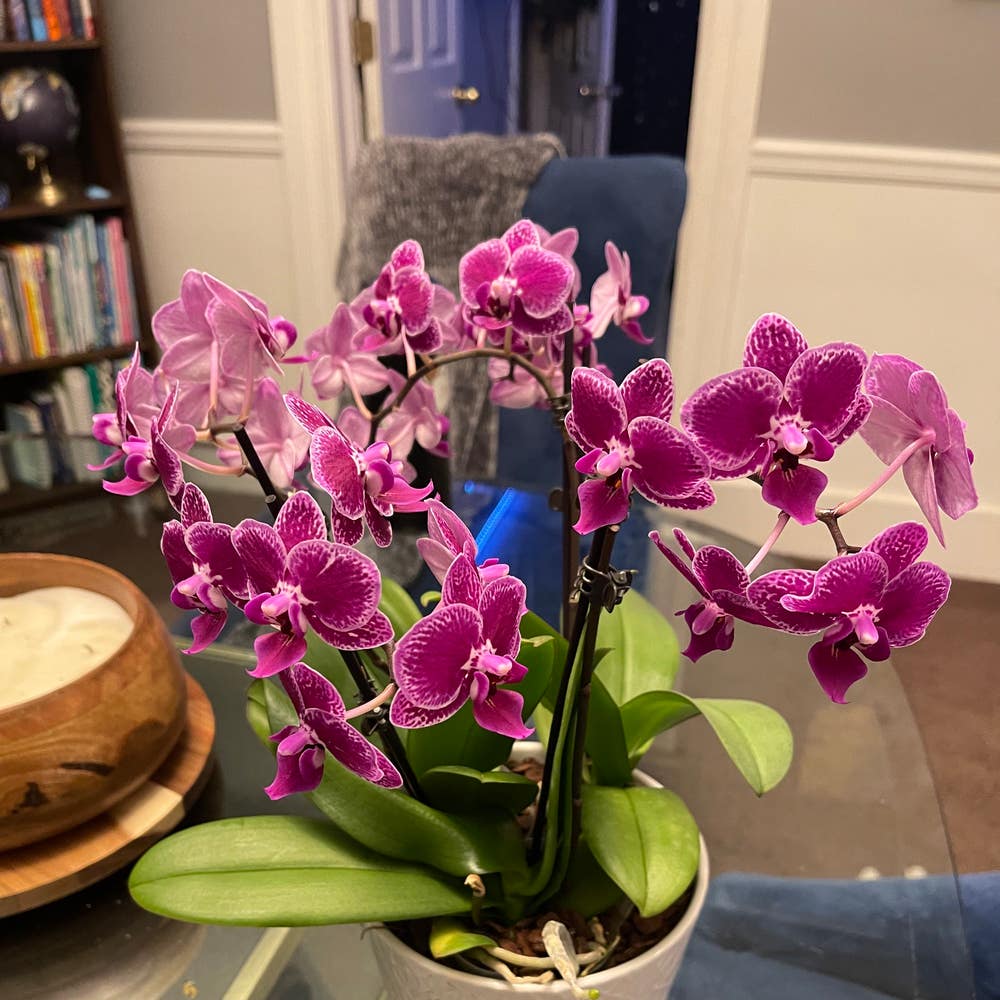
🌜 Why Are My Moon Orchid Leaves Falling Over?
Phalaenopsis amabilis
By the Greg Editorial Team
Jun 18, 2024•5 min read
This article was created with the help of AI so we can cover more plants for you. May contain errors. See one? Report it here.
- Signs of distress: Drooping leaves indicate your Moon Orchid needs help.
- Balance water and light: Avoid over/underwatering and provide bright, indirect sunlight.
- Nutrition and support: Use balanced fertilizer and stakes for healthy, upright leaves.
Spotting the Signs: When Your Moon Orchid is Unhappy
🚨 Telltale Symptoms of Distress
Drooping leaves on a Moon Orchid can be the silent alarm of its discomfort. Beyond the sag, look for yellowing, brown edges, or dark green foliage that's too lush. Wrinkled or torn leaves are cries for help, while black spots or crusts spell serious trouble. If the flowers wilt or show unusual spots, it's time to play plant detective.
🔍 Quick Checks to Perform
First, probe the soil—is it too wet or bone dry? These extremes are your Moon Orchid's nemeses. Next, scrutinize the light; too much sun and your orchid's leaves will sport sunburns, too little and they'll stretch out, thin and weak. Temperature swings? They're like unexpected plot twists for your orchid—best avoided. Keep the thermometer steady, with a sweet spot around 65-75°F (18-24°C).

Water Woes: Striking the Right Balance
💧 The Perils of Overwatering
Overwatering is the silent assassin of Moon Orchids, leading to root rot and the dreaded limp leaf syndrome. To combat this, check the soil before watering; if it's damp, skip the watering can. Ensure your pot has adequate drainage to prevent the roots from sitting in moisture, which is as bad for them as sitting in a bath too long is for your fingers.
🏜️ The Risks of Underwatering
Conversely, underwatering turns your Moon Orchid into a botanical raisin. Leaves droop, signaling a cry for help. Water thoroughly when the top inch of soil feels dry, but don't create a mini flood. Consistency is key; erratic watering is like feeding your plant a feast or famine diet. Use room temperature water to avoid shocking the roots, because nobody likes a cold shower.

Light and Temperature: Creating the Ideal Environment
🌞 Finding the Sweet Spot for Sunlight
Moon Orchids thrive in bright, indirect sunlight. Direct rays can cause leaves to wilt like overcooked spinach, while too little light leaves them languishing. Position your plant where the light is just right—think of a spot that's sunny but shielded, like under a tree canopy. Rotate the pot quarterly to ensure even growth, preventing one side from becoming the botanical equivalent of a lopsided haircut.
❄️ Keeping the Chill at Bay
Temperature fluctuations are to Moon Orchids what icebergs were to the Titanic. Maintain a steady climate between 65-75°F (18-24°C) to avoid leaf droop. Shield your plant from drafts and avoid placing it next to heat sources that turn your living room into a makeshift desert. If your home's temperature swings more than your mood on a Monday morning, consider a heat mat in winter or a fan in summer to keep things stable. Remember, your Moon Orchid isn't looking for a thrill ride on the temperature roller coaster.

Feeding Your Moon Orchid: Nutrition for Strong Leaves
💡 Recognizing Nutrient Needs
Moon Orchids, like any other plant, can throw a tantrum when they're not getting their nutritional fix. Yellowing leaves or a general lack of that vibrant green can be a billboard for deficiency. It's not just about keeping the plant alive; it's about letting it thrive.
🍽️ Crafting the Perfect Diet
Fertilizer: think of it as a multivitamin for your Moon Orchid. A balanced feed, with all the essential nutrients, is key. Too much and you're in the danger zone, too little and you're starving the poor thing. Aim for a fertilizer with a good mix of nitrogen, phosphorus, and potassium.
Remember, the sunlight is your plant's main course, and the fertilizer? That's the seasoning. Keep it regular but moderate. Overfeeding is like force-feeding; it does more harm than good.
Repotting annually? That's like hitting the refresh button, giving your Moon Orchid a new lease on life with nutrient-rich soil. But don't get complacent; even with fresh soil, a little fertilizer goes a long way.
Pro tip: When your Moon Orchid is gearing up to bloom, consider a potash boost. It's like a pep talk for those buds. And always, always water before you fertilize. Think of it as wetting the whistle before a meal.
Lastly, keep your eyes peeled for the plant's response post-feeding. It's a dialogue, not a monologue. Adjust as needed, and watch those leaves stand up like they're ready to take on the world.
Propping Up: Physical Support and Preventative Care
🌱 Building a Support System
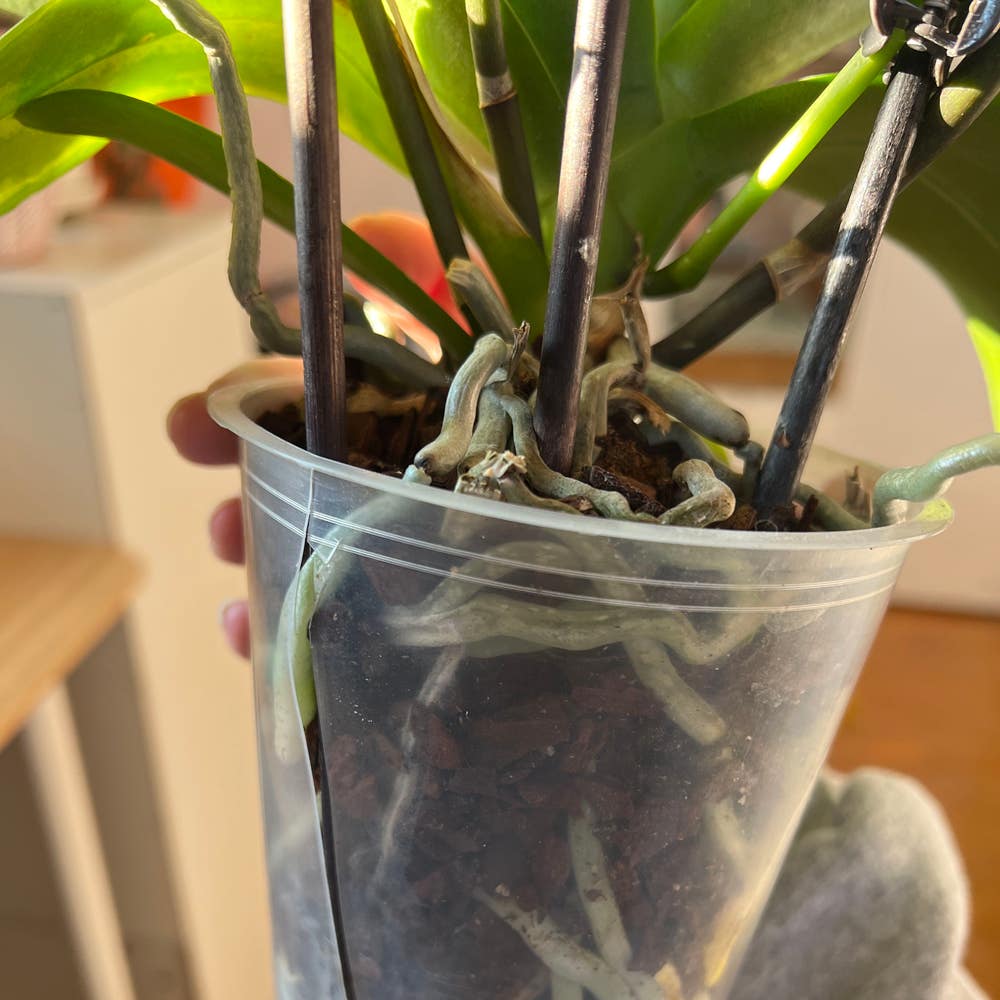
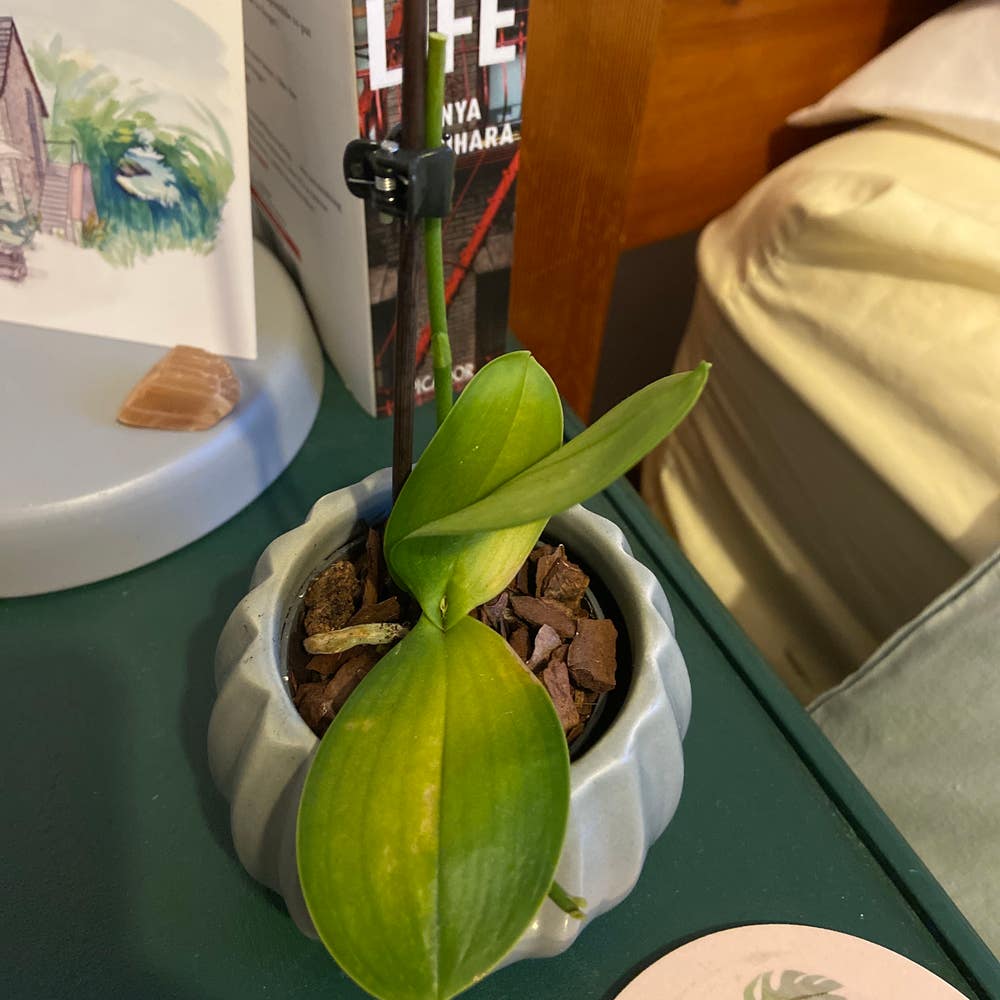
Sometimes, your Moon Orchid's leaves just can't stand up on their own. Stakes or ties are the unsung heroes in these scenarios. Insert stakes gently into the potting medium, avoiding root damage. Then, tie the orchid loosely to the stake with soft material, like strips of pantyhose or foam ties, to avoid cutting into the plant.
🕵️ Ongoing Vigilance
Regular checks are the backbone of preventative care. Adjust ties as the orchid grows, ensuring they're snug but not tight. Keep an eye out for pests, especially in the cozy nooks created by supports. Airflow is crucial; a small fan can discourage pest parties. And remember, cleanliness is next to orchid healthiness—remove any fallen debris promptly to prevent disease.
⚠️ Safety First
This content is for general information and may contain errors, omissions, or outdated details. It is not medical, veterinary advice, or an endorsement of therapeutic claims.
Always consult a qualified healthcare professional before using any plant as food, medicine, or supplement.
Never eat any plant (or feed one to pets) without confirming its identity with at least two trusted sources.
If you suspect poisoning, call Poison Control (800) 222-1222, the Pet Poison Helpline (800) 213-6680, or your local emergency service immediately.
Spotted an error? Please report it here.
Keep your Moon Orchid thriving 🌿 with Greg's personalized care plans that ensure just-right watering and perfect growing conditions.